1981 Irish republican prisoners' hunger strike
Say NothingThe 1981 Irish republican prisoners' hunger strike was a protest by republican prisoners at Long Kesh against their treatment as ordinary criminals and the denial of political status. It became both a deadly confrontation with the British government and a turning point in republican electoral strategy: Bobby Sands won a seat in Parliament while refusing food, but died before the authorities met the prisoners’ demands.
From political status to protest
The strike grew out of a dispute over how paramilitary prisoners would be classified and treated. After internment ended in 1975, people convicted of paramilitary activity were held in individual cells in the H Blocks at Long Kesh, issued prison uniforms, and treated under the same regime as ordinary criminals. Republicans regarded themselves as soldiers and rejected the implication that their actions were simply criminal. Their earlier demands for special category status—which would in effect recognise them as political prisoners—had been refused.
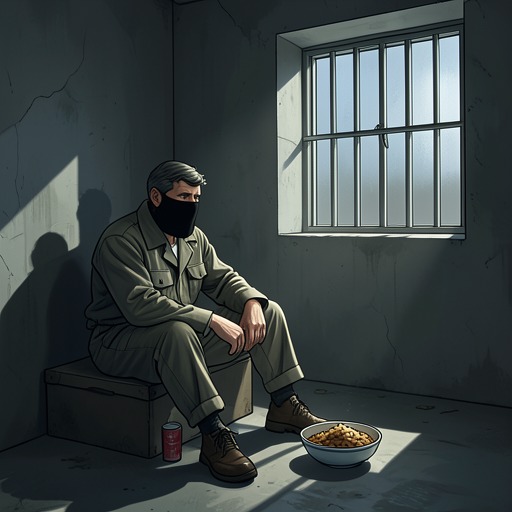
The prison protest had already escalated through the blanket protest and the dirty protest. Prisoners refused prison clothes, then resisted leaving their cells to wash or use the toilet after guards beat them and restricted their access to towels. They tipped chamber pots into the corridors, and, at Brendan Hughes’s suggestion, spread their own waste on the cell walls. The grotesque physical conditions were part of a contest over clothing, association, mail, and ultimately the prisoners’ right to define themselves politically.
The Price sisters’ earlier hunger strike in Brixton Prison formed another part of this history. After their conviction at Winchester Castle, Dolours and Marian Price refused food and demanded transfer to Northern Ireland to serve their sentences as political prisoners. On 3 December, after more than two weeks of their strike, officials restrained Dolours and force-fed her through a tube. The World Medical Association subsequently declared force-feeding unethical, and Roy Jenkins announced that hunger strikers in British prisons would no longer be force-fed. By 1981, the state’s response to a hunger strike had changed; the possibility that prisoners might die of starvation had not gone away.
Sands begins the strike
On 1 March 1981, Bobby Sands stopped eating at Long Kesh. His last morsel was a prison-ration orange, which he found bitter. He marked the beginning of the strike by writing on a scrap of toilet paper. Two weeks later, a second prisoner began fasting; a third followed a week after that. The protest expanded until ten men were on hunger strike. Margaret Thatcher presented the action as a last resort by a failing movement, while the strikers’ refusal made the question of political status a matter of life and death.
Four days after Sands began his strike, Frank Maguire died. As a nationalist member of the British House of Commons, Maguire’s death created a by-election in Fermanagh and South Tyrone. Republicans persuaded his brother not to seek the seat, and Sands became their candidate. The plan joined the prison protest to electoral politics: a government might allow a prisoner to die, the argument went, but the election of a serving hunger striker would make that position harder to sustain. The candidacy also departed from the republican tradition of abstentionism, which had long treated participation in parliamentary politics as a risk to revolutionary principles.
Election and death
On 10 April, after forty-one days without food, Sands was elected to Parliament. His victory did not secure the prisoners’ demands. As his health deteriorated, Thatcher remained unwilling to yield; in a conversation with Northern Ireland Secretary Humphrey Atkins, she recognised that Sands had only days left, though the precise time was uncertain.
Sands died on 5 May 1981, the sixty-sixth day of his strike. His death drew international attention and brought 100,000 people onto the streets of Belfast to accompany his coffin to the cemetery. Support for the republican cause surged on both sides of the border in Ireland. Thatcher publicly maintained that Sands was a convicted criminal who had chosen to take his own life, rather than acknowledge the political claim at the centre of the protest. The confrontation ended for Sands not with a change in prison policy, but with his death; the other nine hunger strikers died one by one over the course of the summer.
Consequences and political legacy
The strike’s political consequences extended beyond the prison. Sands’s election showed that people who did not support the IRA’s violence might still vote for a republican hunger striker. Gerry Adams, already arguing that armed struggle needed a political dimension, saw the result as an opportunity for a new republican politics. The campaign brought electoral participation into closer alignment with the continuing armed campaign, rather than treating the two as incompatible. The precedent later informed Dolours Price’s support for Adams’s 1983 campaign: she canvassed for him and drove voters to polling stations, although she had abandoned violence as her own means of pursuing Irish unity.
For Dolours, the strike also carried a painful personal consequence. In April, while still imprisoned in Armagh, she was transferred to the secure ward at Musgrave Park Hospital weighing seventy-six pounds. She hoped Sands would be brought there so she could offer him a final salute. He never arrived. Two weeks before his death, she herself was released on medical grounds, with the remainder of her sentence remitted because she was considered at imminent risk of collapse and death. In later years she wept over the contrast between Sands’s death and her own release. She also wondered whether the end of force-feeding, which followed her earlier strike, had helped create the conditions in which the ten prisoners could die in 1981. Her anguish linked two hunger strikes across seven years: a struggle that had once kept her alive had helped shape the changed circumstances in which Sands and the others were allowed to starve.