Armagh Gaol
Say NothingArmagh Gaol was a recurring place of imprisonment in the Price family’s history, holding women from different generations for acts tied to Irish republicanism. Later, Dolours Price and Marian Price were imprisoned there after their convictions in England. The prison thus links inherited family experience with the sisters’ own confrontation with political imprisonment, while the chaplain who served them there would also become part of Dolours’s life beyond its walls.
A family history of imprisonment
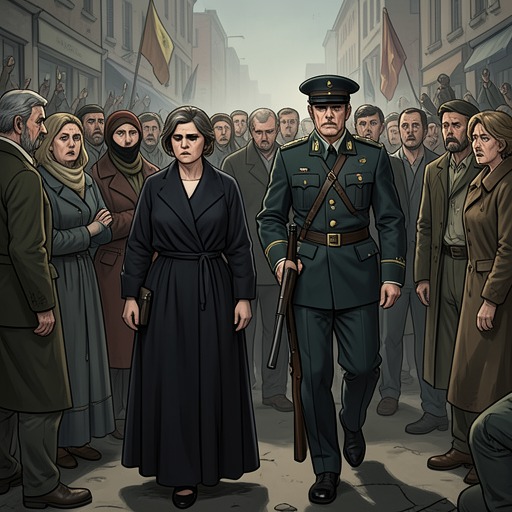
The prison appears first as part of a wider pattern in which incarceration was familiar across the Price family. Chrissie Price’s mother, Granny Dolan, had served three months in Armagh jail after attempting to take a Royal Ulster Constabulary officer’s service weapon. Chrissie Price and three of her sisters also served time there. Their arrest followed their wearing of small paper Easter lilies, emblems in orange, white, and green that commemorated the 1916 Easter Rising and were prohibited under the Flags and Emblems Act. The circumstances differed from Granny Dolan’s armed action, but both cases made prison a consequence of women’s visible participation in republican life.
That pattern extended beyond the Price household. During the 1971 mass internment raids, Francie McGuigan’s mother, Mary, was already serving almost a year in Armagh jail for taking part in a peaceful protest. When soldiers arrested Francie and his father, John, she was therefore absent from the family home and unable to intervene. Her imprisonment gives the jail a place in a broader account of how political activity and family life were disrupted: while a mother was confined for protest, her son was seized in a separate security operation. Armagh was not simply a destination for convicted militants; it also held women whose political actions, including peaceful protest, brought them into conflict with the authorities.
The Price sisters in custody
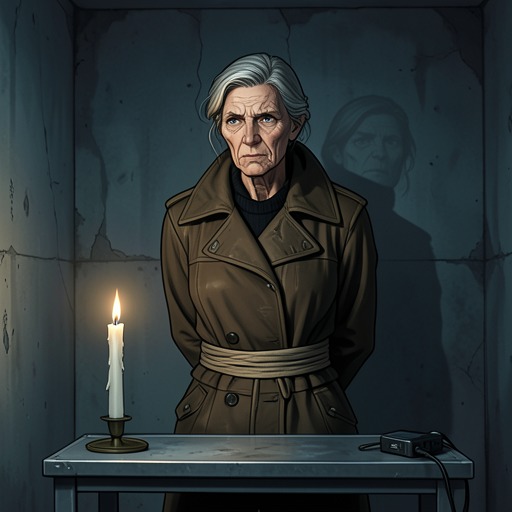
Dolours Price and Marian Price became residents of Brixton Prison shortly after their convictions at Winchester Castle. They were the only women held in that overcrowded, overwhelmingly male prison, where they were kept in separate cells and escorted under close supervision. Before entering Brixton, both had begun a hunger strike, accepting only water. They intended to continue even if it meant death, demanding repatriation so they could serve their sentences as political prisoners in jails in Northern Ireland. Armagh Gaol became part of the history of that demand when the sisters were eventually transferred there; the transfer was not immediate.
The sources place their move to Armagh in a sequence of changing prison conditions rather than as a simple release from custody. In March 1975, the sisters were granted special status and allowed to wear their own clothes. The account also describes their accommodation as suite-like and security as less tight than before. These details mark a change in their daily circumstances, but not an end to imprisonment. The sisters’ political claim to be treated differently from ordinary prisoners remained central to how their custody was understood.
The recollections associated with their time in Armagh preserve moments of movement and adaptation as well as institutional status. Marian is recorded running into her cell, while Dolours’s prison recollection describes her painting and writing letters. Such details place the sisters inside a lived prison routine: the cell was both the unit of confinement and a space in which they continued activities beyond the formal terms of their imprisonment. The available account does not make Armagh an uncomplicated refuge; rather, it distinguishes the conditions there from the stricter custody they had experienced elsewhere while keeping their continued confinement in view.
A prison shaped by political identity
Armagh Gaol’s significance in these accounts rests partly on the struggle over how republican prisoners should be classified. Dolours and Marian’s demand for repatriation was explicitly tied to recognition as political prisoners. The broader conflict over prisoner status was also visible at Long Kesh, where prisoners later resisted uniforms and sought special category status. Armagh’s place in the Price sisters’ story therefore belongs to a wider dispute in which clothing, association, and the terms of confinement carried political meaning. For the sisters, being transferred to a jail in Northern Ireland and receiving special status altered the setting and conditions of custody, but imprisonment remained the underlying fact.
The jail also holds an intergenerational contrast. Granny Dolan, Chrissie Price, and Chrissie’s sisters had been imprisoned there before the Price sisters’ own incarceration. The older women’s arrests arose from distinct acts, ranging from an attempt to seize a police weapon to wearing a banned emblem; the younger sisters’ imprisonment followed a bombing conviction and a hunger strike for repatriation. Across these episodes, women appear not as incidental supporters of male political activity but as participants whose choices brought them into custody. The family’s experience makes that continuity concrete without making the different acts or circumstances interchangeable.
Connections beyond the prison
Monsignor Raymond Murray served as chaplain at Armagh Gaol when Dolours and Marian were prisoners there. His connection to Dolours continued after that period: he married her and Stephen Rea in a secret ceremony at Armagh Cathedral in 1983. The prison and cathedral were separate places, but Murray connects the sisters’ incarceration with a later private milestone in Dolours’s life. At her funeral in 2013, he celebrated the requiem Mass and recalled both her early years as a student protester and the lasting toll of her hunger strike.
That funeral returned the story to the family and political community in which the prison had first appeared. Marian, who was then in prison, received permission to attend her sister’s wake for a few hours. The sisters’ earlier imprisonment at Armagh and Marian’s later custody were not the same episode, but the later scene echoed the recurring costs of imprisonment for their family. Armagh Gaol’s narrative significance is consequently cumulative: it is a site in the history of women’s republican imprisonment, a stage in the Price sisters’ struggle over political status, and one point in a life story whose relationships and consequences extended well beyond the prison itself.