Ballot box and Armalite strategy
Say NothingThe Ballot box and Armalite strategy was a political approach in which republican candidates sought votes while the Provisional IRA continued its armed campaign. The election of Bobby Sands in 1981 gave the approach a decisive public demonstration: a hunger striker behind bars won a seat in Parliament, even as the prisoners’ demands went unmet and the war continued. The strategy challenged a long tradition of republican abstentionism without resolving the contradiction between electoral politics and armed force.
From Protest to Armed Struggle
The strategy emerged from a conflict shaped by exclusion and political grievance. The 1969 march from Belfast to Derry protested discrimination against Catholics in Northern Ireland, where Catholics faced barriers to employment and housing and lacked executive power. Some of the young marchers believed that peaceful protest could force change, and that the political divide might be recast as a struggle between young and old rather than between Catholics and Protestants. The violent attack at Burntollet Bridge helped undo that hope for Dolours Price. In 1971, she joined the IRA, regarding the decision as a return to her family’s republican tradition rather than a break from it.
Price’s insistence on joining as a full combatant also reflected a challenge to the movement’s established roles for women. After she rejected an auxiliary position, a special meeting of the Provisionals’ Army Council determined that women could join as full members for the first time. The decision was linked both to Price’s ambition and republican lineage and to the mass imprisonment of men. This episode belongs to the armed side of the later strategy: the movement’s military organization was adapting and widening even as republican politics would later turn toward elections.
The Electoral Opening
The immediate opening came during the 1981 hunger strike. After Frank Maguire died, creating a by-election in Fermanagh and South Tyrone, republicans proposed that Bobby Sands run from prison. The candidacy could attract attention to the prisoners’ cause and, if successful, force a new political question: whether the British government could allow a Member of Parliament to die in prison. The tactic departed from abstentionism, a tradition that had treated participation in parliamentary politics as a risk to revolutionary commitment and had contributed to the 1969 split between the Official IRA and the Provisionals.
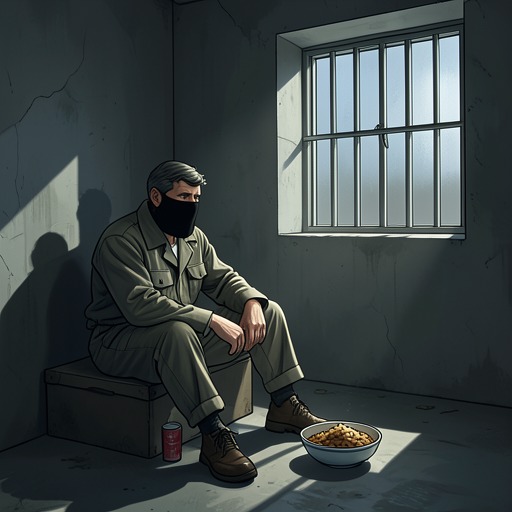
Gerry Adams saw the candidacy as evidence that people who did not support IRA violence might still vote for a republican hunger striker. Working with Danny Morrison, he developed an approach that combined electoral organization with the IRA’s continuing armed campaign. Morrison later expressed its paradox as taking power with “a ballot paper in one hand and an Armalite in the other.” On 10 April 1981, after forty-one days without food, Sands was elected to Parliament. His victory did not win the prisoners’ demands; his health continued to deteriorate, and he died before taking his seat. The election nevertheless demonstrated the political reach that a republican candidate could command.
Two Tracks, Unequal Risks
The strategy did not mean that the armed organization had become merely a symbol or that electoral participation had replaced its clandestine work. Earlier in the conflict, the Unknowns operated as a secret unit answering directly to Adams. In 1972, Dolours Price was assigned responsibility for transporting Joe Lynskey to a court-martial and likely execution. The account of the Belfast Brigade’s authority over disappearances likewise presents a highly organized armed structure, in which secret killing and burial were described as policy rather than accident. These episodes predate the 1981 election, but clarify the kind of military apparatus that persisted alongside the later political turn.
The two tracks also did not describe every individual’s path in the same way. By the time Adams stood for West Belfast in 1983, Price had abandoned violence as a means of pursuing Irish unity for herself, while retaining republican commitments. She canvassed for Adams, urged people to vote for Sinn Féin, and drove voters to polling stations. Adams, meanwhile, said he would boycott Westminster and not take his seat if elected, acknowledging the abstentionist inheritance even as he sought electoral support. The strategy’s significance lies in this unsettled combination: an expanding political campaign, an ongoing armed struggle, and differing degrees of commitment to each among the people associated with them.