Belfast
Say NothingBelfast is more than the backdrop to Jean McConville’s disappearance: its industrial history, divided neighbourhoods, and changing streets shape the human and political story around her. The city’s geography repeatedly brings communities close without bringing them together, while homes, housing estates, churches, and public spaces become places where violence is experienced, remembered, and contested.
Industrial City and Divided Geography
The Belfast of Jean McConville’s childhood was a sooty, grey industrial city set between a flat green mountain and Belfast Lough. Linen mills and tobacco factories stood alongside a deepwater harbour and the shipyards where the Titanic was built. Jean was born in East Belfast in 1934 to Thomas and May Murray, a Protestant couple. Her father worked at the Harland & Wolff shipyard; as a child, she watched the daily procession of men pass their home on Avoniel Road on its way to work and return in the evening. When the Second World War began, Belfast’s linen factories produced uniforms and its shipyards became part of the wartime economy.
The city’s streets also marked the boundary between communities. The Falls Road, a Catholic stronghold, and the Shankill Road, a Protestant one, ran roughly parallel toward central Belfast. They drew closer but never met. Narrow cross streets linked the two roads, with Catholic territory giving way to Protestant territory somewhere along each one. The physical arrangement made division legible at street level: adjacent rows of similar terraced houses belonged to different social worlds, and crossing a short distance could mean crossing a communal boundary.
That division formed part of a wider constitutional and religious tension. Partition left Protestants a majority in Northern Ireland but a minority on the island as a whole, while Catholics were a majority on the island but a minority in Northern Ireland. Each community could therefore understand itself as embattled. On 1 January 1969, student protesters gathered outside City Hall in Donegall Square and set out to march roughly seventy miles from Belfast to Derry, protesting systemic discrimination against Catholics. The city was thus both a starting point for a civil-rights challenge and a place where the divisions that gave rise to that challenge were embedded in everyday geography.
A City in Upheaval
The summer of 1969 brought violence to the region. In Derry, the Apprentice Boys’ annual march commemorated the closing of the city gates against Catholic forces in 1688. The marchers’ customary practice of throwing pennies down from the walls toward the Catholic Bogside provoked a response, and rioting escalated into the Battle of the Bogside. The surrounding upheaval reached Belfast as well: the book’s account situates the city’s later family displacements and neighbourhood tensions within the outbreak of rioting and the wider conflict.
For the McConville family, political upheaval was also a matter of where a family could live. Jean was anxious about her children amid the Troubles, and the family was driven from its East Belfast home. After her husband Arthur’s death, Jean suffered depression and was admitted to Purdysburn psychiatric hospital; she also helped a wounded British soldier. These details complicate any account of the city as a simple map of opposing sides: ordinary lives were shaped by bereavement, mental distress, and choices made amid violence, as well as by communal boundaries.
In December 1972, the family had recently moved from the flat where Arthur had spent his final days to a slightly larger home in Divis Flats, a bleak public-housing complex in West Belfast. Darkness came early in the cold weather, and the cooker in the new flat was not yet connected. Jean sent her fifteen-year-old daughter Helen to buy fish and chips while the others waited; Jean took a bath, seeking a moment of privacy in a crowded family life. She had just emerged when someone knocked at the front door at about seven in the evening. The book places her disappearance within this domestic scene, making the ordinary details of a meal, a bath, and a recently changed home part of the history of a conflict that entered the family flat.
Divis Flats and the McConville Children
The consequences of Jean’s disappearance were visible in the same housing complex. For weeks, her children stayed together and held on to the family home in case their mother returned. Eventually, social-welfare authorities arrived in two cars to take them into care. Helen loaded her younger siblings into the vehicles and told them they were going away only until their mother came back. Neighbours watched from the concrete balconies as the children were driven away. The scene turns Divis Flats from a residential setting into a witness to the family’s abandonment and the community’s silence.
A social worker had visited soon after Jean was taken, following a report that the siblings were looking after themselves. The authorities’ file recorded the apparent abduction by an organisation, but the visit did not restore the family or answer what had happened. The social worker found that Helen was managing with the children and recorded little affection between Helen and her grandmother, Granny McConville. The administrative notes show how a family’s crisis could be reduced to a file and a judgment about whether a capable older child was coping.
The police response offered little more. The Royal Ulster Constabulary files contain no record of an investigation into Jean’s disappearance. A detective from Springfield Road police station visited the flat on 17 January, but the police produced no substantive clues and do not appear to have pursued the case. Two local Members of Parliament condemned the kidnapping and appealed for information; nobody came forward. In this account, the city’s silence is not abstract: it surrounds a particular home, a family already displaced, and children left waiting for a mother who did not return.
Divis Flats itself did not remain. During the 1980s, activists seeking to force attention onto the appalling conditions formed a demolition committee. When a flat became vacant, its members removed fixtures including baths, sinks, toilets, and electrical fittings, and damaged windows and doors. In 1993, the low-rise blocks were demolished after an outcry over the conditions. A new development of red-brick houses with small cement gardens replaced them. By the time Anthony McIntyre interviewed Brendan Hughes in 2001, Hughes was living in what remained of Divis Flats. The site’s transformation altered the built landscape, but it could not undo what had happened there or the memories attached to it.
Public Memory and the Unfinished City
Belfast’s public spaces also became places where loss was made visible. In 1988, after Mairéad Farrell and two associates were killed in Gibraltar, their coffins were carried through West Belfast to Milltown Cemetery. British security forces were normally present at republican funerals to photograph mourners and gather intelligence, a practice experienced by many as intimidating and disrespectful. At this funeral, however, no police officers or soldiers were visible; the authorities had apparently been instructed to stay away. Gerry Adams and other prominent republicans stood among thousands of mourners as the first coffin was lowered into a grave. The ceremony brought together bereavement, political presence, and the persistent tension over who could watch and control the streets.
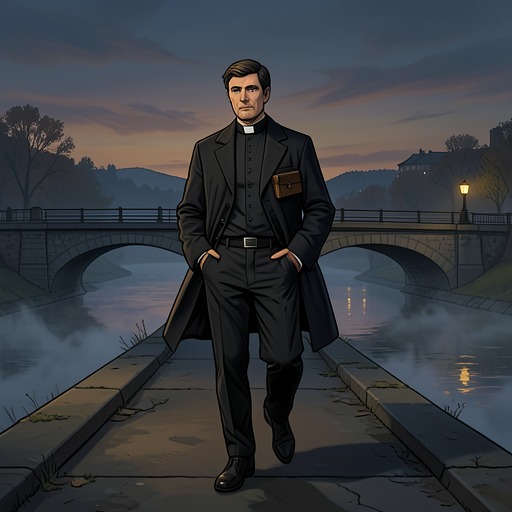
Clonard Monastery occupied another consequential position in the city. The late-nineteenth-century Gothic building stood across a line between the republican Falls Road and the loyalist Shankill. Father Alec Reid, who had moved to Belfast in the early 1960s, witnessed the Troubles from this location. Its placement made the monastery a vantage point at a boundary that was also a site of religious and political division.
The later city did not simply leave those divisions behind. Nearly two decades after the Good Friday Agreement, Belfast was peaceful apart from occasional dissident attacks, yet its neighbourhoods remained divided. Peace walls of concertina wire and steel still separated Catholic and Protestant areas, and there were more of them than at the height of the Troubles. They helped maintain a degree of calm through physical separation, even as slogans threatening each community remained painted on opposite sides. The city’s walls therefore register both change and continuity: violence had diminished, but separation remained built into the urban environment.
Across the book, Belfast’s homes and boundaries connect intimate loss to public history. The route from East Belfast to Divis Flats, the silent balconies, the streets divided between the Falls Road and the Shankill, and the walls of the later city give physical form to displacement and unresolved memory. Belfast is not presented as a settled landscape after conflict, but as a place where the built environment keeps marking the distance between peace and reconciliation.