Belfast Brigade
Say NothingThe Belfast Brigade was the Provisional IRA’s city organization and a centre of both armed activity and strategic decision-making during the conflict. Its local units operated in a landscape where support, secrecy and intelligence were inseparable: the brigade’s presence was rooted in West Belfast communities, while British forces struggled to identify its members and obtain information about them. Later accounts of disappearances and the 1973 London bombing campaign placed the brigade’s command structure at the heart of contested questions about who authorized its actions.
Organization and operational setting
In 1972, the brigade’s D Company was commanded by Brendan Hughes, who was responsible for a swathe of West Belfast. Its territory included the Grosvenor Road, the old Pound Loney area and the Falls Road, described as some of the conflict’s hottest ground. D Company had begun with only twelve members, known as the Dogs or the Dirty Dozen. Hughes, a shrewd and tenacious soldier, had joined the Provisional IRA in early 1970 through his cousin Charlie, the previous D Company commander. Charlie had been shot and killed by the Official Irish Republican Army eighteen months before the account of Hughes’s activities on Leeson Street in September 1972.
The brigade’s environment made command dangerous as well as demanding. Hughes was living underground, moving between houses and rarely sleeping in the same bed on consecutive nights. He faced threats not only from loyalist paramilitaries, police and the British Army, but from the Official Irish Republican Army too. In the book’s account, Belfast’s tightly connected social world made remaining at large there precarious: people knew one another, and an underground life in the city could be far shorter than in rural areas. Hughes nevertheless stayed close to his men and continued operating in the area he commanded.
Command, loyalty and competing roles
Hughes led by taking part. He followed a principle instilled by his father: to get people to do something, do it alongside them. Rather than simply dispatching volunteers, he went on missions himself. Dolours Price recalled that he seemed to be everywhere at once and that he asked no volunteer to do what he would not do. This practice helped give him a strong following among the men on the street and made his authority personal as well as organizational.
Gerry Adams occupied a different kind of role in the brigade’s leadership. When Hughes was badly injured, Adams arrived with a doctor, despite the danger of travelling to him while the British Army searched for him. The book characterizes Adams as a strategist attentive to the wider political context, while Hughes saw himself primarily as a soldier and tactician. Their relationship was marked by affection and loyalty, but also by this contrast in approach. Adams later described Hughes as a figure with a tremendous following who acted instinctively; Hughes, for his part, held Adams in such esteem that he would reconsider even something he believed to be plainly wrong if Adams said otherwise.
The brigade’s command was also politically consequential. According to the book, Adams had been commander of the Ballymurphy unit and later became officer commanding of the Belfast Brigade, the senior IRA position in the city. The book presents this account alongside Adams’s later denial that he had ever joined the IRA. The discrepancy became especially important when police questioned him about the Boston College interviews and the brigade’s structure in connection with the McConville case. In that interrogation, Adams maintained that he could not have commanded the brigade in 1972 because he had never been a member. The book places that denial against accounts attributing command responsibility to him, rather than treating the disputed question as settled by the denial itself.
Intelligence, secrecy and counterinsurgency
For British forces, the brigade posed an intelligence problem. New paramilitary recruits were difficult to distinguish from civilians, while older police files had become inadequate as membership expanded. D Company, operated by Hughes, was of particular interest to Frank Kitson because the book describes it as the unit doing the most damage. Soldiers referred to its West Belfast area as the reservation and complained that its members were embedded in the community, unseen and silent.
The difficulty was not simply a lack of information to collect. British soldiers complained that a wall of silence protected the IRA in West Belfast, where informers were stigmatized as touts. Against this local secrecy, Kitson’s counterinsurgency approach placed growing emphasis on intelligence and on acting upon the environment surrounding an armed movement. The brigade’s concealment within civilian life thus shaped the conflict beyond its operations: it helped drive the British military’s search for new methods while deepening the significance of cooperation, silence and the social costs of informing.
Disappearances and contested responsibility
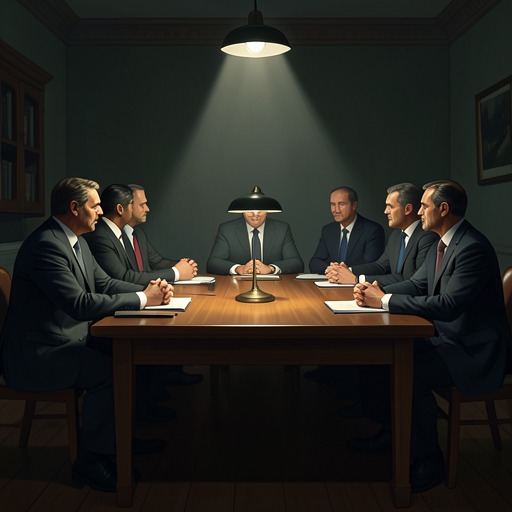
The Belfast Brigade’s reported role in the disappearance of people was not presented as a matter of accidental or unauthorized action. Dolours Price told Ed Moloney that the decision to disappear someone was made by the brigade, whose staff would have had to meet and deliberate. The book stresses that the Provisional IRA was hierarchical even during the bloody, unstable period of late 1972, and argues that executing people and burying them in unmarked graves required authorization. On this account, disappearance was a policy decision, not a by-product of disorder.
That claim carries particular weight because Adams was identified in the book as the brigade commander. It also sharpens the contrast between organizational responsibility and individual denial: when questioned about the Boston College interviews, Adams rejected the premise that he could have occupied that command role. The resulting dispute concerns not only what happened to the disappeared, but how authority within the brigade was exercised and whether its leaders could disclaim responsibility for decisions attributed to its staff.
The London campaign and wider strategy
The brigade’s recorded planning extended beyond Belfast. In accounts of the 1973 bombing campaign in London, Hughes described the idea as emerging from Belfast Brigade meetings involving himself, Adams, Ivor Bell and Pat McClure, with Tom Cahill also among the principal figures. The book reports that Price worked with McClure and Adams, and that Hugh Feeney, a member of the Unknowns who took part in the mission, confirmed Adams’s close involvement with the unit’s activities during this period. Adams denied involvement in the plan, while Price and Hughes maintained that he had been involved.
These conflicting accounts make the London operation a revealing instance of the brigade’s wider reach and the disputes that followed it. The episode places planning, recruitment and operational activity within a network of Belfast leaders, but it also leaves responsibility contested. Taken together with the brigade’s local command of D Company and Price’s account of decisions about disappearances, the London campaign shows why the brigade’s history cannot be reduced to the actions of individual gunmen: questions of strategy and authorization repeatedly lead back to the organization’s leadership.