Boston College
Say NothingBoston College was at once a scholarly home for Irish history and the unlikely repository at the center of the Belfast Project controversy. Its John J. Burns Library held secret interviews with former paramilitaries who had been promised that their testimony would remain confidential until after their deaths. When criminal investigators sought those recordings, the college’s distance from Belfast proved no shield: in 2013, detectives crossed the library’s threshold to take material that had become evidence in a murder investigation.
Campus and Irish collections
The John J. Burns Library occupies a grand neo-Gothic building on Boston College’s leafy campus. Stone spires and stained glass make it resemble a church, an architectural impression that sits beside its practical role as a major research archive. Founded by Jesuits in 1863 to educate the children of poor immigrants who had fled the potato famine in Ireland, Boston College maintained close ties with Ireland as it grew. The Burns Library came to hold what the account describes as the most comprehensive collection of Irish political and cultural artefacts in the United States: 250,000 volumes and about sixteen million manuscripts.
That collection had helped establish the institution’s reputation as a bastion of scholarship on Irish history and literature. It also made the library an attractive destination for a project whose subject was not a distant past neatly closed by academic study. The interviews concerned a recent conflict whose participants, organizations, crimes, and political legacies remained matters of public dispute. In this setting, archival custody was never simply a question of storing documents; it implicated who could hear the testimony, when it could be released, and whether the people described in it might face consequences.
The Belfast Project takes shape
In spring 2000, as Boston College sought a way to mark the end of the three-decade conflict in Northern Ireland, historian Paul Bew suggested documenting the Troubles through testimony from people who had participated in them. He raised the idea with Bob O’Neill, head of the John J. Burns Library. Bew proposed Ed Moloney, a Belfast journalist with experience at the Irish Times and the Sunday Tribune, to direct the project. Moloney recruited Anthony McIntyre, known as Mackers, as an interviewer; the two had met at a republican funeral in 1993, and McIntyre had since become one of Moloney’s sources. For loyalist interviews, Moloney recruited Wilson McArthur, an East Belfast man.
Boston College received a grant of $200,000 in 2001 from an Irish American businessman willing to support the initiative. The plan was to interview former paramilitaries on both republican and loyalist sides. Testimony from police officers was also considered, but that element was abandoned. What proceeded was a project built around the accounts of former combatants, rather than an official institutional history or a comprehensive record of every party to the conflict.
Secrecy was central to its design. Participants signed contracts stating that their testimony would not be publicly released without their consent until after they had died. The existence of the project itself was kept secret, in part because the interviews described crimes and their organizers feared that authorities might seize the material. Moloney regarded Boston College as an appealing repository because it lay across the Atlantic, physically and legally far from police in Britain and Ireland. The United States seemed like neutral ground. That confidence would be tested by legal cooperation between the United States and the United Kingdom.
A hidden archive, an uncertain audience
The project was so secret that Boston College’s history department did not know it existed until Moloney’s book using interview material appeared. Apart from O’Neill and Tom Hachey, few people at the college knew about the archive. The men who arranged the interviews had also never settled who would ultimately be allowed to consult them. Their discussions invoked future Boston College students, but the project had no clear, agreed system for access.
The uncertainty became concrete when a history professor sent a doctoral student to the Burns Library to consult the interviews of Brendan Hughes and David Ervine. Moloney objected and urged Hachey to close the archive to all further access while a strict protocol was developed. This dispute exposed a basic tension in the project’s purpose: material collected for future scholarship had been sealed under promises of secrecy, yet the institution holding it had not clearly established how scholarship could proceed. In 2010, after Hughes had asked McIntyre and Moloney to ensure his recollections were published as a book, Moloney used Hughes’s transcript and Ervine’s to write Voices from the Grave. Boston College’s O’Neill and Hachey described it as the first planned volume drawn from the oral-history archive. The publication made the project public while leaving open what access to the wider collection meant.
Subpoenas and the archive’s transfer
In spring 2011, Moloney received news at home in the Bronx that Boston College had been served with a subpoena. The United States Department of Justice was acting under a mutual legal assistance treaty with the United Kingdom, relaying a request from the Police Service of Northern Ireland. Investigators sought the original recordings of interviews with Hughes and Dolours Price in connection with an alleged murder. The material was no longer only a protected historical record: it had become a potential source of evidence for criminal proceedings.
Before the end of May, Boston College turned over Hughes’s interviews because he had died and much of his account had already appeared in Voices from the Grave. The recordings and transcripts supplied to the investigators were unredacted. The book, by contrast, had been carefully edited to shield certain identities for legal and security reasons. Moloney objected that the authorities now possessed information on which they could act. The distinction between a published, edited narrative and a complete interview record thus became consequential: the archive contained more than readers of the book had been allowed to see.
A second subpoena followed in August, seeking recordings related to the abduction and death of Jean McConville. The account notes that officials had mistakenly suggested Price’s interview had already been unsealed and shared with a Sunday Life reporter; Boston College’s lawyers told the court this was false. In December, a federal judge ordered the college to hand over the tapes and transcripts for judicial review. Boston College chose not to appeal, a decision Moloney and McIntyre met with anger. They retained their own lawyers, and the university later agreed to fight the subpoena for Price’s material. The legal conflict therefore did not end with one institutional response: the university’s decisions and the interviewers’ efforts to resist the demands diverged.
The library as a contested site of memory
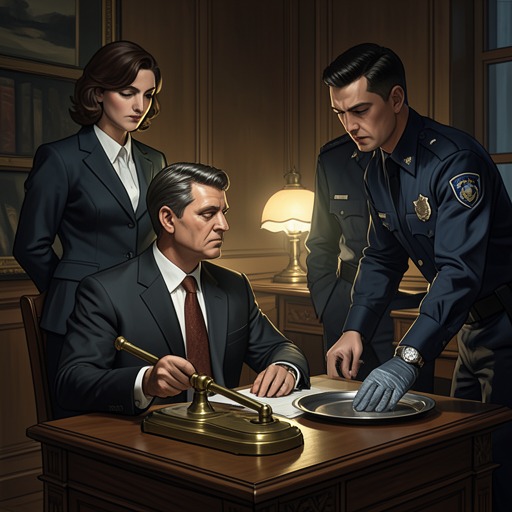
The consequences of the archive’s location became visible in summer 2013. Two detectives from the Serious Crime Branch of the Police Service of Northern Ireland flew from Belfast to Boston and entered the Burns Library. Passing beneath its stained-glass windows, they went to the Treasure Room to collect files that had been stored there for nearly a decade. The material included MiniDiscs and transcripts. The detectives handled it carefully because it contained sensitive, potentially dangerous information; it was now officially evidence in a murder investigation.
That scene reverses the project’s original promise. The distance that had made Boston College seem like a safe repository did not prevent the recordings from being reached through legal channels. The library’s churchlike architecture and scholarly holdings remained, but its sealed testimony had moved from an oral-history undertaking into the machinery of investigation. The book places this shift within a continuing contest over public memory: Gerry Adams’s refusal to acknowledge that he had been in the IRA contributed to uncertainty about whether former participants could safely disclose their own histories, while Sinn Féin’s discipline and preferred account of the conflict shaped what could be said. Against that background, Boston College was more than a storage site. It became a place where promises of confidentiality, academic use, political silence, and the demands of criminal justice met—and where none could be treated as separate from the others.