County Monaghan
Say NothingCounty Monaghan appears as a place where the border crossing offered the appearance of respite but led instead to secret custody and execution. After the Four Square Laundry operation, Dolours Price drove Kevin McKee and Seamus Wright south from Belfast and handed them over to a local unit in Monaghan. McKee was held in a house in the county while senior IRA leaders were expected to come across the border for his court-martial. The place thus marks a transition: the two men had been told to expect rest, but their loss of leverage after the raids left their lives in the hands of the organization that had taken them.
Cross-Border Transfer
The journey to Monaghan followed the simultaneous raids on the Four Square Laundry intelligence network. McKee and Wright had first given information about the Mobile Reaction Force and the laundry; after the raids, the account explains, they no longer had leverage. Although Brendan Hughes had assured them they had immunity, he had not been authorized to make that guarantee. Their later work as triple agents did not erase the earlier betrayal in the eyes of the IRA leadership, and the Unknowns were summoned to take charge of them.
Price drove the men across the border to the Republic of Ireland. She had been brought up to loathe informers, but concealed her contempt during the journey; the men were relaxed, believing they had earned their lives back. She told them they were going for a week of rest and recovery. She understood that to be true, though she suspected otherwise, and followed her orders by leaving them with the local unit in Monaghan. The contrast between the reassuring explanation and the transfer into secret custody gives the crossing its significance in the narrative.
McKee’s Confinement
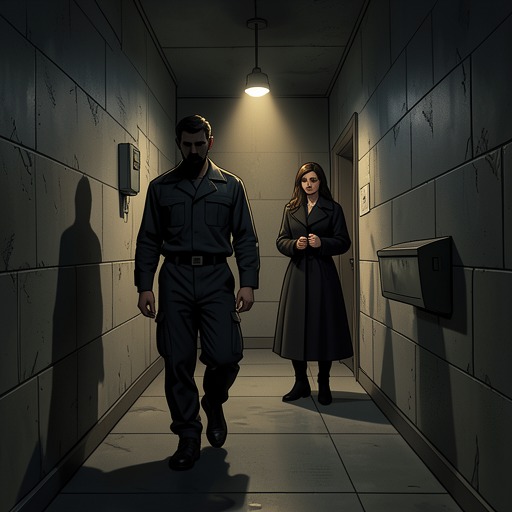
McKee was kept in County Monaghan in a house belonging to the family of Fergal O’Hanlon, an IRA man killed in the 1950s whose death became the subject of the ballad “The Patriot Game”. He waited there for senior leaders to cross the border and conduct his court-martial. The people assigned to guard him grew fond of him: he was remembered as a good cook, a lively companion, and a strong personality. The familiarity that developed in the house made the impending decision harder for those holding him, but did not change his status as a prisoner.
During his confinement, McKee telephoned his mother from a nearby priest’s home and asked her to bring him a change of clothes. His mother and aunts drove down to the house, but Kevin was already gone when they arrived. A man there told them to take the clothes with them and that McKee would not return. The visit leaves the house as a point of contact between hidden detention and family life: relatives could reach the place, but not the person they had come to see.
Execution and the Place’s Significance
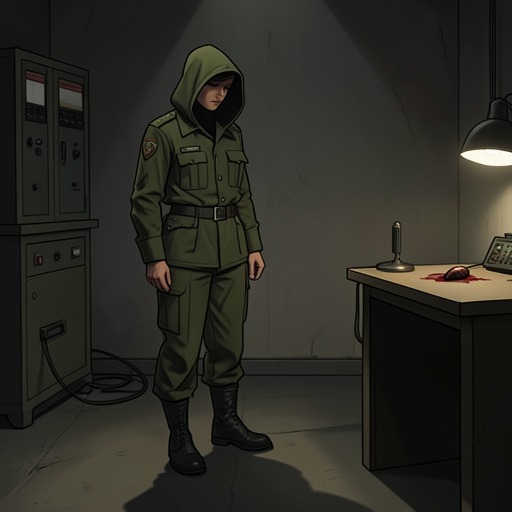
When the time came to execute McKee, the local volunteers who had been holding him could not bring themselves to shoot him because they had grown too fond of him. Two detached gunmen were sent from Belfast to carry out the killing instead. A priest was summoned beforehand to administer the last rites, part of a practiced ritual in which McKee was hooded, bound, made to kneel on the grass, and shot in the back of the head. The account describes this as the fate that followed his confinement in the county; it does not identify the precise site of the execution.
County Monaghan’s narrative role is therefore more specific than that of a simple waypoint on the way south. It is where McKee’s apparent reprieve gave way to waiting, where personal affection among his captors could not protect him, and where his family’s attempt to bring him clothes met his disappearance. Hughes later felt betrayed by the decision to disappear and kill McKee and Wright, having given them his word that they would not be killed. The episode makes the border crossing a boundary not into safety, but into a process from which the men did not return.