De La Salle Boys’ Home
Say NothingThe De La Salle Boys’ Home, also known as Rubane House, was a residential institution near Kircubbin in County Down where several of Jean McConville’s sons were placed after their mother disappeared. For Michael and Tucker McConville, its open countryside offered no refuge: the home’s distance from Belfast deepened their separation from the family they hoped might be reunited, while abuse inside its walls made escape a recurring necessity.
Setting and Transfer
In March 1973, Michael and Tucker were summoned to court in Belfast on a shoplifting charge. That same month, they were moved from Nazareth Lodge to the De La Salle Boys’ Home, twenty-two miles away near Kircubbin. The drive was short, but for Michael the journey felt as if it could have been a hundred miles: the move took him out of Belfast altogether, away from the city to which he repeatedly tried to return.
The institution occupied a converted Victorian mansion and newer cottages on a 250-acre property. Its grounds included a school, swimming pool, tennis courts, football pitch, and billiard table. After the brick-and-concrete confines of Belfast, the land seemed wide and open. That apparent openness stood in sharp contrast to what life inside the home became: distance from the city did not mean safety, and the sprawling grounds did not prevent the children from being controlled or harmed.
Abuse and Institutional Conditions
A later government investigation found that violence was embedded in daily life at the home. Monks and lay employees used force on slight pretexts: boys were punched, struck with belts, and lashed across the knuckles with a thin wooden cane. Michael was eleven and Tucker nine; older boys, already shaped by the same violent environment, bullied them relentlessly. Clothing bought in bulk rarely fitted, and staff sometimes hired children out to neighbouring farms to pick potatoes, a practice some former staff members later disputed.
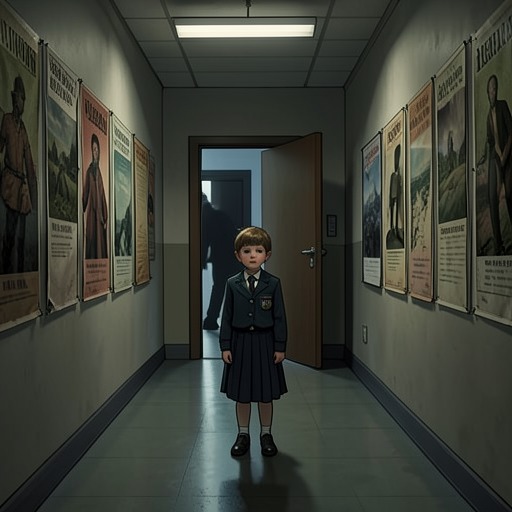
The danger also extended into the dormitories. In the darkened television room, monks in long robes directed certain boys to sit on their laps; sexual abuse was widespread. Michael was not molested, but watched from beneath his covers as adults entered at night with a torch and took sleeping boys from their beds. The distinction between what he witnessed and what happened to other children did not make the dormitory safe: adults entrusted with their care were themselves part of the threat.
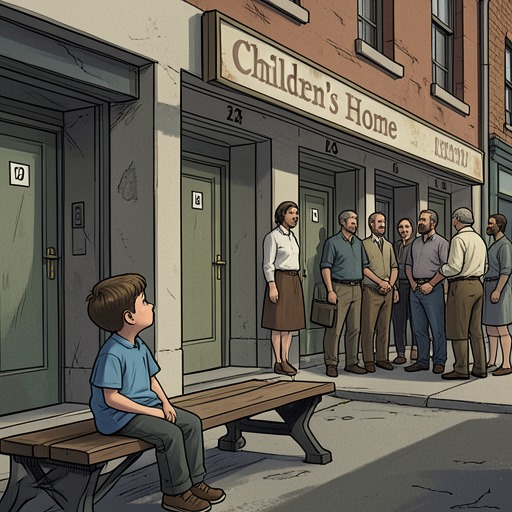
The home’s history continued as the McConville family’s younger boys were sent there. Billy and Jim, both seven, became its youngest residents; older children assaulted them, and Billy was sexually abused by adults. With staff implicated in the abuse, the boys had no dependable adult to whom they could turn. One former resident described the De La Salle Brothers as acting together in the abuse. The De La Salle Brothers later acknowledged widespread sexual abuse at Kircubbin during this period, while the Sisters of Nazareth also acknowledged a pattern of physical abuse at Nazareth Lodge. For some McConville children, the harm endured in Catholic institutions persisted into adulthood as fear and anxiety at the sight of a priest.
Escape and Institutional Reach
Michael and Tucker repeatedly ran away because they believed they had to be back in Belfast if their mother returned. Each time they were found and brought back, they were beaten. Their attempts became so frequent that staff took away their shoes, hoping that barefoot boys would be slowed before they reached the country road and could hitch a ride toward Belfast. The measure made the home’s control tangible: even the possibility of escape was answered by removing the means to travel.
The authorities’ decisions did not end with the boys’ repeated flights. They may not have understood the predatory conditions at Kircubbin; if they had any inkling, it did not prevent other children from being sent there. The continuing transfers expose the distance between institutional placement and actual protection: children were moved into the home without the abuse being stopped.
After escaping once too often, Michael was transferred again, this time to Lisnevin, a secure residential facility near Newtownards for boys considered too difficult or wilful for places such as Kircubbin. His departure marked an institutional response to his flight rather than a return to family life. In the book’s account, the home remains a point in a chain of removals: Michael’s repeated efforts to get back to Belfast led not to reunion, but to another placement farther from it.
Testimony and the Record
The account of Kircubbin rests in part on testimony from McConville children to the Historical Institutional Abuse Inquiry. The released transcripts protected witnesses by redacting their names, but Billy McConville chose to waive anonymity when he gave evidence. That choice made public a distinction the institution’s routines had obscured: the children were not merely being moved between care homes, but were living through specific forms of violence and abuse. The home’s record therefore extends beyond the transfers and escapes themselves, preserving testimony about how adults and older children exercised power over boys placed in their care.