Death of Dolours Price
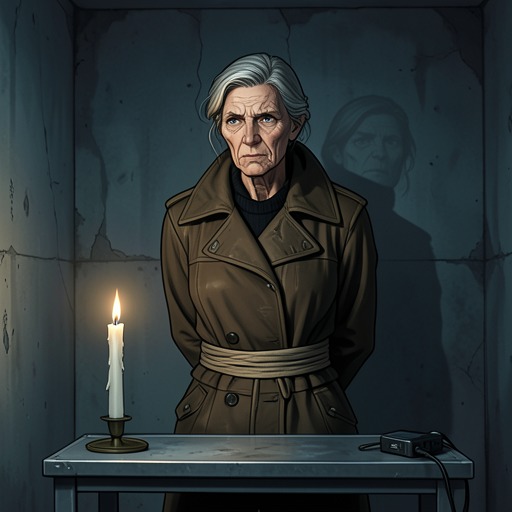
Say NothingThe Death of Dolours Price closed a life shaped by armed struggle and imprisonment without resolving what that past had done to her. Price died at sixty-two after her drinking and depression had worsened; a postmortem found a toxic combination of antidepressants, sedatives and antipsychotics in her bloodstream, but no alcohol. The coroner ruled out suicide and recorded death by misadventure. The circumstances remained open to painful interpretation, and her funeral turned private loss into a gathering around the divided memories of the Troubles.
Final months and death
Price knew about the legal battle in the United States over her interview for the Boston College project. In the summer of 2012, she said she had put the matter out of her mind and would not lose sleep over it. She claimed indifference, but her drinking intensified, as did her depression. In January 2013 she was briefly hospitalised after falling down a flight of stairs while drunk. She discharged herself, returned to her home in Malahide, and continued drinking and taking Valium.
On the morning of her death, her son Danny checked on her before leaving the house and found her in bed asleep. When he returned that evening, she had not moved. He later said he knew immediately that she was dead. The postmortem identified the combination of antidepressants, sedatives and antipsychotics; notably, there was no alcohol in her system at the time. Price was sixty-two. The account establishes the physical circumstances of her death, but not a settled explanation of her intention.
Funeral and former comrades
The funeral recalled an earlier separation between Price and her family. In 1975, when she and her sister Marian petitioned for compassionate leave from prison to bury their mother, permission was refused. In 2013, Marian was allowed to leave prison for a few hours to attend her sister’s wake at the family home on Slievegallion Drive. The contrast was stark: the sisters who had once been denied leave to grieve together were reunited for a final farewell, though Marian’s freedom lasted only hours.
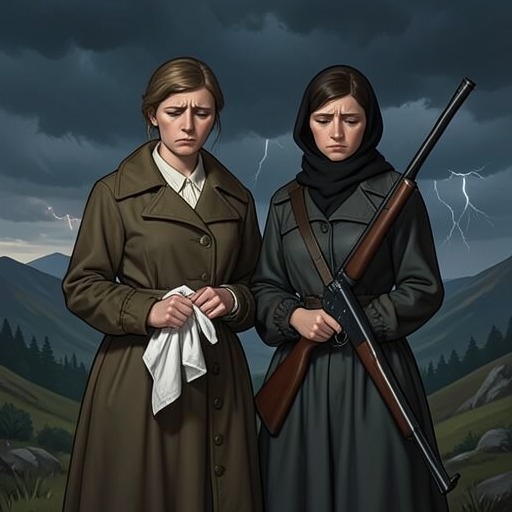
The next day, black flags hung from lamp posts along the road in Andersonstown. Stephen Rea and his sons carried the coffin through cold rain into St Agnes’s Church, followed by a long cortège. The Mass was said by Monsignor Raymond Murray, formerly chaplain at Armagh jail, where Dolours and Marian had been imprisoned. He had also married Dolours and Rea in a secret ceremony at the Armagh cathedral in 1983. His reflection on her name connected the public figure and the person mourned: he recalled that Dolours meant sorrows and that she had lived with the lifelong toll of the hunger strike.
Hugh Feeney, her old friend and co-defendant, attended. He recalled that forty years earlier he and Gerry Kelly had been on hunger strike with the Price sisters. At the funeral, those shared histories had led to different destinations: Dolours was being buried, Marian was back in prison, and Kelly had entered politics. Kelly, who had long since fallen out with Price, did not attend. Neither did Gerry Adams, her former commanding officer. Their absences marked the distance between past comradeship and later political division without making that history disappear from the ceremony.
The coroner’s finding and competing readings
At the graveside, Bernadette Devlin spoke of the accumulated effects of war, loss, imprisonment and inhumanity: they had affected people in heart, soul and spirit, she said, and made every day hard. Eamonn McCann’s oration focused on Price’s contradictions. He described her as someone who had lived the ideals she professed with an urgency that others had not, yet had never freed herself from those ideas. His words made imprisonment more than a fact of her earlier life: ideals, too, could become a confinement.
The coroner asked Danny Rea whether his mother had ever spoken of killing herself. He said she had expressed no direct intention, though she had commented on the self-destructive nature of her condition. The coroner ruled out suicide. Carrie Twomey, close to Price in her final years, believed that she had effectively taken her own life. These accounts do not amount to the same conclusion: the official finding was death by misadventure, while Twomey interpreted the long course of self-destruction as a kind of suicide. The book preserves that tension rather than resolving it into certainty.
A body carrying the past
Price’s death is placed alongside Brendan Hughes’s reflections on what a hunger strike does to the body. In his Boston College interview, Hughes described the body consuming its fat and then its muscle in order to keep the brain alive. The comparison gives physical force to the account of what followed the strikes: even after Price and Hughes ended them and tried to return to society, they continued to nurse old grudges and replay wartime acts. The narrative presents this as a prolonged inward damage, not as proof of a particular cause of death.
At the funeral’s close, the mourners fell silent beneath the driving rain as a police helicopter sounded in the distance. Before the coffin was lowered, someone retrieved the Irish flag, folded its rain-soaked fabric and handed it to Price’s sons. The gesture joined a family farewell to the political symbols that had followed her through life. In a book concerned with how wars are fought again in memory, Price’s death remains at once a documented medical event, a contested personal loss and a public reckoning with ideals whose hold outlasted the fighting.