Divis Flats
Say NothingDivis Flats was a public-housing development in West Belfast intended to offer a modern answer to overcrowding, but its concrete walkways and maze-like interiors became the setting for armed resistance, civilian danger and the abduction of Jean McConville. The complex’s history joins the scale of urban redevelopment to intimate loss: a place designed as a city in the sky became, for the McConville children, both the home they struggled to keep and the landscape from which their mother was taken.
Design and setting
Built between 1966 and 1972 as part of a slum-clearance programme, Divis Flats replaced the Pound Loney, an old neighbourhood of crowded nineteenth-century housing. The development comprised twelve connected blocks and 850 units. Its design, inspired by Le Corbusier, promised a vertical city with amenities that many Belfast families had lacked: showers, indoor toilets and hot-water sinks. Wide concrete balconies ran along each level, intended to recall the streets outside the old terraced houses and provide places where children could play. The doors were painted red, blue and yellow, their bright colours set against the grey of Belfast.
The McConville family had already been uprooted from East Belfast during the 1969 upheaval. After temporary stays in a school shelter and in a small chalet, they moved in February 1970 to a four-bedroom maisonette in Farset Walk. For Jean and Arthur McConville, the chalet had been the first home they could properly call their own; the new permanent flat appeared to offer security on a larger scale. But the design’s optimistic image did not match the conditions residents encountered. The complex had no meaningful social amenities or green spaces. Beyond two bleak football pitches and an asphalt enclosure with a few swings, there was little provision for more than a thousand children.
The buildings also failed in less visible ways. Cheap plasterboard walls carried neighbours’ conversations from flat to flat, while the non-porous concrete exterior encouraged condensation and black mould. To Michael McConville, the interior was a maze of corridors, stairwells and ramps. The lifts were frequently out of order, and the whole complex could seem less like a planned community than a trap of concrete passages. Its later description as a slum in the sky captured the distance between the architectural promise and the life delivered below it.
A home inside a conflict zone
Divis Flats stood amid escalating violence. The British Army arrived in Northern Ireland in 1969 after the Battle of the Bogside and the riots; at first, many Catholics regarded the soldiers as a more neutral presence than the police and welcomed them into West Belfast. As violence grew, that early hope gave way to armed encounters. The army occupied the upper two floors of the twenty-storey Divis Tower as an observation post, from which lookouts could monitor the city. At street level and within the housing blocks, gun battles and searches made the complex part of the contested landscape.
With a largely Catholic population, Divis Flats became a stronghold for armed resistance. Residents described a method known as the chain: when police or soldiers searched one flat for a weapon, it could be passed from neighbour to neighbour through open back windows until it reached the far end of the block. The arrangement made the connected buildings useful for concealing arms, but it also meant that the ordinary architecture of close-set flats and shared walls was shaped by surveillance and danger.
The complex had already witnessed the death of a child before the McConvilles arrived. In August 1969, after police officers were wounded by sniper fire nearby, police in an armoured car fired indiscriminately into Divis. A round passed through the plasterboard walls of a flat and struck nine-year-old Patrick Rooney, who was sheltering with his family. Continued gunfire delayed the ambulance; men eventually carried him out, but he died shortly afterwards. The thin internal walls that later exposed neighbours to one another’s conversations also offered little protection from bullets.
The McConville home and Jean’s abduction
By December 1972, the McConvilles had moved from Farset Walk to a slightly larger flat in St Jude’s Walk. Jean, a widow with ten children, relied on the older siblings to help care for the younger ones. One evening, with the cooker not yet connected, she sent fifteen-year-old Helen to buy fish and chips. Jean took a bath while the children waited for their dinner. Around seven o’clock, people burst into the flat. The children could not agree on their number: there were perhaps eight, or possibly ten or twelve. Some wore balaclavas and others nylon stockings over their faces; at least one carried a gun.
The intruders told Jean to put on her coat. As she emerged, still dressing, her children panicked and tried to hold on to her. The group assured them that she would return after a few hours. Sixteen-year-old Archie, the oldest child at home, asked to go with his mother, and they allowed him to accompany her from the flat. Some of the abductors were unmasked. Michael recognized them as neighbours, not strangers. Their familiarity turned the shared residential world into something more threatening: the people taking Jean away had lived among the family.
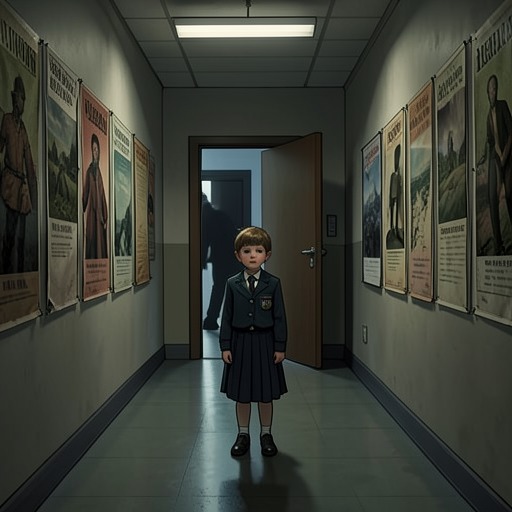
The route out passed through the concrete corridors and stairways. Archie noticed that the complex, usually inhabited even at night, seemed eerily empty. At the foot of the stairs a larger masked group waited beside a blue Volkswagen van. When Archie tried to stay with his mother, a man pressed a pistol against his cheek and ordered him to leave. From a second-level opening the children called the pigeon holes, he watched Jean being bundled into the van, which drove away. Her last words to him were an instruction to watch the children until she came back.
The abduction left the siblings in the flat, waiting for Jean’s return. A social worker’s notes recorded the view that their mother had been taken by an organization, understood as a paramilitary group. The children refused the recommendation that they be placed in care because they wanted to be at home when she returned. Neighbours complained about the noise rather than helping, and the local parish priest was recorded as unsympathetic. With little money and only Archie earning, the children ran short of food; Michael later told police that he and a brother had stolen biscuits because they had not eaten for days. Eventually the authorities took several of the children into care. Helen promised them they were going away only until their mother came back, while neighbours watched from the balconies in silence.
Memory, disputed accounts and demolition
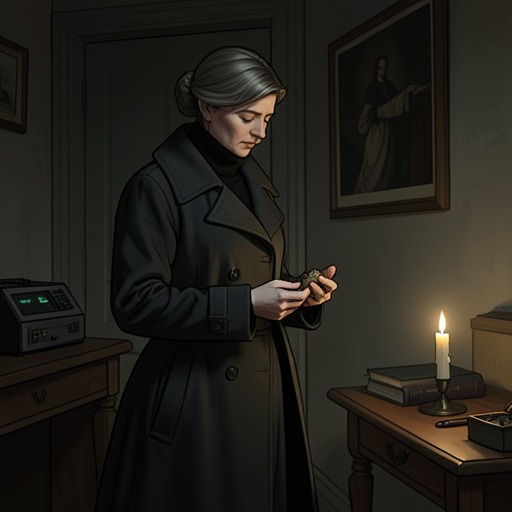
The physical conditions of Divis Flats later became part of the dispute over what happened to Jean. Brendan Hughes told Anthony McIntyre in a Boston College oral-history interview that the Irish Republican Army believed Jean was an informer who used a radio transmitter to pass information to the British Army. Hughes said that a first transmitter had been found and Jean warned, and that a second was discovered later. He acknowledged that he had not been present when the first radio was found and was relying on information from subordinates. The claim that Jean had used a radio remained contested. Former police officers questioned whether the army or police used such handheld radios with informants at the time, although research later located evidence of a small radio used by the army in Belfast in 1972, including a photograph of a soldier holding one in Divis Flats.
Even if a radio existed, the flat’s construction made clandestine communication difficult: the walls were so thin that neighbours could overhear ordinary conversation. Michael McConville also noted that Hughes had not said he personally saw the device. A police log discovered in a later review recorded a beaten woman named Mary McConville, with an address at St Jude’s Walk, being warned to stop giving information to the military. The record appeared to support the existence of an earlier warning, but placed it on 29 November, complicating the children’s recollection of the sequence of events. The setting thus figures not only in accounts of the abduction but also in questions about how rumours, physical evidence and uncertain dates shaped explanations of it.
Years later, the siblings’ memories of the neighbours who took Jean remained vivid. Some could no longer recall their mother’s appearance except through a surviving photograph, yet recognized members of the abduction team as adults. Helen encountered a woman she knew had been involved while out with her children; Michael once rode in a taxi driven by one of the abductors and said nothing during the journey. The flats’ intimate geography had made recognition unavoidable: neighbours shared corridors and balconies, and the people who had taken Jean remained part of the same local world.
The low-rise blocks were demolished in 1993 after activists drew attention to the complex’s appalling conditions. During the 1980s, a demolition committee had helped make flats uninhabitable by stripping out fixtures, breaking windows and removing doors after residents left. The government eventually bulldozed the blocks and built redbrick houses with small cement gardens. The twenty-storey tower remained. In 2001, Brendan Hughes lived on its tenth floor, while the British Army still occupied the roof and top two floors. The tower preserved a vertical remnant of the old complex: the observation post above, a former IRA commander below, and the vanished housing blocks around them. Divis Flats therefore persisted in the book both as a transformed place and as an architecture of memory, carrying the contrast between official plans for a better home and the violence and abandonment experienced within its walls.