Dolours Price
Say NothingDolours Price’s life traces a passage from inherited republican conviction to armed action, imprisonment, disillusionment, and belated testimony. A leader in the IRA’s London bombing campaign and a hunger striker who treated her own body as a political weapon, she later questioned the movement she had served. Her recorded accounts of Jean McConville’s disappearance made her a consequential witness to the conflict’s hidden history, while her memories of violence continued to trouble her long after prison and militancy had ended.
Identity and formation
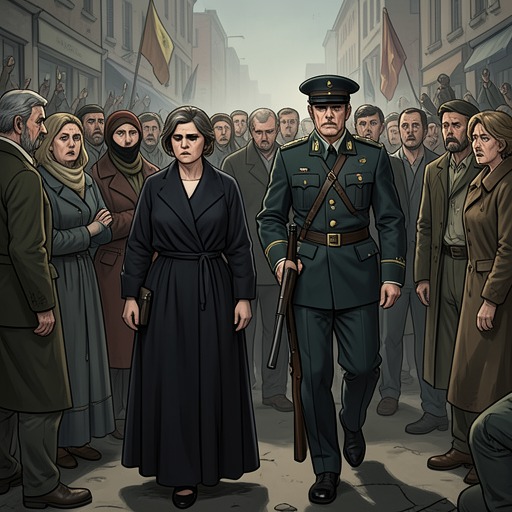
Price grew up in West Belfast in the 1950s in a family for whom Ireland came before religious observance. As a child she favored saints who had died as martyrs, and she attended church daily, though she noticed that her parents did not. At about fourteen she announced that she would no longer go to Mass. The combination of a Catholic upbringing, republican family loyalties, and early questioning of inherited authority would recur in a life shaped by competing kinds of allegiance.
Her father, Albert Price, was intermittently present during her youth because he was involved in the renewed struggle. When the IRA needed guns, he went looking for them; men gathered in the Price family’s front room to plan in low voices. He later went on the run across the border in the Republic of Ireland. Price began studying at St Mary’s in 1970 and applied herself to her degree, but her experience of the civil-rights march and the attack at Burntollet Bridge had changed her. Her father later said that both she and her sister Marian Price were never the same after returning to Belfast. Their closeness was also political: the sisters would join the IRA, face imprisonment together, and sustain one another through a hunger strike.
In 1971 Price approached a local IRA commander and asked to join. Her induction took place in the front room of the family home on Slievegallion Drive. She raised her right hand and pledged to promote the IRA’s objectives and obey orders from a superior officer. Her mother sat in the next room with a cup of tea, apparently acting as if she knew nothing of the ceremony. The contrast captures the intimate setting of Price’s entry into a movement whose ideal of the volunteer demanded discipline, comradeship, and readiness to sacrifice everything for the cause.
From recruitment to command
Price’s early IRA activity included carrying weapons and serving as a courier. She was arrested by the Royal Ulster Constabulary, interrogated at Castlereagh, and involved in a bank robbery; she also took part in the James Brown hospital rescue mission. The surviving account of these episodes places her within a clandestine network in which mobility, disguise, and trust were practical necessities. Her public image, meanwhile, acquired a glamour that sat uneasily beside the discipline and danger of underground work.
Price became a leading figure in the Unknowns, an IRA unit involved in secretly removing people suspected of informing. The work brought her into the story of Joe Lynskey, a friend and comrade whom she later remembered with particular pain. She drove him to his death, and her later account of the episode was marked not by triumph but by the conviction that she should have done more to help him escape. The role placed her inside a system whose secrecy and claimed security imperatives could end in the killing and hidden burial of people from within the republican community itself.
She also took part in the disappearance of Seamus Wright and Kevin McKee, who were delivered for execution. Her later recollections of Lynskey, Wright, and McKee became part of a recurring pattern: people she had known returned to her memory as unresolved moral obligations. These actions belong to the same clandestine context as her later involvement in Jean McConville’s case, but the people and circumstances were distinct; her accounts would eventually bring several buried episodes into public dispute.
The London campaign and imprisonment
Price helped develop an IRA plan to bomb London. An initial proposal involved firebombs intended for department stores on Oxford Street, but acid leaked from the devices and ruined them. Already in London, she abandoned that operation and disposed of the faulty bombs in the River Thames. The abortive plan was followed by a more carefully coordinated campaign. As head of the Unknowns, she was selected to lead the operation, with Hugh Feeney and Marian Price as lieutenants. The recruits trained in the Republic of Ireland with explosives and timers.
For the later mission Price flew from Dublin under the assumed name Una Devlin. By 7 March 1973 the team had arrived in London, left cars carrying explosives in public garages, and checked into separate hotels. The intended targets were a British Army recruiting centre in Whitehall, the British Forces Broadcasting Service on Dean Stanley Street, New Scotland Yard, and the Old Bailey. The plan called for telephone warnings shortly before 2 p.m., with timers set to detonate an hour later; the team expected to have returned to Ireland on a late-morning flight from Heathrow Airport. Orders directed the bombers to avoid civilian casualties, in the shadow of the deaths caused by Bloody Friday.
The operation ended in arrests. Price, Marian, and Feeney were due to fly from Heathrow at 12:30, but Special Branch officers were waiting when they entered the terminal. At the police station, officers stripped and photographed members of the team so their clothing could be examined for explosive residue. Price was photographed naked. She and Marian refused prison uniforms, seeing themselves as captured soldiers and political prisoners rather than ordinary criminals, and wrapped themselves in rough prison blankets instead. Feeney refused even the blanket. At their trial at Winchester Castle, Price, Marian, and Feeney received thirty-year sentences because of their leadership roles. Price audibly described the sentence as a death sentence.
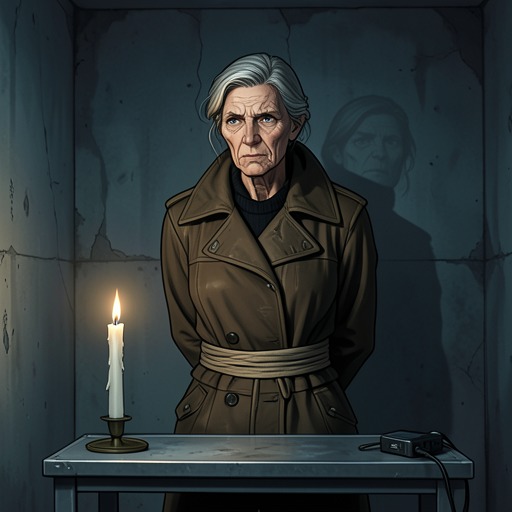
In Brixton Prison, the sisters were watched at every step and given prisoner numbers; Price became Prisoner No. 286185. They began refusing food before entering the prison, taking only water, and intended to continue their hunger strike until death if necessary. Feeney and Gerry Kelly joined them from other prisons. Their demand was repatriation to Northern Ireland to serve their sentences as political prisoners. Price cast the strike as a test of an IRA volunteer’s allegiance and as a reversal of the use of hunger against the Irish during the famine: the body, she believed, could be the ultimate weapon against a more powerful state.
Force-feeding made that political contest bodily and immediate. A tube delivered a blended mixture that included raw eggs, orange juice, and liquid Complan. Price vomited after being fed and told Marian that she did not think she could endure the ordeal again. Marian told her she could come off the strike. The sisters’ shared resistance thus contained a point of divergence: solidarity did not require Price to keep risking death after the state had begun forcing food into her. Price’s hunger strike ended, and she was eventually returned to Northern Ireland. In Armagh jail, she and Marian did not join the women’s dirty protest. The sisters were beginning to draw back from the movement, even as imprisonment continued to bind them to its politics.
Release, relationships, and political retreat
Prison did not leave Price untouched. In Armagh she fixated on the small square of sky visible through a window. The IRA’s 1978 bombing of the La Mon House hotel, which killed twelve civilians and severely burned dozens more, sharpened questions she had begun to ask about the movement’s violence. She wondered whether she was imprisoned because she wanted to burn or incinerate people. These doubts led toward a withdrawal from the IRA and an embrace of nonviolence, although her republican commitments did not simply disappear. She also suffered an eating disorder and received treatment at Musgrave Park Hospital.
In April 1981 Price was released on medical grounds, with the balance of her sentence remitted because the authorities considered her at imminent risk of sudden collapse and death. After more than eight years in prison, she reunited with her family and slowly regained weight. Her release was on licence: she remained subject to conditions, including a restriction on leaving Northern Ireland. She successfully sought permission for a month-long summer holiday in the Republic of Ireland, after Margaret Thatcher personally reviewed the request. Later, Price returned to England in breach of her release terms. Thatcher rejected a proposal to adjust the conditions to let her stay there, despite advice that imprisoning her again risked renewed protest and another hunger strike.
Price became a writer and journalist and married the actor Stephen Rea; they had two sons, Danny and Oscar, and the marriage later ended. She was associated with the Field Day theatre company and continued to support republicanism, but the political settlement increasingly widened the distance between her and the Sinn Féin leadership. At the IRA ceasefire announcement in August 1994, republicans gathered at a social club in West Belfast to hear the decision presented as neither victory nor defeat. Price asked whether they were being told, in retrospect, that armed struggle should never have been undertaken. The question expressed a lasting tension: she could challenge the political turn without disavowing the sacrifices that had brought her there.
Testimony, memory, and ending
After the Good Friday Agreement, Price became more openly disaffected with the direction taken by the republican leadership. The continuing denial by Gerry Adams that he had been in the IRA contributed to a wider uncertainty about whether former participants could safely speak about their roles. The peace process had altered public politics, but the old culture of silence persisted, reinforced by fear of prosecution and the stigma—and danger—attached to being called an informer. In a political climate where the leadership sought to preserve a coherent account of the conflict, Price’s criticisms marked her as an opponent of that account.
Price joined the Belfast Project, an oral-history initiative in which former combatants were interviewed by other former paramilitaries rather than by graduate students unfamiliar with the underground. Anthony McIntyre interviewed her at home over long sessions about her republican family, her teenage radicalisation, the London bombing mission, and imprisonment and hunger strike. She also gave Ed Moloney a separate set of recorded interviews. Although she spent about fifteen hours in recorded conversations with McIntyre without mentioning McConville, she discussed McConville’s disappearance in detail in the interviews with Moloney. The distinction between the two interview records later became important to understanding what the archive contained.
In her account to Moloney, Price said she had already been helping to disappear people before she was ordered to take McConville across the border. She said she had not previously known McConville and claimed that McConville had confessed to informing; she also described a transmitter found in McConville’s flat and an alleged sighting of her at a barracks on Hastings Street, concealed behind a blanket with a slit through which she could see. These were Price’s claims, presented as recollection, rather than facts independently established by her testimony alone. She said that an IRA unit in Dundalk had dug a grave but had not carried out the killing, and that she was later called back with Pat McClure and another volunteer. Price recalled that all three took turns firing the single gun so none could be certain who had delivered the fatal shot. She said that she deliberately missed; one of the others fired, and McConville fell.
The interviews belonged to an archive whose confidentiality promises were later tested by legal demands for recordings. Price knew of the United States court battle over her Boston College interview, though she said she was indifferent to it. At the same time, her public interventions showed how difficult it was for her to leave the past sealed away. She wrote critically about Adams in The Blanket, describing a sense of personal and political betrayal, and called journalists when an urge to set the record straight took hold. After reading an interview in which Adams discussed Lynskey’s disappearance, she told Allison Morris that Lynskey had been a gentleman and that she should have helped him flee. Her regret was specific: she believed she had failed a friend whom she should not have allowed to go to his death.
In her final years Price was troubled by what she had done to others and to herself. While driving with her sons in the back seat, she sometimes looked in the rear-view mirror and saw the dead Joe Lynskey instead of Danny or Oscar. At a lecture at Trinity on political prisoners, she stood up in anger, recited the names of republican hunger strikers, and walked out. She said that Lynskey, Wright, McKee, and McConville came into her mind, and that she sometimes prayed for them in the middle of the night. Such returns of memory connected the political history she had helped make to the private life she tried to rebuild; they did not settle the conflicts between responsibility, loyalty, and remorse.
Price’s drinking intensified as her depression deepened. In January 2013 she was briefly hospitalised after falling down stairs while drunk, then discharged herself and returned to her home in Malahide, where she continued to drink and take Valium. On the day she died, Danny found her asleep in bed before leaving the house; when he returned that evening, she had not moved. Her death closed the life of a former commander and prisoner, but not the arguments attached to her testimony. In a Belfast where the past remained politically dangerous, Price’s recorded recollections made her both a participant in concealed violence and a witness whose claims, regrets, and silences continued to shape how that violence could be remembered.