Eamon Molloy
Say NothingEamon Molloy was a 21-year-old man killed by the Irish Republican Army in 1975 for being an informant. His story emerges through two moments separated by nearly a quarter-century: a priest’s recollection of Molloy’s last hours and the discovery of his remains in 1999. Together, they reveal a man caught between the fact of his informing and his final wish that his family be told otherwise.
Identity and Circumstances
The account establishes little about Molloy’s life before his death, but it gives the decisive circumstance: the Irish Republican Army killed him for being an informant. His fate was bound to the stigma attached to informing and to the violence used to enforce silence. The record of his final hours does not soften that fact; instead, it places the label beside the frightened young man who knew he was about to die.
His Final Night
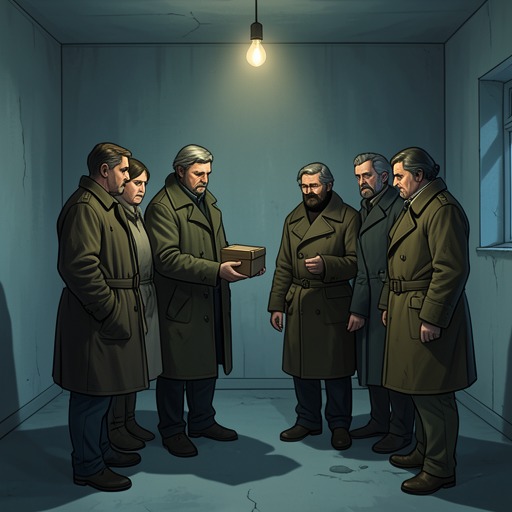
About a quarter-century after the killing, Eugene McCoy recalled being summoned one night to a mobile home in a remote part of County Louth. A group of men had called for a priest, and McCoy found Molloy tied to a bed. Molloy had asked to confess before his execution. McCoy had left without his rosary beads; the man he took to be the head of the execution squad drew out his own and handed them to him, saying, ‘Use mine.’ The gesture occurred within a scene of imminent violence, without changing what was about to happen.
Molloy asked McCoy to carry one last message to his family: ‘Tell them I’m not an informer.’ The statement was false: Molloy had in fact been an informer, a fact subsequently well established. Yet the account preserves the distinction between that public fact and his dying request. He wanted his family to receive a denial, not the truth of the charge under which he was about to be killed. McCoy did not deliver the message after leaving, and he did not report the encounter to police.
Discovery and Burial
In the spring of 1999, less than a month after legislation establishing a commission to locate people killed and secretly buried during the conflict had passed, two Catholic priests led police officers to a medieval graveyard outside Dundalk. Under a rhododendron bush in a quiet corner, officers found a new coffin deposited above ground. It contained Molloy’s remains. The account indicates that his body had been dug up, placed in the coffin and left in the graveyard overnight; it does not identify who did so or explain why.
After Molloy’s family recovered his body, they held a funeral and reburied him. The discovery also prompted McCoy to come forward. Having heard about it on the news, he approached the family and said he had a story to tell, supplying the account of the confession and the message that he had never delivered. The recovery therefore returned Molloy’s body to his family while bringing his last request, and the priest’s failure to carry it out, into public view.
Significance in the Account
Molloy’s story turns on the gap between a body recovered and a message left undelivered. The commission’s legislation offered limited immunity to people who came forward with information, helping investigators seek the buried victims; in Molloy’s case, the recovery was followed by a witness’s account that had remained unreported for decades. His final words do not erase his role as an informant, but they show how the consequences of that role reached beyond his death, shaping what his family might be told and what a priest chose not to say.