Force-feeding
Say NothingForce-feeding was the British authorities’ coercive response to hunger strikes by republican prisoners, converting a protest over political status into a direct struggle over control of the body. At Brixton Prison in December 1973, the procedure was imposed on Dolours Price after she and Marian Price had refused food for more than two weeks; its physical violence, and the government’s later decision to stop using it, made it a defining conflict in the sisters’ imprisonment.
The Hunger Strike at Brixton
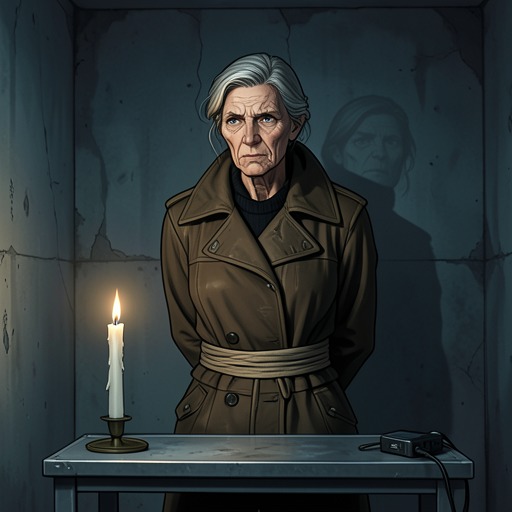
Shortly after their conviction at Winchester Castle, Dolours and Marian Price arrived at Brixton Prison, where they were the only women among an overwhelmingly male population. They were kept in separate cells and escorted through the prison, attracting verbal attention from male inmates. Dolours received the number 286185, an institutional identity that seemed to anticipate a sentence lasting decades. The sisters, however, had already begun refusing food, taking only water, and intended to continue their strike even if it meant death.
Their demand was to be repatriated so they could serve their sentences as political prisoners in jails in Northern Ireland. Hugh Feeney and Gerry Kelly, held in different prisons, joined the strike. For Dolours, prison was where an IRA volunteer’s allegiance to the cause was tested; she presented the hunger strike as a continuation of the sacrifice made by volunteers killed on the streets of Belfast. The confrontation therefore concerned more than the conditions of confinement: the British government’s refusal to recognise the prisoners’ political status was met with a protest that placed their lives directly at stake.
The government feared that a hunger striker’s death could bring disastrous consequences, including retaliatory violence, but it did not grant the sisters’ demand. On 3 December, after the strike had lasted two and a half weeks, doctors and nurses entered Dolours’s cell and took her to a room for feeding. They restrained her in a chair bolted to the floor, tied her with bedsheets, and forced a wooden bit into her mouth. A rubber tube was passed through it and down her throat while officials held her back. Dolours gagged and struggled to breathe as liquid was poured through the tube into her stomach.
The Procedure and Its Reversal
The mixture forced into Dolours’s stomach contained raw eggs, orange juice and liquid Complan, a concentrated preparation of milk, minerals and vitamins. She vomited it before the tube had even been removed. Once released to the exercise yard, she found Marian Price, who had not yet been force-fed, and described the ordeal. Dolours said she did not think she could endure it again; Marian told her she could come off the strike. The sisters’ solidarity was tested not by a difference in their demand, but by the unequal timing of the state’s violence against them.
The procedure turned a hunger strike into a repeated contest over bodily control. Accounts of the sisters’ treatment describe their physical deterioration: Dolours’s teeth began to loosen, a condition confirmed by a prison dentist, and both sisters’ complexions became waxy. During force-feeding, a radio was turned up to cover their screams. The procedure also drew public condemnation; a psychiatrist compared its effects to rape. These details expose the gap between the official language of medical treatment and the experience of restraint, forced penetration and fear described in the accounts.
The practice had a longer history: force-feeding had been used against suffragettes in Holloway Prison in 1913. For Dolours, the later refusal of the British Medical Council to force-feed hunger strikers marked a consequential change, and Roy Jenkins announced that hunger strikers would not be subjected to the procedure. The reversal did not erase what had happened at Brixton, but it changed the terms of later confrontations: the state’s response to hunger could no longer be treated as a settled, routine intervention.
Political Status and the Prison Regime
The dispute that brought force-feeding into the Price sisters’ imprisonment belonged to a larger confrontation over how republican prisoners were to be classified and controlled. When internment officially ended towards the end of 1975, paramilitary suspects were charged as ordinary criminals rather than detained indefinitely as political prisoners. At Long Kesh, convicted prisoners were placed in individual cells in the H Blocks and issued prison uniforms; the uniform made no distinction between an IRA volunteer and a common thief. For republicans, this was not merely a change in prison administration: criminal classification challenged the claim that volunteers were soldiers captured in a war.
The prisoners’ response at Long Kesh showed how insistently that claim remained contested. In 1976 they began the blanket protest, refusing prison clothes and wrapping themselves in blankets; their demand for special category status was refused. After beatings during trips to shower and restricted access to towels, some stopped leaving their cells, and the protest escalated into the dirty protest, with chamber pots emptied into corridors and waste spread on cell walls. These later forms of bodily defiance did not repeat the Price sisters’ hunger strike, but they expose the same underlying struggle: the prison authorities sought to impose a criminal identity through confinement and discipline, while prisoners made their own bodies the site on which that imposed status could be refused.
Medical Ethics and the Later Hunger Strikes
The refusal to continue force-feeding marked a change in the state’s response, not an end to the hunger-strike conflict. During the later H-Block protest, the authorities did not use the procedure; after Bobby Sands died, nine other prisoners also followed him in death. The contrast with Brixton is stark: intervention once imposed on a weakened prisoner’s body gave way to a policy that left hunger’s consequences to unfold without forced feeding.
The book places that reversal alongside a wider medical and ethical reckoning. The World Medical Association had issued guidance on the treatment of hunger strikers, while Dolours Price later recalled the British Medical Council’s refusal to force-feed them as a pivotal limit on the practice. Force-feeding thus remains more than a coercive technique in the account: it marks the contested boundary between medical intervention and punishment, and shows how a prison dispute over political identity could become an argument about what institutions were permitted to do to a person’s body.