Freddie Scappaticci
Say NothingFreddie Scappaticci, known as Stakeknife, was a long-serving British Army informant inside the Provisional IRA and, for much of The Troubles, a figure at the heart of the IRA’s internal hunt for spies. His exposure produced a devastating reversal: the man reputed to be the Nutting Squad’s most fearsome spy hunter was himself a double agent, positioned inside the organization’s security apparatus. The contradiction made his case more than a story of one informer; it revealed how the machinery built to defend the IRA from penetration could become a source of access for British intelligence.
Identity and Background
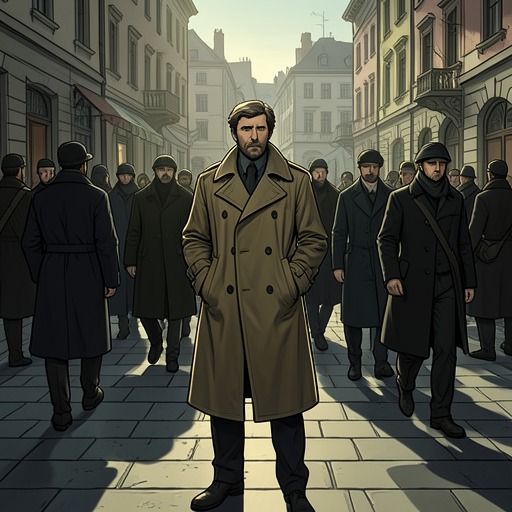
Scappaticci grew up in South Belfast in a family of Italian immigrants. His father owned a popular ice cream van bearing the family name. Scappaticci was a barrel-chested bricklayer with a handlebar moustache, and was known as Freddie or, more often, Scap. He joined the republican movement at the beginning of The Troubles and was interned at Long Kesh. These details later acquired a sharp, almost emblematic significance: the family ice cream van, an ordinary fixture of his background, would reappear in rumours about whether he could return to Belfast even after his identity as an informer was exposed.
His other name, Stakeknife, circulated for years in several spellings, including Stake Knife and Steak Knife. Each version suggested a blade driven into the heart of the IRA. By 1999, one account described the supposed agent as the crown jewel of British intelligence in Ulster. Yet even within republican circles, the name remained a rumour without a publicly identified person behind it. In March 2003, Dolours Price told a visitor to her Dublin home that she had heard of the informer of informers but had not worked out who he was. In moments of anger, she said, she had joked that it might be Gerry Adams, though she did not believe Adams was Stakeknife.
The Nutting Squad and Access to the IRA
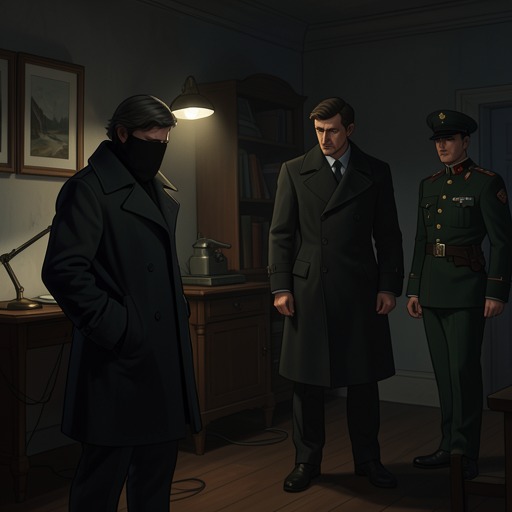
The Nutting Squad was the IRA’s dedicated internal security unit, established in the late 1970s to vet recruits and investigate suspected informers. Its members interrogated those thought to be cooperating with the British. Questioning could last hours or days and involved threats, beatings, and torture; confessions could be followed by execution. Its victims’ bodies sometimes appeared in wasteland or beside country lanes, with limbs bound and signs of torture. In this setting, Scappaticci acquired a reputation as the unit’s most formidable spy hunter.
That role gave him an extraordinary position inside the organization. The Provisional IRA had reorganized into cells in the late 1970s, limiting what one operational group could know about another. But the Nutting Squad had an organization-wide remit: it could examine personnel, weapons supplies, and attack plans. One former IRA member compared the unit to a junction box connecting the whole movement. A spy within it could therefore see beyond the boundaries that cellular organization was meant to impose. The security unit’s urgency and broad reach, intended to protect the IRA, also made it a particularly valuable point of access for British intelligence.
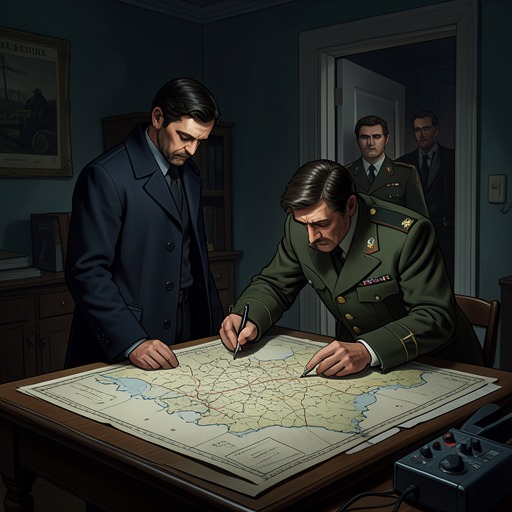
Scappaticci had reportedly offered his services to the authorities in 1978 and remained a double agent for a quarter of a century. Accounts described him as a walk-in and suggested that revenge may have played a part: he had recently been beaten by other IRA members. The precise reason he became an informant may never be known. What was clearer was the value British intelligence placed on him. His information was so highly prized that British ministers were regularly briefed on it, and his contribution advanced the careers of a generation of spymasters. A British Army commander in Northern Ireland described him as one of the Army’s most important secrets and called him a golden egg.
Exposure and the Central Paradox
The 2002 break-in at Castlereagh heightened speculation about the identity of a senior informer. Three unmasked and unarmed men entered the anti-terrorist operations centre and took sensitive intelligence files. Police warned informants that they might be compromised and relocated more than three hundred people. Although most observers concluded that the Provisional IRA had carried out the break-in, the thieves appeared to have had help from inside the building. Press speculation connected the raid to a search for an informer whose code name was reported as Steak Knife. The burglary did not uncover Scappaticci’s identity; his name was presumably not in the files taken from Castlereagh.
Just over a year later, newspapers in England and Ireland identified Stakeknife as Scappaticci and reported that he had been a paid British Army informant for decades. The revelation resolved the mystery of the name while deepening the crisis it represented. Scappaticci was not Gerry Adams, as Dolours Price had once speculated, but the man entrusted with helping the IRA find its moles. The organization had placed its own internal security in the hands of a mole, while British intelligence had secured a position inside the very apparatus designed to detect it.
Scappaticci rejected the allegations, appearing at his Belfast solicitor’s office after the press reports. His calm public denial was consistent with advice attributed to Trevor Campbell, who had warned informants never to confess because confession meant death. Before the Nutting Squad could reach him, Scappaticci vanished from Belfast and went into hiding, reportedly with help from his handlers. In republican circles, the shock was sufficiently great that some Sinn Féin leaders urged scepticism about what they called unsubstantiated allegations. Dennis Donaldson, then one of Gerry Adams’s trusted officials, told an American journalist that he could not believe the revelation. The public denial, disbelief, and sudden disappearance left the central identification in view but did not produce a full public account of the relationship between Scappaticci and his handlers.
Investigation and Accountability
In 2016, a new investigation into Stakeknife was launched under Jon Boutcher, chief constable of Bedfordshire. It was expected to involve fifty detectives for as long as five years, with a budget that might exceed thirty million pounds. Boutcher acknowledged that, given the passage of time and the nature of the crimes, truth would be difficult to reach. The scale and duration of the proposed inquiry reflected the distance between identifying an alleged agent and establishing what he and his handlers had done.
In January 2018, British police arrested Scappaticci, then seventy-two, and held him at an undisclosed location. He was questioned for several days and released without charge. At the time described, he was reportedly still in hiding under an assumed name in a witness-protection programme administered by the same government that claimed to be investigating him. The account presents prosecution as uncertain not only because of the difficulty of proving old crimes but because a full reckoning could implicate the British state. Scappaticci was said to know how far the government had countenanced or facilitated the Nutting Squad’s violence. Bringing him to trial might therefore create a risk that he would disclose what the state had sought to keep secret.
He may also have been protected by what he knew about his former IRA comrades. The possibility that he kept a secret dossier, perhaps to be released if anything happened to him, remained speculation rather than established fact. In the spring of 2017, after his father died, rumours circulated in Belfast that Scappaticci had returned for the funeral. The procession was led by the family ice cream van. If he attended, no one confronted him. The episode brought his private origins and public infamy together in a single unresolved image: a familiar family vehicle moving through a city where the former spy hunter might still have had enemies, while his whereabouts remained uncertain.
Civil actions offered another route to accountability. Families of numerous victims brought lawsuits against Scappaticci in the absence of criminal prosecution. These claims formed part of a wider turn to private litigation when the criminal justice system left victims’ families without answers. The cases did not, by themselves, settle the allegations against him or establish the full extent of state involvement. His story therefore ends not with a trial or a definitive public accounting, but with an investigation, an arrest without charge, unresolved legal claims, and the continuing possibility that the evidence needed to explain the conspiracy remained inaccessible.