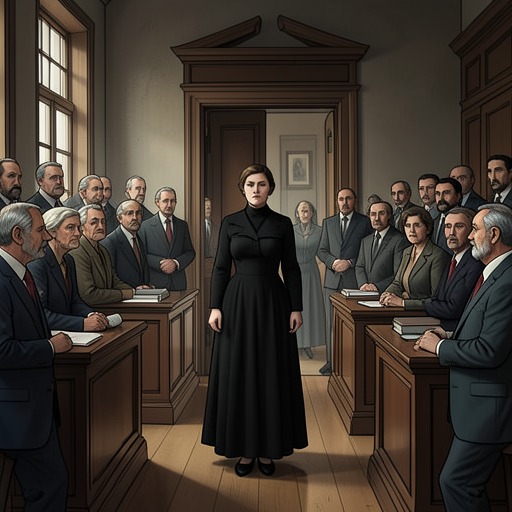
Heathrow Airport, planned return route to Dublin
Say NothingHeathrow Airport, planned return route to Dublin, was meant to complete the London bombing operation by carrying its participants out of the country before the bombs detonated. The plan depended on timing: cars were to be left at four targets, warnings issued, and the team on flights home before the explosions. When police discovered a bomb early, the airport became the point where that carefully staged departure turned into a police operation. Most of the team arrived there believing the mission remained undiscovered; several had boarded their plane before officials made them get off, and Dolours Price, Marian Price, and Hugh Feeney were detained on arrival for a later flight.
The planned escape route
The airport figured in the operation as an exit, not a target. The bombing team intended to place cars at a British Army recruiting centre in Whitehall, the British Forces Broadcasting Service on Dean Stanley Street, New Scotland Yard, and the Old Bailey. Their timers were set for 2:50 p.m. The plan called for warnings before the explosions, and for the team to be back in Ireland by then. A late-morning flight from Heathrow to Dublin was therefore part of the operational design: departure was supposed to separate the bombers from the danger and attention their attack would create.
The group did not travel as a single unit. Most members were scheduled to take a British European Airways flight due to leave at 11:20 a.m.; the Price sisters and Hugh Feeney were due on an Aer Lingus flight at 12:30 p.m. That staggered arrangement meant that the group’s escape unfolded in two stages. It also left the later travellers arriving at the airport after the earlier party should have been airborne. Dolours Price, who had led the group, had already used the assumed name Una Devlin when travelling to London, a false identity she continued to use when questioned.
The first flight is interrupted
As most of the team travelled to the airport, a BBC report announced that the first bomb had been found and defused. The bombers did not hear it. They reached Terminal 1 believing they could leave London unnoticed, proceeded to Gate 4, and presented their tickets for the flight to Dublin. Several had boarded and taken their seats when officials entered the aircraft and instructed everyone to disembark. The planned passage out of the country had thus stopped just as it seemed to be complete: the team was at the gate, but its members had not escaped the consequences of the operation.
The contrast between what the bombers knew and what the authorities knew made the airport encounter decisive. The team believed the attack was proceeding according to schedule; the police were already responding to the discovery of a bomb, and the crew had become the subject of a manhunt. Their intended anonymity depended on leaving before the bombs were found. Once that sequence failed, the airport’s ordinary procedures—tickets, gates, boarding, and officials entering a plane—became the means by which the departure was halted.
Detention and the broken timetable
Dolours Price, Marian Price, and Hugh Feeney were due to travel later, on the 12:30 Aer Lingus flight. When they entered the terminal, Special Branch officers were waiting and asked them to accompany the officers. They were taken into custody and brought to a holding area for questioning. The airport therefore marked not only the interruption of the earlier party’s flight but the capture of the operation’s leader and two other members as they arrived for their own departure.
The plan had assumed that everyone would be out of Britain before any bomb was discovered. Because that assumption had failed, the volunteers had no convincing cover story ready. Some said they had come to London looking for work; others claimed to have stayed on Belgrave Road and got drunk at a local pub. They gave false names, denied knowing one another, and answered questions about the bombs with silence. Dolours persisted with the name Una Devlin. Their explanations could not restore the timetable on which the operation depended: they were now detained in the country they had expected to leave before the attack came to light.
What the airport reveals
The escape plan was not simply an afterthought to the bombing. It was built into the operation’s timing and divided among separate flights, with the participants expected to be travelling home while the bombs remained undiscovered. Heathrow Airport, planned return route to Dublin, exposes how vulnerable that design was to an early discovery: once the first device was found, the return journey became a bottleneck rather than a way out. The earlier travellers were stopped after boarding; the later group encountered officers in the terminal.
The airport did not capture every participant. One member of the group, described as an eleventh bomber, had slipped away before the others were arrested and gone to ground in London. The account says that this person was never identified or captured. That exception sharpens the distinction between the airport as the site where most of the team’s escape failed and the wider manhunt that followed. The operation’s intended ending—an unnoticed return to Dublin—gave way to a divided outcome: arrests at the airport, and one participant still outside the authorities’ grasp.