Helen McConville
Say NothingHelen McConville’s life was shaped by two linked demands: caring for her younger siblings after the abduction of her mother, Jean McConville, and refusing to let the family’s loss disappear into silence. Still a teenager when Jean vanished from Divis Flats, Helen became the practical centre of a family left waiting for its mother to come home. As an adult, she brought that private expectation into public view, challenging the Irish Republican Army’s account of Jean’s fate and continuing to seek answers when criminal proceedings offered little prospect of accountability.
Identity and Family Background
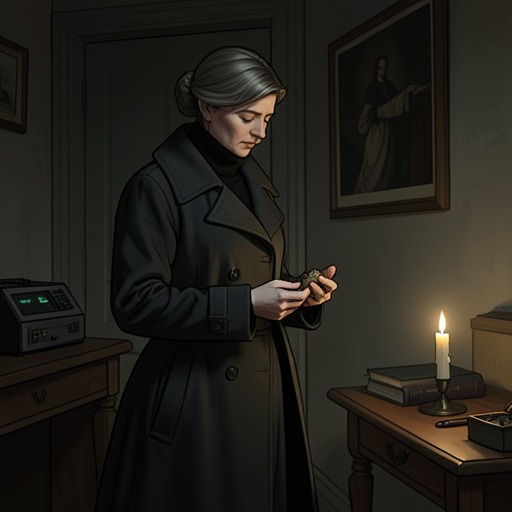
Helen was one of ten surviving children of Jean and Arthur McConville. She was fifteen in December 1972, when the family had recently moved to a slightly larger flat in Divis Flats, West Belfast. The household had already endured Arthur’s death after a gruelling illness, leaving Jean widowed and responsible for the children on a meagre pension. Helen was old enough to be sent out for food and to help manage the household, but she was still a child when those responsibilities changed in an instant.
On the evening Jean was taken, the cooker in the new flat was not connected. Jean sent Helen to a local takeaway for fish and chips while the family waited at home. When Helen returned, the household had been invaded by a group of roughly eight to twelve people, men and women, some masked with balaclavas or stockings and at least one carrying a gun. The account places Helen away from the flat during the abduction itself: an ordinary errand for dinner had separated her from the moment that would define the family’s future.
Abduction and the First Aftermath
Jean had already survived an earlier abduction. After going to bingo, she had been tricked into entering a car by a false report that one of her children had been hit by a vehicle. She was hooded, taken to a derelict building, tied to a chair, beaten and interrogated, then found by soldiers wandering the streets. Helen raced to a nearby barracks after a British soldier came to the family flat shortly after two in the morning. There she found her mother bedraggled and without shoes, her hair disordered and her face bruised. Jean would not identify her abductors and dismissed their questions as nonsense; that night, unable to sleep, she smoked one cigarette after another and told Helen that she missed Arthur.
The following evening, Jean again sent Helen to fetch fish and chips. As Helen left, her mother warned her not to stop for a secret smoke. Helen walked through the passages of Divis to the takeaway and, on her return, noticed people loitering on the balconies outside the flats, an unusual sight in December. She ran toward home. The children later recalled that Jean had drawn a bath to soothe the pain from the beating, and that she was in the flat when the intruders arrived. Helen’s errand placed her just outside the household at the moment the family was taken from its ordinary routine into a lasting crisis.
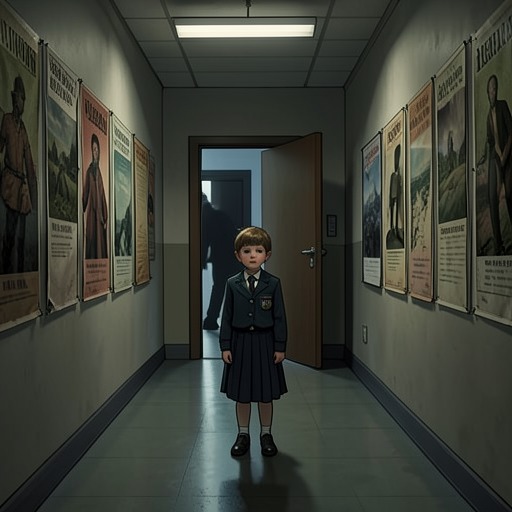
After Jean disappeared, Helen and the younger children remained in the flat, convinced their mother would return. When a social worker recommended that the children be taken into care, they refused: they needed to be at home when Jean came back. The worker described Helen as a capable girl, but the praise also registered the burden placed on a fifteen-year-old. The children lacked adequate supervision and money; eventually, they were hungry, and Michael was caught stealing food. The household’s isolation was compounded by neighbours’ complaints and the absence of meaningful local support.
Separation and Adulthood
Eventually, social welfare authorities arrived to take the younger children into care. Helen loaded her siblings into the cars and reassured them that they were going away only until their mother returned. As the children left, neighbours watched silently from the concrete balconies. Helen’s parting anger expressed the abandonment the family had experienced from the people around them. She herself was too old to be kept in care against her will but too young to become her siblings’ legal guardian. She stayed with her brother Archie or with friends, and worked first for a company making funeral shrouds and later as a waitress.
Helen had briefly met Seamus McKendry while they were both connected with Nazareth Lodge: he was an apprentice carpenter there, and she was among the children brought into care. They lost touch, met again two years later while she was waitressing, and fell in love. They married when Helen was eighteen. Even with a stable marriage and children of her own, the disappearance remained present in her decisions. When the family had an opportunity to move to Australia, Helen felt unable to go because she still held to the possibility that Jean might come back.
In 1992, the death of Helen’s oldest sister, Anne, renewed her determination to find out what had happened to their mother. Looking into Anne’s coffin, Helen was struck by her resemblance to Jean and pledged to pursue the truth. Seamus began asking around Belfast. When he mentioned Jean’s name in a bar known as an Irish Republican Army hangout, the room went quiet; a man passed him a betting slip bearing a warning to leave. The exchange showed how difficult it remained for the family to ask questions in the very community where the disappearance had occurred.
Public Challenge and the Search for Answers
In 1995, Helen spoke at a press conference at Linen Hall Library in Belfast, where an organisation had been formed to address the fate of people abducted and murdered during the Troubles whose bodies had not been found. She described the group that had entered the family home and taken Jean, and asked how the women involved could look at their own children without feeling guilt. By then Helen was thirty-seven, nearly the age her mother had been when she disappeared. Her testimony made the family’s loss public while insisting that the responsibility belonged to people who had acted, not to an inexplicable mystery.
Helen and Seamus sought answers from the Sinn Féin leadership, asking for an internal investigation into Jean’s disappearance. Seamus also confronted Gerry Adams after encountering him at a supermarket, asking whether Adams was trying to make a fool of Helen. Later that summer, Adams issued a statement calling on anyone with information about the missing people to contact their families. The appeal did not resolve the McConvilles’ questions, but it marked a public response to a campaign that had increasingly addressed Adams and the Irish Republican Army directly.
The dispute over Jean’s reputation intensified when the Irish Republican Army acknowledged responsibility for her disappearance and, in a 1999 statement, said she had admitted being a British Army informer. Helen and her siblings rejected the accusation. They maintained that Jean had been a Protestant widow living in a nationalist Catholic neighbourhood amid rising sectarian tension, and recalled an episode in which she had helped a wounded British soldier. Helen argued that, under torture, her mother might have admitted anything. The family’s insistence on Jean’s vulnerability challenged a story that cast her as an informer and helped explain the stigma the children endured when people treated them as complicit or unwelcome.
When a 2010 newspaper report described Dolours Price’s involvement in the operation, Helen demanded the arrest of both Price and Adams. She allowed that they might not have fired the fatal shot but held them as guilty as those who had. The demand continued her effort to distinguish direct physical violence from responsibility for an operation and its consequences. It also showed how testimony about the past could reopen a case the family had spent decades trying to understand.
Continuing Pursuit of Justice
After prosecutors said they would not bring charges against Gerry Adams, Helen consulted a London law firm to explore a civil suit against him. The possibility of a civil case extended the family’s pursuit beyond the criminal process, whose limits had become increasingly stark. Her brother Michael said the family would continue to the bitter end after more than forty years of fighting for justice. Helen’s course—from the teenager sent out for dinner, to the young woman trying to hold her siblings together, to a public advocate demanding answers—makes the disappearance not only an unresolved crime but a continuing family struggle over truth, reputation and accountability.