Hugh Feeney
Say NothingHugh Feeney was a member of the IRA’s Unknowns and one of the leaders of the team assembled for the 1973 London bombing operation. Still in his early twenties, he was entrusted with the operation’s money, explosives checks, and a place in its command structure. He travelled with Dolours Price and Marian Price, was arrested with them at Heathrow, and later joined them in a hunger strike that lasted 206 days. His life in the book is marked by the persistence of that shared history: at Dolours Price’s funeral, the former co-defendant and fellow hunger striker stood as witness to how far their lives had diverged.
Identity and Role
Feeney was described as erudite, bespectacled, and in his early twenties when he gathered with volunteers at a call house in the Lower Falls. He was Price’s friend and fellow member of the Unknowns. The recruits who remained after the larger group had been warned of the operation’s danger numbered about ten. Feeney was assigned as quartermaster, responsible for the operation’s money, and carried a thick roll of five-pound notes. The detail makes his role concrete: he was not simply among the volunteers but entrusted with the practical resources on which the mission depended.
As head of the Unknowns, Wee Pat wanted capable people directing the operation and selected Price to lead it. She became the officer commanding the group, with Feeney and Marian Price as her two lieutenants. Since none of the recruits had experience operating behind enemy lines, Wee Pat arranged intensive training across the border in explosives and timers. Feeney’s responsibilities therefore sat within a small command team whose members had to learn unfamiliar technical skills as well as maintain the secrecy of the mission.
The London Operation
On 5 March, Feeney led the first team across the Irish Sea, driving the Ford Cortina and Vauxhall Viva onto the Dublin–Liverpool ferry. A second team, led by Marian Price, travelled the following day with two other cars. When customs officials held up the Hillman Hunter over its number plate, the team feared that the authorities might have been alerted. They sent word back to Ireland not to dispatch the final two cars. The plan had envisaged six vehicles; after the scare, only four continued to England.
Once the group was in London, the cars were left in public garages with their bombs concealed beneath the rear seats. Price instructed the team to behave as strangers if they encountered one another and warned against drinking. Feeney’s actions on the eve of the operation show both the practical demands and the strange ordinariness surrounding it: he arrived late to the theatre because he had gone to make one final check on the car bombs. He then joined Price and Marian Price to see Brian Friel’s The Freedom of the City at the Royal Court. The play’s subject—a civil-rights protest distorted into an apparent terrorist occupation, ending in the deaths of the protesters—stood in stark contrast to the operation the group was preparing to carry out. For Feeney, however, the possibility that there might not be another chance to see good theatre made the outing seem worthwhile.
Arrest and Conviction
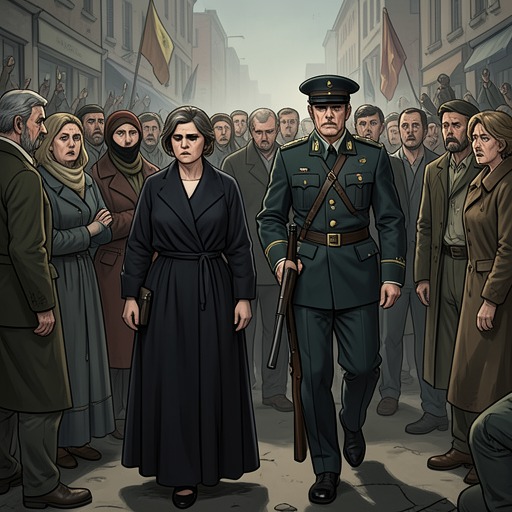
The operation’s planned escape depended on the bombers leaving Britain before the devices were discovered. That timing failed. Most of the team were already travelling to Heathrow when news broke of the first bomb; they did not hear the report and reached the airport believing the mission had proceeded as intended. Feeney, Dolours Price, and Marian Price were due to take a later Aer Lingus flight. Special Branch officers were waiting when they arrived and took the three into custody for questioning. The volunteers had prepared no convincing cover stories, used false names, and denied knowing one another; when asked about the bombs, they remained silent.
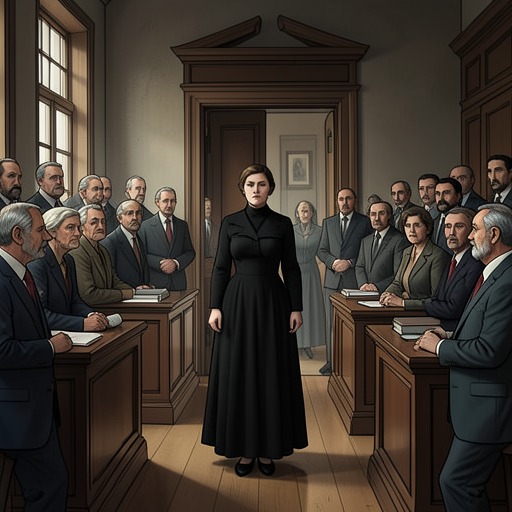
At the trial at Winchester Castle, Feeney was convicted with the other remaining defendants. The judge imposed the maximum sentence, with Feeney, Dolours Price, and Marian Price receiving thirty years because of their leadership roles. He subsequently reduced their sentences to twenty years. The proceedings had made public the hierarchy within the operation: Feeney’s sentence was more severe than those imposed on five other bombers because the court regarded him as part of its leadership. The book does not describe a separate statement or gesture by Feeney during sentencing, but his place among the leaders was reflected in the punishment he received.
Hunger Strike and Transfer
After conviction, Feeney and the Price sisters were held in Brixton Prison. Dolours Price later recalled the close supervision there and the sisters’ confinement as the only women in an overwhelmingly male institution. They were already refusing food, taking only water, and intended to continue until death if necessary. Feeney, held in a different prison, joined them, as did Gerry Kelly. Their demand was that they be transferred to prisons in Northern Ireland and treated as political prisoners rather than ordinary criminals.
The strike connected Feeney’s prison protest to a long tradition of Irish resistance through fasting, while also making the immediate stakes unmistakable: the four prisoners were prepared to risk death to secure transfer and recognition of their political status. On 8 June, after 206 days, Feeney, the Price sisters, and Kelly issued a joint statement ending the strike. They said that Roy Jenkins had assured them they would be returned to Northern Ireland and insisted that the protest had never been intended as a suicide mission, but as a way of obtaining what they considered minimal demands. The assurance did not mean an immediate return: Dolours and Marian Price were moved first to Durham Prison and later to Armagh. The account does not give Feeney’s subsequent prison movements, so his trajectory cannot be made to mirror theirs in detail; his participation in the strike and joint statement nevertheless places him at the centre of the same campaign.
Later Life and Remembrance
Feeney appears again decades later at Dolours Price’s funeral. Monsignor Raymond Murray, who had known the sisters in Armagh, recalled the lifelong toll of the hunger strike. Feeney pointed to the reversal embodied in the funeral: forty years earlier, he and Gerry Kelly had been on hunger strike with Dolours and Marian Price; now Dolours was being buried, Marian was back in prison, and Kelly had entered politics. The contrast gives his later appearance its force. Their shared protest had not led them into a shared future.
The book also records Feeney’s quiet dismay on learning that Pat McClure, a man he had revered, might have worked as a prison guard. McClure had died in 1986 after five years as a guard at a high-security prison. Feeney’s reaction shows how the past remained unsettled even among former comrades: the identity he had attached to a revered figure collided with the possibility that McClure had become a prison officer. In the book’s acknowledgments, Feeney is also named among those who generously shared their time and recollections. He is thus present both as a participant in the events and as a later witness whose memories helped make their history tellable.