Jim McConville
Say NothingJim McConville was the youngest of Jean McConville’s children, a twin of Billy, and six years old when his mother was abducted. Her disappearance left him and his siblings to endure deprivation, separation, and years of uncertainty about what had happened to her. As an adult, Jim was repeatedly in prison and became one of the family’s outspoken defenders of Jean’s name. At the vigil and search for her remains, his caution about confronting the Irish Republican Army stood beside his anger at the stigma attached to his mother; his appeal for forgiveness met a sharp refusal from Billy, and the effort to recover Jean brought the siblings’ unresolved differences into the open.
Childhood After Jean’s Disappearance
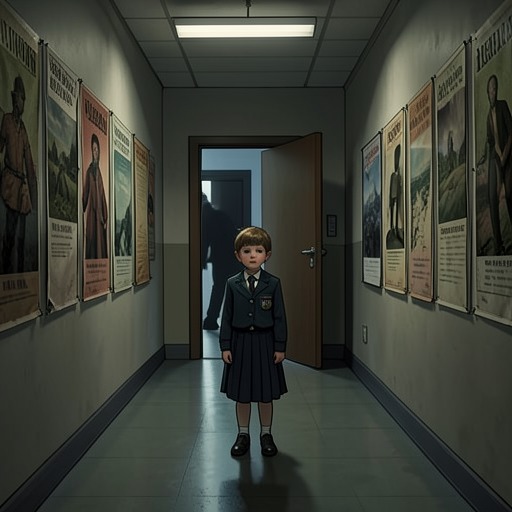
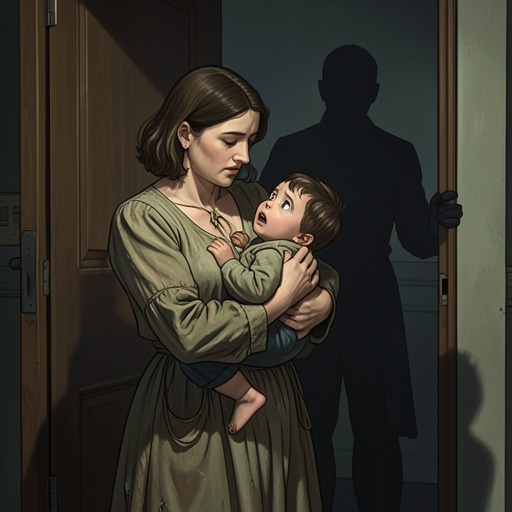
When authorities asked the children about their parents, Jim explained that his father was dead and that the Irish Republican Army had taken his mother away. The bluntness of the account belonged to a childhood in which Jean’s absence was not an abstract mystery: the children expected her to return and tried to remain together at home. Jim and his siblings resisted being taken into care, but welfare authorities eventually arrived at Divis Flats. Helen loaded the younger children into two cars, telling them they were going away only until their mother came back. Jim was among the children brought to Nazareth Lodge with Helen, Michael, Tucker, Susan, and Billy.
The separation did not bring security. Jean had vanished, their father had died before that, and the children had spent months without adequate supervision. Nazareth Lodge was a harsh institution, where beatings and severe punishment were routine. The text places Jim’s later life against this rupture without treating it as a simple explanation for every subsequent difficulty. It does establish the conditions surrounding his childhood: a family that had tried to hold together was split up, and the young children entered institutional care while still waiting for their mother.
Adulthood and the Search for Answers
Jim’s adult life included repeated contact with the criminal justice system. In the 1980s, he was detained in a young offenders’ centre; he later served a prison sentence in England for armed robbery. The account also describes him as having been in and out of prison by the time the family gathered in the search for Jean. These details sit within a broader family aftermath: several siblings struggled to find work, and some grappled with drug or alcohol addiction. Jim’s account is not presented as an isolated criminal biography, but as one life shaped by the long consequences of loss and by the family’s difficult passage into adulthood.
The siblings’ reunion during the search for their mother was uneasy as well as necessary. They had kept in sporadic contact after being separated, and some worried that they no longer knew how to relate to one another. Their shared resemblance to Jean could not erase the distance between them. They spoke of “my mother,” not “our mother,” as if each had been left alone with a private bereavement. Jim, who had been six when Jean was taken, joined his siblings in seeking her remains and in challenging the suggestion that she had been an informer.
That accusation had followed the family for years. In 1999, the Irish Republican Army acknowledged responsibility for Jean’s disappearance while stating that she had admitted being a British Army informer. Jim described the personal cost of the allegation: ‘I fought a lot of times with people who called my mother a tout,’ he said, recalling that people would not look at the family and that they were left sitting alone in pubs. The claim made the children’s grief public and stigmatized them in their own community. Jim’s testimony shows that the dispute was not only over the circumstances of Jean’s death, but also over whether her children could defend her without themselves being treated as suspect.
Anger, Caution, and Forgiveness
Jim and his siblings rejected the informer label, but their accounts of what had happened were not identical. Archie wondered whether the Irish Republican Army might have mistaken Jean for another suspected agent. Michael dismissed the idea that his mother had been a spy, describing her as an overworked and fragile mother of ten. Helen argued that torture could have made Jean admit anything. Jim’s own emphasis was the lived consequence of the accusation: ostracism that continued long after the children had lost their mother.
At the search, the siblings also differed over how openly to confront those responsible. Helen wanted Jean buried at Milltown Cemetery with a headstone naming her as kidnapped and murdered by the Irish Republican Army. Jim was more wary. He said that the family lived in republican areas and did not want trouble; he also said that those who had killed Jean would suffer for the rest of their lives and that it was time to forgive. This was not a denial of the crime: the same statement acknowledges who had done it. Rather, his appeal placed the danger of renewed antagonism beside the family’s demand for recognition.
Billy answered with a refusal to forgive. The exchange made the search another point of strain between siblings who had already been separated in childhood and had gathered in the hope of recovering their mother. Michael found the quarrel painful and said he had hoped the search would bring them closer, but that it was tearing them further apart. Jim’s position therefore matters not as a resolution of the family’s grief, but as one side of a conflict over how to live with it: he urged forgiveness while continuing to identify the perpetrators and to resist the accusation against Jean.
Narrative Significance
Jim’s story links the immediate aftermath of Jean’s abduction to the later struggle over her reputation and remains. As a child, he supplied the stark account that she had been taken; as an adult, he described the social isolation produced by calling her an informer. At the search, the family’s demand to find and bury Jean did not dissolve its internal divisions. Jim’s caution and appeal for forgiveness stood in tension with Helen’s wish for a public accusation on the headstone and Billy’s declaration that he would never forgive. Through that contrast, the account presents the disappearance as an injury that persisted within the family as well as between the family and the community: the siblings could agree that their mother had been taken and still disagree over what justice, safety, and remembrance required.