Kircubbin
Say NothingKircubbin was the rural setting of the De La Salle Boys’ Home, where the McConville boys were sent after their mother’s disappearance. The move took them out of Belfast, but not to safety: the institution’s broad grounds stood alongside a culture of abuse that shaped the brothers’ experiences there.
Setting and transfer
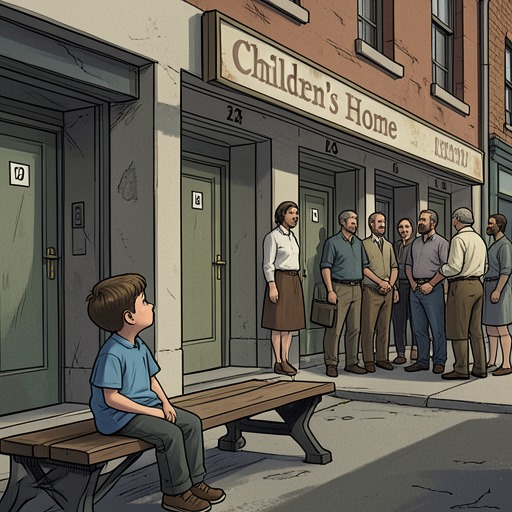
In March 1973, after Michael and Tucker McConville appeared in a Belfast court on a shoplifting charge, authorities decided to move them from Nazareth Lodge to the De La Salle Boys’ Home, near the village of Kircubbin in County Down, twenty-two miles from Belfast. The converted Victorian mansion and newer cottages occupied 250 acres. A school, swimming pool, tennis courts, football pitch and billiard table gave the grounds an openness sharply unlike the brick-and-concrete confines of the city. For Michael, however, the distance felt immense: Kircubbin was a place from which he and his brother were separated from the Belfast they still regarded as home.
Abuse and daily life
The distance from Belfast did not protect the boys from violence. A later government investigation found that physical punishment was entrenched at Kircubbin: monks and lay staff beat children with fists, strapped them with belts and struck their knuckles with a thin wooden cane. Older boys also bullied Michael, then eleven, and Tucker, nine. Their clothing, bought in bulk by the Christian Brothers, often did not fit: shirtsleeves ended above the elbows, while oversized trousers had to be held up with belts. The children were made to work, and staff sometimes hired them out to neighbouring farms to pick potatoes.
Abuse extended into the dormitories. During evening television, monks in long robes summoned some children to sit on their laps. Michael was not sexually abused, but he watched from beneath the covers as adults entered the dormitory with a torch and took sleeping boys from their beds. The children had little recourse: the behaviour was silently tolerated, and, one former resident later explained, the Christian Brothers were complicit together.
Michael and Tucker repeatedly ran away because they felt they should be back in Belfast in case their mother returned. Each time they were brought back, they were beaten. Eventually staff took away their shoes, hoping that being barefoot would slow them if they reached the country road and tried to hitch a ride home. Despite what was happening at Kircubbin, the authorities later transferred the seven-year-old twins, Billy and Jim, from Nazareth Lodge. They became the youngest residents; older children assaulted them, and Billy was sexually abused by adults. The De La Salle Brothers later acknowledged widespread sexual abuse at Kircubbin during this period. Some of the McConville children were left so fearful by their experiences in Catholic institutions that even as adults the sight of a priest could cause anxiety.
Institutional reach and recognition
Whether the authorities understood the conditions at Kircubbin remains uncertain; whatever they knew, it did not prevent them from sending more children there. When the seven-year-old twins Billy and Jim were transferred from Nazareth Lodge, their car travelled down the coast of Strangford Lough toward the home, and the boys sat apprehensively in the back. Their experience at Kircubbin was part of a wider institutional history: the De La Salle Brothers later admitted widespread sexual abuse at the home, while the Sisters of Nazareth acknowledged a pattern of physical abuse at Nazareth Lodge. Kircubbin’s remoteness thus did not mark an isolated failure; children moved between institutions where abuse persisted and adult protection could not be relied upon.
The meaning of the journey back
Kircubbin entered a longer pattern of forced separation. Michael’s attempts to return to West Belfast had begun as soon as he was removed from the family flat at Divis Flats; when a welfare official suggested that his mother had abandoned the children, he angrily rejected the claim. His insistence gives the boys’ later escapes from Kircubbin a meaning beyond flight from the home: they were trying to remain connected to the possibility that their mother might return.