Linen Hall Library
Say NothingLinen Hall Library is a historic building on Donegall Square in central Belfast whose role in this account is civic rather than ceremonial: it provides a public setting for testimony about the people who disappeared during The Troubles. At a press conference held there, Helen McConville spoke about her mother, Jean McConville, making the family’s long-standing grief part of a wider effort to confront unresolved killings and disappearances.
Setting and Civic Role
The library occupies a handsome old building on Donegall Square. The book places it within central Belfast, where a new organisation gathered to address the fate of people abducted and murdered during The Troubles whose bodies had not been found. Participants wore sky-blue ribbons on their lapels. In this setting, the library serves as the venue for a public press conference, bringing an issue often surrounded by silence into a visible civic space.
A Platform for the Families of the Disappeared
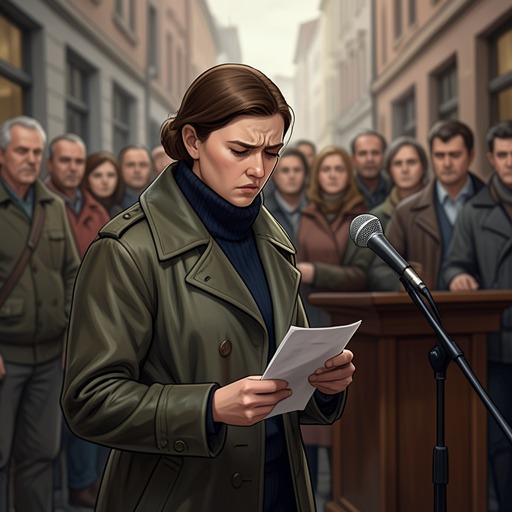
Helen McConville was one of the speakers. She recalled that four women and eight men had entered her family home in 1972 and taken her mother away, after which the family never saw Jean again. Helen directly addressed the women involved, asking how they could face their own children without feeling guilt for what they had done to her mother. The testimony made the disappearance more than a matter of an absent body: it named the loss as an act that continued to shape the lives of those left behind.
Helen was thirty-seven, nearly the age Jean had been when she disappeared, and had a family of her own. Yet the McConvilles had never managed to function as a normal family after the abduction. Helen had considered moving to Australia with her husband, Seamus McKendry, and their children, but remained because she could not let go of the possibility that her mother might return. The press conference at the library thus brought into public view a hope that had persisted within the family for years.
Memory and the Unresolved Past
The library scene gains significance from the book’s wider account of post-conflict Belfast. The Good Friday Agreement established power-sharing, but the conflict ended without a clear victor and without a formal process for deciding how The Troubles should be understood or commemorated. The press conference offered a public act of accounting amid that unresolved history: family testimony challenged the distance that political settlement could place between the present and past violence.
The book also describes how memory remained contested, with Gerry Adams refusing to acknowledge that he had been in the IRA and Sinn Féin maintaining a powerful narrative of republican armed struggle. Those later conflicts over disclosure and interpretation are not events at the library, but they illuminate what was at stake in Helen’s appearance there. Linen Hall Library becomes a point of contact between private remembrance and public speech, where the search for the disappeared is made visible without resolving the larger struggle over how Belfast remembers.