Mobile Reconnaissance Force
Say NothingThe Mobile Reconnaissance Force was a secretive British Army unit in Belfast that conducted covert surveillance and assassinations while seeking to make its violence appear to come from paramilitary groups. Its significance lay not only in what it did, but in the confusion it cultivated: intelligence work, lethal force, and the public image of the army as a neutral authority were made to serve the same counterinsurgency strategy.
Identity and Purpose
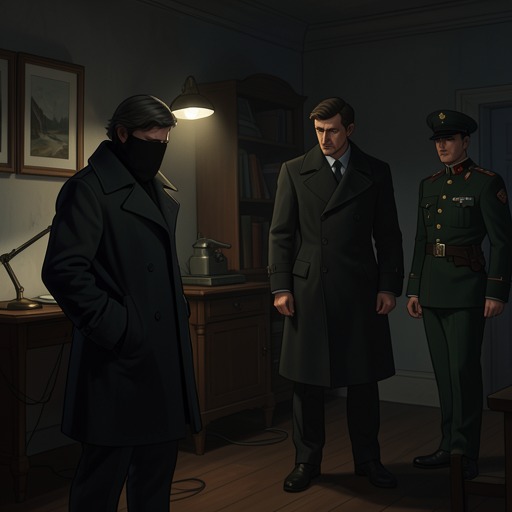
The unit was so clandestine that even its name was uncertain. The book notes several possible expansions of MRF: Mobile Reconnaissance Force, Military Reconnaissance Force, and Military Reaction Force. It comprised roughly thirty specially selected operators—men and women handpicked from across the British Army. Some soldiers of Irish origin were recruited specifically because they could blend into local communities. Within the army, members were known as the “Bomb Squad,” reflecting one responsibility: watching places where paramilitaries were expected to plant bombs.
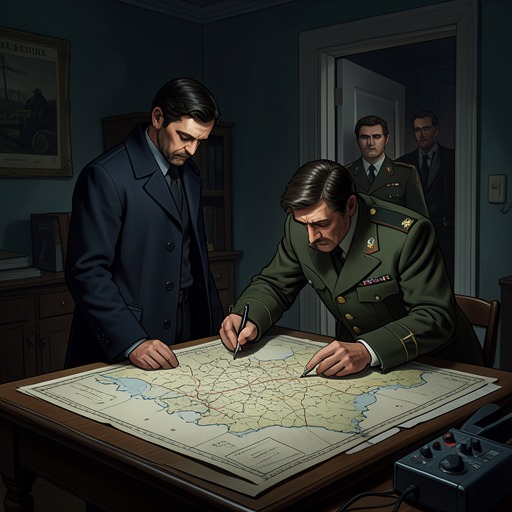
The unit is presented as a concrete application of Frank Kitson’s colonial counterinsurgency ideas in the Troubles. In a December 1971 memorandum titled “Future Developments in Belfast,” Kitson identified the development of the MRF as a critical means of taking the fight to the Irish Republican Army. The force was thus not simply an intelligence-gathering experiment: its work formed part of a deliberate campaign against republican organizations and their standing in the communities where they operated.
Covert Surveillance and Disguise
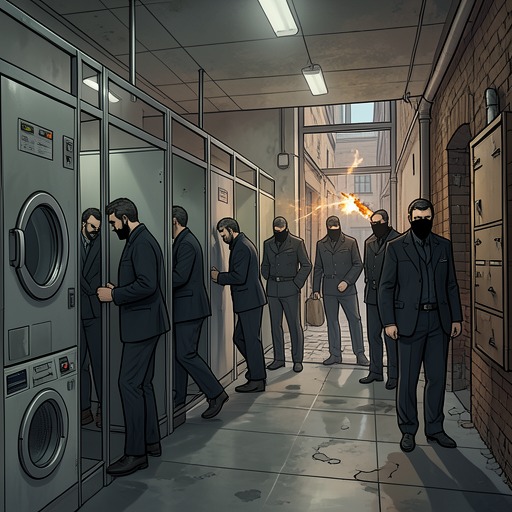
MRF members drove through republican districts in plain clothes, but their surveillance did not stop at watching from vehicles. They entered the streets and presented themselves as ordinary workers or residents: some posed as road sweepers or dustmen, while others mingled with vagrants. A woman working for the force went door to door selling cosmetics while gathering information. These roles turned everyday encounters into opportunities for intelligence collection.
The unit also established hidden observation posts in buildings damaged by fire or rioting. In one method described in the book, an operator concealed inside a shop or home could look into the neighbourhood through a single brick removed from a wall that had been sealed up. The small opening captures the force’s broader method: to observe from within a community while concealing both the observer and the purpose of the observation.
Assassinations and False Attribution
The MRF also carried out killings. Plain-clothes teams travelled in an unmarked Ford Cortina with a Sterling sub-machine gun hidden beneath the seat. Concealment mattered even when they passed army positions: one former member explained that colleagues who spotted them armed might mistake them for enemies and shoot them. The unit’s disguise therefore exposed its operators to danger from the forces they belonged to as well as hiding them from their intended targets.
The teams used weapons associated with paramilitary groups so that ballistic evidence could point away from the army and toward the Irish Republican Army or loyalist killers. A former MRF member recalled the purpose as “We wanted to cause confusion,” adding that false attribution could weaken paramilitaries’ standing in their communities while helping preserve the army’s image as a law-abiding, neutral referee. In cases where an attempted assassination instead killed an unaffiliated civilian, that strategy could also leave families with a false account of who was responsible.
Jean Smyth-Campbell and the Afterlife of Secrecy
The book connects the MRF’s operations to the death of Jean Smyth-Campbell, a twenty-four-year-old woman shot one summer night in 1972. She was sitting in the passenger seat of a car at a bus terminal on the Glen Road when a bullet passed through the window and struck her head. Police said that no security forces were involved and suggested a possible connection to political organizations in the area. Her family came to believe that the Irish Republican Army had killed her. It was four decades before they learned that she was almost certainly killed by the MRF.
The long gap between the official account, the family’s understanding, and the later attribution shows the consequences of an operation built around concealment and misdirection. The MRF’s methods were intended to blur responsibility as well as gather intelligence or eliminate targets. In this account, the force stands as a particularly stark instance of counterinsurgency in which disguises and planted traces made the army’s actions harder to distinguish from the violence it claimed to police.