Nazareth Lodge
Say NothingNazareth Lodge was a four-storey redbrick children’s home in Belfast where several of Jean McConville’s children were placed after their mother disappeared. For them, the institution was not simply a new address: it replaced the family home they had tried to keep open in the hope that Jean would return, and exposed children already grieving the death of their father to a harsh regime of institutional care. The account distinguishes this period at Nazareth Lodge, where physical abuse was acknowledged, from the later, more extensive abuse described at the De La Salle Boys’ Home.
Setting and Transfer into Care
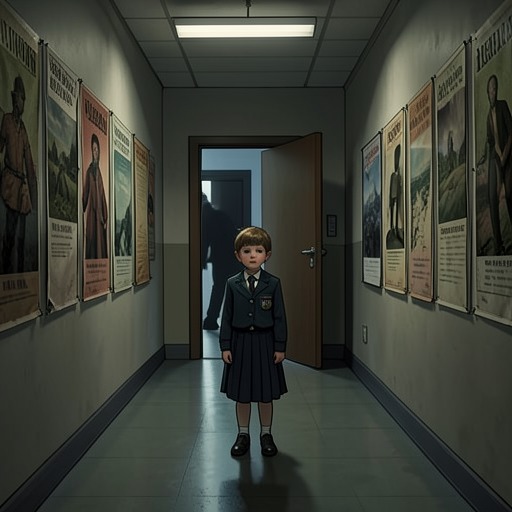
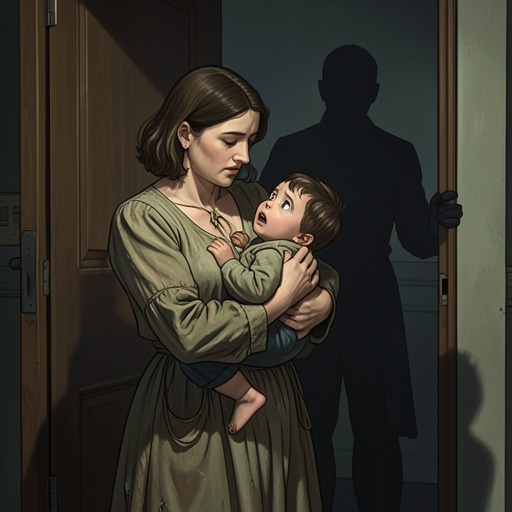
After Jean McConville’s disappearance, the children stayed together at their home in Divis Flats for weeks, reluctant to leave in case she came back. Social welfare authorities eventually intervened. Helen McConville helped her younger siblings into two cars, telling them they were going away only until their mother returned. Neighbours watched from the concrete balconies as the children left. The departure ended their attempt to preserve the household as a family, though it did not resolve the uncertainty that had kept them there.
The placement sequence was more complicated than a direct move from Divis Flats to Nazareth Lodge: the account notes that the children were initially taken to another home before being placed at Nazareth Lodge, condensing those arrangements. Helen, Michael McConville, Tucker McConville, Susan, Billy McConville and Jim McConville were eventually brought to South Belfast and up a long, curving drive to the imposing redbrick building. The children did not all enter care together or remain in the same place. Some siblings stayed elsewhere, while this group’s arrival at Nazareth Lodge began a period of separation from one another as well as from their former home.
Life inside Nazareth Lodge
The contrast between the McConville children’s previous family life and the institution was severe. Many residents had been wards of the state since infancy and appeared accustomed to institutional routines. The McConville children, by contrast, had grown up at home and had spent several months living without adult supervision after their mother’s disappearance. Their father had died before Jean was taken, so the move came after the loss of both parents and the breakdown of their household.
Nazareth Lodge was run by the Sisters of Nazareth. The account describes the nuns as stern and reports that beatings and harsh punishment were routine, an environment one former resident likened to something out of Dickens. The Sisters of Nazareth later acknowledged a pattern of physical abuse at the home. This context matters to the children’s next movements: Nazareth Lodge was one stage in a chain of state placements, not a secure substitute for the home they had lost.
Michael McConville responded to being taken from Divis Flats by repeatedly trying to get back to West Belfast. Restless, streetwise and angry, he became adept at slipping away. When a welfare official suggested that Jean had abandoned her children, Michael rejected the claim, insisting that it was a lie. His efforts to return were tied to the possibility, however uncertain, that his mother might reappear; removal from Belfast did not make that expectation disappear.
Departures and the Wider Pattern of Placement
In March 1973, Michael and Tucker were summoned to court in Belfast on a shoplifting charge. A decision was then made to move them out of Nazareth Lodge and away from Belfast to the De La Salle Boys’ Home near Kircubbin. This transfer marks a change of institution and setting, rather than a continuation of life at Nazareth Lodge: the boys’ subsequent experiences of repeated running away, punishment and abuse belong to the account of Kircubbin. Billy and Jim were also later reassigned from Nazareth Lodge to that home. Their transfer extended the siblings’ dispersal and placed the younger boys in the same institution as Michael and Tucker.
Helen’s path diverged. Too old to be kept in care against her will but still too young to become her siblings’ legal guardian, she left Nazareth Lodge and stayed with Archie McConville or friends. She worked making funeral shrouds and as a waitress. During her time at Nazareth Lodge she had briefly met Seamus McKendry, then an apprentice carpenter working at the home. They lost touch, encountered each other again two years later while Helen was waitressing, fell in love, and married when she was eighteen. The meeting at the home thus remained part of a life that otherwise moved away from institutional care and from the hope of restoring the original family household.
Significance in the McConville Story
Nazareth Lodge occupies a specific place in the family’s story: it was both a response by welfare authorities to the children’s abandonment of their home and a new source of hardship. The move removed them from the place where they had waited for Jean, but the evidence does not present the institution as a stable or protective family replacement. Instead, the siblings were divided among different circumstances, and several were transferred onward to other institutions.
The narrative’s treatment of Nazareth Lodge also keeps distinct forms of harm in view. It records routine physical punishment at the home and the later acknowledgment of that pattern by the Sisters of Nazareth; it describes sexual abuse and other violence at Kircubbin as events in the boys’ subsequent placement, not as incidents at Nazareth Lodge. That distinction makes the institution’s role clearer: Nazareth was an early stage in a disrupted passage through care, while the later transfers brought further dangers. Against this institutional sequence, Helen’s brief encounter with Seamus McKendry stands out as a personal connection formed within the home and renewed after she had left it.