Northern Ireland peace process
Say NothingThe Northern Ireland peace process was the gradual, contested shift from conflict to political negotiation, culminating in the Good Friday Agreement. It brought together republican and nonviolent nationalist politics with British and Irish government diplomacy, but it did not simply resolve the conflict: the settlement left unresolved questions of past violence, justice and memory that continued to shape public life.
From civil-rights protest to political change
The process emerged from a conflict rooted in the unequal political and economic position of Catholics in Northern Ireland. On 1 January 1969, student protesters set out from Belfast for Derry to challenge discrimination in jobs, housing and political power. Catholics were a minority within Northern Ireland, and no Catholic had held executive office in its devolved government at Stormont during the previous half-century. Emigration further reflected the imbalance: Catholics often left for work, and their population remained nearly static despite a birth rate roughly twice that of Protestants.
The marchers hoped peaceful protest might redraw political divisions, making the contest one between young and old rather than Catholics and Protestants, or republicans and loyalists. But the violence at Burntollet Bridge changed the outlook of participants including Dolours Price. She concluded that marching would not persuade those committed to opposing change, and in 1971 joined the IRA. Her trajectory illustrates a wider turn in which exclusion, political frustration and violence helped shift some activists from civil-rights protest into armed struggle. That shift did not settle the question of how change could be achieved; it made the relationship between violence and politics increasingly central.
The political opening later associated with the peace process was shaped in part by events inside the prisons. When Bobby Sands began a hunger strike in 1981, the death of nationalist MP Frank Maguire created a by-election opportunity. Republicans put Sands forward as a candidate while he was in prison. The decision marked a departure from the tradition of abstentionism, which had treated parliamentary participation as a danger to revolutionary commitment. Sands’s electoral success demonstrated the political force that could be generated through an election, even as the hunger strike and his death kept the prisoners’ struggle at the centre of public attention.
Secret contacts and the turn to dialogue
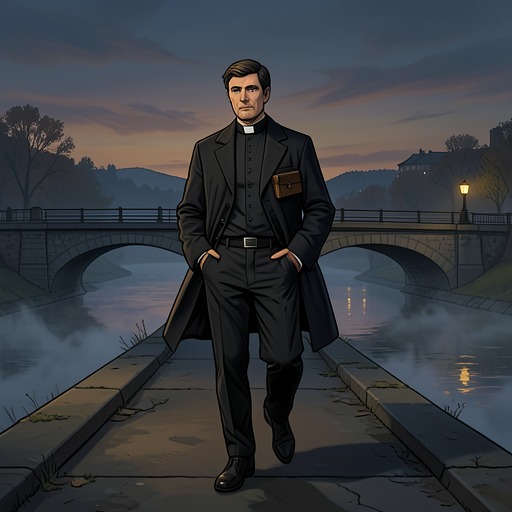
Father Alec Reid worked to persuade people across the sectarian divide to reject violence. He came to believe that ending the IRA campaign was essential to ending the conflict, and found Gerry Adams receptive to an initial appeal. Adams regarded the Church as a possible convener because of its standing and communications with relevant parties. Reid’s role was important, though Brendan Hughes later disputed the image of Adams as a leader simply guided by the priest, recalling instead that Adams was handling Reid.
Reid also sought to bring Adams and John Hume, the leader of the Social Democratic and Labour Party, into contact. Hume had condemned the IRA’s violence and challenged what he saw as the contradiction between military attacks and republican claims to represent the poor. After the IRA’s 1987 bombing at Enniskillen killed ten civilians and one British soldier and wounded more than sixty people, Hume called the attack an act of savagery. Earlier that year, the IRA had firebombed his home while his wife and youngest daughter were inside; they narrowly escaped. Dialogue therefore carried substantial personal and political risks for both men.
On 11 January 1988, Hume met Adams at Clonard Monastery. Their discreet discussions led to an exchange of position papers intended to clarify what their organisations might accept in a peace settlement. The process depended on secrecy: Adams could be seen within republican ranks as having sold out the armed struggle if he appeared to negotiate a ceasefire. Reid carried a Sinn Féin paper from a requiem Mass, where he had also ministered to two murdered British soldiers. Blood from that work smudged the envelope; he transferred the papers into a clean one and delivered them to Hume. The fragile document became a concrete link between a scene of violence and an effort to negotiate an end to it.
Ceasefire, uncertainty and settlement
In August 1994, the IRA declared a ceasefire. Republicans including Price were summoned to a social club in West Belfast and told that the decision was a positive move, but neither victory nor defeat. Some questioned why the IRA would stop fighting without a British promise to withdraw. Price asked whether the decision meant that, in hindsight, the armed struggle should never have begun. Her question exposed the difficulty of moving from an absolute ambition for British withdrawal to negotiation and compromise after decades of sacrifice.
The leadership presented the ceasefire as tactical and reversible, a reassurance that appeared designed partly to prevent another organisational split. The principal concession identified in the negotiations was greater British acceptance of Sinn Féin. In 1996 the ceasefire ended when the IRA bombed London’s Docklands, injuring more than one hundred people; the IRA blamed the British government’s refusal to negotiate with Sinn Féin before weapons were decommissioned. A second ceasefire began in 1997 and held. The sequence showed that the transition was neither immediate nor guaranteed: negotiations advanced amid continued disagreement over the conditions for political participation and the future of armed activity.
During a week of negotiations in April 1998, representatives argued over the proposed assembly, weapons decommissioning, prisoners and relations among Northern Ireland, Ireland and Britain. George Mitchell, the American chief negotiator, was noted for his patience and persistence. Outside Hillsborough Castle, schoolchildren gathered in sleet, singing and asking for peace; Adams brought them drinks. On Good Friday, the parties announced an agreement. Northern Ireland would remain in the United Kingdom while having its own devolved assembly and close links to the Republic of Ireland. The settlement recognised the different majority preferences across the island and established consent as its governing principle: a future majority in Northern Ireland choosing unity with Ireland would trigger a binding obligation on the British and Irish governments to honour that choice. Sinn Féin also agreed to set aside abstentionism and take seats in the new assembly.
A peace without a settled account of the past
The agreement created a political framework, not a comprehensive reckoning with the conflict. It provided for the release of paramilitary prisoners held at the time and capped at two years future sentences for Troubles-related crimes, but offered no truth-and-reconciliation process. Nor did it establish a general exchange of testimony for amnesty. A limited amnesty applied under 1999 legislation to people who voluntarily supplied information that could help recover the bodies of the disappeared; it did not resolve the wider problem of unsolved killings or past abuses.
This gap shaped the later search for historical testimony. The Belfast Project was conceived in part because negotiators had focused on the future and the agreement contained no mechanism for investigating the previous three decades. Unlike South Africa’s post-apartheid truth process, the Northern Ireland settlement followed a stalemate rather than an acknowledged victory by one side. The peace agreement’s power-sharing arrangements helped end conflict without establishing an agreed public account of it.
The consequences persisted in criminal justice. In 2012, David Cameron acknowledged shocking levels of state collusion, while unsolved Troubles killings remained open criminal cases. The official response to past atrocities was piecemeal, involving inquests, police investigations and inquiries, with a legacy unit carrying a backlog of nearly a thousand cases. The peace process therefore achieved a constitutional and political transformation without ending disputes over equal treatment, evidence or responsibility. Its defining tension is that it made political cooperation possible while leaving the past both consequential and contested.