Old Bailey
Say NothingThe Old Bailey is London’s central criminal court, a monumental courthouse whose dome and bronze figure of Justice made it one of the city’s most recognisable legal landmarks. On 8 March 1973, a car bomb exploded just outside its doors during a bombing campaign by the Irish Republican Army. The blast struck while trials were in progress, scattered glass through the building, and turned the courthouse into both a scene of immediate danger and a lasting part of the bombers’ legal history.
The courthouse and its setting
Built at the turn of the twentieth century, the Old Bailey was described as a massive stone courthouse topped by a great dome. Above the masonry, a bronze figure of Justice stood with arms outstretched, holding a sword and scales. Its architectural weight and ceremonial image of law sharply contrasted with the fragile practicalities of the street below: on the morning of the bombing, a rail strike had driven commuters into cars, and London had suspended parking restrictions to accommodate the traffic. Vehicles filled spaces normally reserved for loading or controlled by parking meters, making the search for any particular car difficult.
The courthouse was also a working building, not merely a symbol. When Martin Huckerby, a journalist at The Times, ran out after hearing a colleague relay a bomb warning, several cars were already parked around it. He searched for a green Ford Cortina estate described in the call and found one directly in front of the building. Its number plate, YFN 469K, differed from the number he had been looking for, but the resemblance convinced him it was the right car. Through the window he saw black gloves on the floor and an aerosol can. He waited for the police, then took shelter in a doorway about twenty-five yards away as officers began clearing the street.
The bomb outside the Old Bailey
The warning caller had told The Times that the bombs would go off in an hour. But a communication error in the police control room garbled the information about the Old Bailey car and delayed the response. Two uniformed officers arrived at 2:33 p.m.; officers began evacuating the area and cordoning off the street, but the bomb squad could not defuse the device. The delay was consequential: the reporter had reached the car more than twenty minutes before the police, and the evacuation was still under way as the timer approached three o’clock.
Inside the courthouse, a drug-conspiracy case was nearing its conclusion in one courtroom while a judge addressed a jury in a murder trial in another. People entered and warned those inside to leave because a bomb stood outside. Across the street, patrons at the George pub received the same warning. Some moved farther inside; others, seeing a calm, sunny afternoon and having little recent experience of serious bombing in London, stayed or watched the bomb squad from the windows. The building’s daily legal business collided with a danger that many people nearby struggled to imagine.
A school bus carrying forty-nine children on a field trip to St Paul’s Cathedral arrived less than fifty yards from the Cortina as the bomb squad worked. The children had begun getting off when an officer shouted for them to run; they escaped around a corner before the explosion. The blast tore away the George’s façade, exposing its lounge, and threw a police officer evacuating jurors about twenty feet. A police photographer was hurled across the street; Huckerby was cut on his face and hands and taken to St Bartholomew’s Hospital. The explosion filled the vicinity with hot dust and broken glass, while injured people tried to escape or help one another.
The blast was one of two bombs that detonated in the campaign; nearly 250 people were injured between them. Frederick Milton, a caretaker working at Hillgate House beside the Old Bailey, was covered in blood but resisted calls to go to hospital so he could help other survivors. He later collapsed and died in hospital. An autopsy found that his heart attack had begun before the explosion, so the medical evidence did not support a murder charge. After the attack, police acknowledged that human error had garbled the warning about the courthouse bomb. Dolours Price and other members of the bombing team blamed the civilian casualties on the authorities’ slow response, a defence the account presents as morally disingenuous but supported in part by the acknowledged delay.
A damaged venue and a changed trial
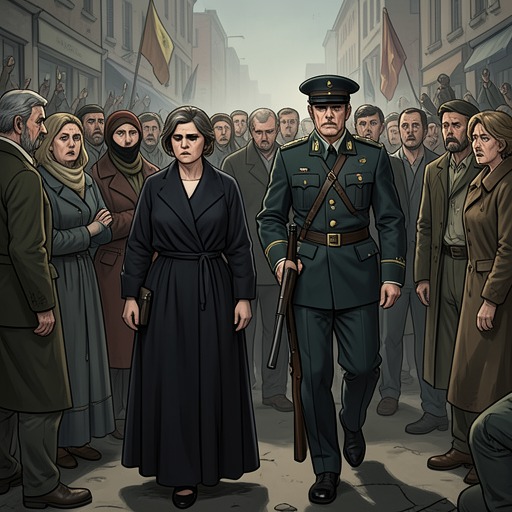
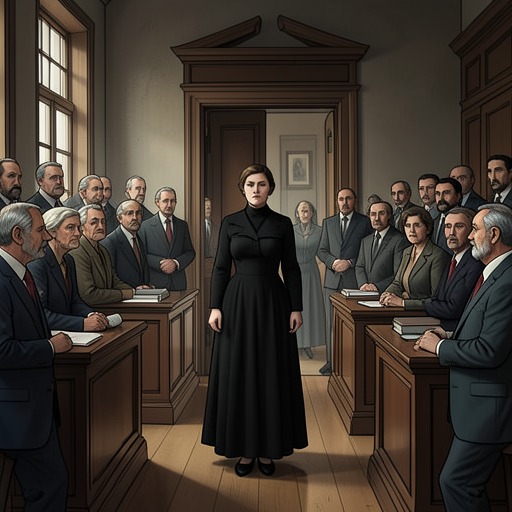
The bombing altered the courthouse’s role in the case against the captured team. Dolours Price and Marian Price, along with eight others, were charged with conspiring to cause an explosion likely to endanger life. The Old Bailey would ordinarily have been an obvious place to try the defendants. But it was still being repaired, and the government wanted the proceedings expedited. Holding a trial there on charges of attempting to destroy the very courthouse would also risk appearing prejudicial. The proceedings therefore opened in autumn 1973 at the Great Hall of Winchester Castle rather than at the damaged London court.
The change of venue made the Old Bailey more than a target in the prosecution’s account of the case: it became an absent courtroom, unavailable because of the violence the trial was about. The courthouse’s damage had practical consequences for the conduct of justice, while the proposed venue raised a separate question about the appearance of fairness. The transfer removed the proceedings from the bombed building, but could not separate them from it; the attack was the reason the trial could not be held there.
Michael Mansfield and the building’s afterlife
The bombing also entered the life of Michael Mansfield, who was in the Old Bailey’s top-floor library when the device detonated. Broken glass showered him, though he was not seriously injured. He had recently won a major case at the courthouse: in the trial of the Angry Brigade, a group of British anarchists accused of bombing the homes of Conservative ministers, he had defended Angela Weir, who was acquitted after Mansfield challenged the government’s handwriting evidence. The money from that case had enabled him to buy a second-hand Triumph 2000. On the day of the bombing, he drove to work because of the rail strike, found a parking space near the main entrance, and parked not far from the green Cortina. The explosion ripped his car apart.
Not long afterward, Mansfield was asked to defend the Price sisters. Many established lawyers were unwilling to represent the young Irish bombers, whom the attack had made deeply unpopular in London, but Mansfield accepted the case and wanted to meet them. Their defence brought him back into professional contact with the people whose bomb had shattered his car and showered him with glass. In this way, the Old Bailey’s meaning in the narrative extends from courthouse to blast site and then to the setting of a personal reversal: the man injured by the bombing became counsel for the women accused in the resulting case.