Post-traumatic stress disorder
Say NothingPost-traumatic stress disorder becomes visible in the book not as an abstract diagnosis but as part of Dolours Price’s later effort to live with and recount her past. At St Patrick’s Hospital, where she was being treated for depression and PTSD, she spoke at length with Ed Moloney about her history; elsewhere, she described the difficulty of looking back at actions she had once carried out without pausing to question them. Her account links the condition to the afterlife of political violence and imprisonment, while the narrative is careful not to assign the diagnosis to other people whose suffering it also records.
Diagnosis and the act of telling
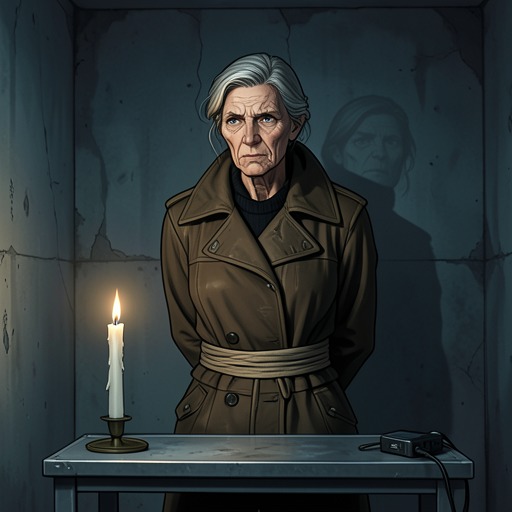
In 2010, while staying at St Patrick’s Hospital, Price agreed to speak with Moloney under an arrangement that he would safeguard her account and not release it until after her death. Their first conversation lasted several hours in her hospital room; a few days later they met again in a rented flat, where a small camera crew filmed her. The narrative describes her as sober and coherent in both encounters. Her treatment for depression and PTSD is therefore part of the circumstances of the interviews, not a reason the book gives to dismiss what she said.
The interviews also show how telling could bring earlier experiences into the present. Price spoke about her aunt Bridie’s severe injuries after an accident at an Irish Republican Army arms dump, the mourning imposed in the family home, and how that suffering helped shape her own decision to join the struggle. She recalled being beaten at Burntollet Bridge and later joining the Irish Republican Army and the Unknowns. When asked about enforced disappearance, she said she had not believed in the practice, and recalled that she and other volunteers had questioned whether it was a wise way to proceed, but had been told that this was how it was done. Her recollections move between family loss, political commitment and acts carried out inside the organization; the diagnosis is presented within that difficult field of memory rather than as a complete explanation of it.
Prison and bodily coercion
The book’s account of Price’s imprisonment supplies a concrete context for the bodily vulnerability that recurs in her story, though it does not claim that a single episode caused her PTSD. After conviction at Winchester Castle, she and her sister Marian Price were held at Brixton Prison, where they were the only women in an overcrowded, overwhelmingly male facility. They were kept in separate cells and escorted closely; Dolours was assigned the number 286185. The sisters had already stopped eating, taking only water, and demanded transfer to Northern Ireland to serve their sentences as political prisoners.
On 3 December, after the hunger strike had lasted two and a half weeks, doctors and nurses restrained Dolours in a chair bolted to the floor and force-fed her through a tube. Weak from not eating, she struggled as officials held her and a wooden mouthpiece prevented her from biting the hose. The blended feed of raw eggs, orange juice and liquid Complan made her vomit. Released to the exercise yard, she told Marian what had happened and said she did not think she could endure it again. Marian told her she could leave the strike. This episode gives the book a precise account of coercion enacted on the body; it does not, by itself, establish a clinical cause for the later diagnosis.
Delayed reflection and responsibility
In a later recorded conversation, Price described a gap between acting in the heat of events and examining those actions afterwards. As a volunteer, she said, she was often required to act contrary to her nature and obeyed orders that were difficult to carry out. Only later, she said, could she ask the complex questions that had not been asked at the time. She also said that she had spent considerable time speaking with doctors about these matters. The account presents this retrospective questioning as part of her struggle to interpret her own conduct, without suggesting that reflection erased responsibility or settled every question.
That tension becomes especially stark when Price speaks about people who remained in her thoughts: Joe Lynskey, Seamus Wright, Kevin McKee and Jean McConville. She described occasionally praying for them in the middle of the night, despite not being especially religious, and hoped they were in a better place. Her recollection of these names is not offered as a symptom checklist. It shows instead how the past returns in specific human relationships and unresolved deaths, and how her later testimony carries both memory and moral unease.
Writing, recurrence and limits of the record
Price wrote about the subject in a 2006 essay, Post Traumatic Stress Syndrome, published in The Blanket. The book returns to that writing in accounts of her later years and notes that she had been struggling; an interview with Carrie Twomey is cited in connection with PTSD. The supplied evidence does not detail the essay’s full argument or provide a clinical account of her symptoms, so the condition cannot be reconstructed here as a diagnosis with specified criteria or a complete treatment history. What can be traced is the recurrence of the subject across her writing, interviews, medical care and memories of imprisonment.
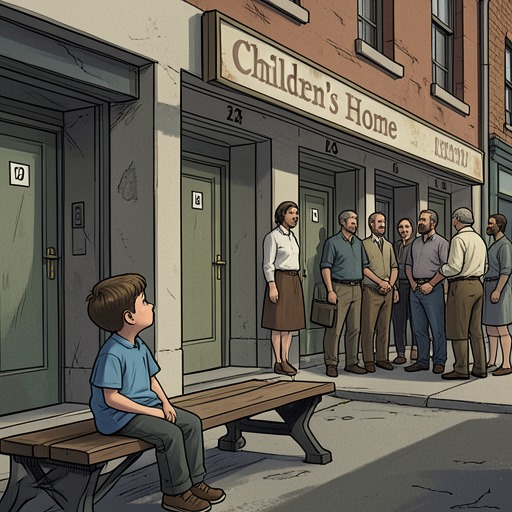
The narrative also sets Price’s experience against other forms of institutional harm without treating them as interchangeable diagnoses. Jean McConville’s children endured the mother’s disappearance, removal from their home and harsh treatment in care; Michael McConville was later sent to Lisnevin, a secure institution with isolation cells and an electrified perimeter fence. Republican prisoners in Long Kesh, including Brendan Hughes and his men, endured the blanket and dirty protests amid escalating conflict with prison authorities. These accounts establish a wider landscape of loss, confinement and bodily hardship, but the book does not identify those people as having PTSD on this evidence. That distinction keeps the entry focused: the condition belongs here as part of the documented account of Price’s later life, while the surrounding stories show the many injuries of the conflict that cannot be reduced to one label.