Roisin McNearney
Say NothingRoisin McNearney was an eighteen-year-old typist from Belfast whose brief involvement in the Irish Republican Army brought her from ordinary work and her parents’ home into a bombing operation in London. The youngest member of the crew, she became its most consequential witness after arrest: she disclosed her involvement to police, was acquitted while the other defendants were convicted, and left court under a new identity that has never been publicly traced. Her story turns on the gulf between the limited role she claimed and the lasting consequences of her cooperation for herself and her former comrades.
Background and Recruitment
Before joining the Irish Republican Army, McNearney worked as a typist and still lived with her parents. She had been a member for only six months when she became part of the operation. At eighteen, she was the youngest recruit in a group whose oldest member was twenty-nine-year-old William Armstrong. The contrast between her age and the operation’s scale is central to her place in the account: she was inexperienced and young, but was entrusted with a practical role in a dangerous mission.
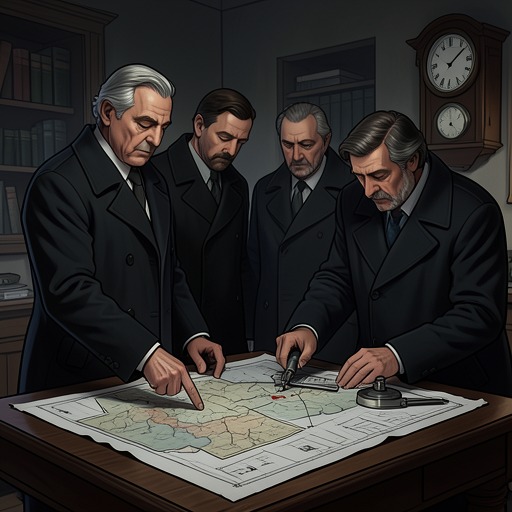
The group prepared vehicles for the journey from Ireland to England, concealing large explosive payloads beneath the rear seats and connecting them to timers under the front passenger seats. On 6 March, McNearney travelled in a Hillman Hunter driven by Martin Brady as the team crossed by ferry from Dublin to Liverpool. At customs, inspectors held up the car because of a problem with its number plate. While Brady was questioned, McNearney became increasingly nervous and said she needed the toilet. When she returned, the inspector had been called away; another official waved the car through rather than let it continue to obstruct traffic. The team then sent word back to Ireland not to dispatch two further cars, fearing the customs delay might mean the authorities had been alerted. The account establishes McNearney’s presence during this near-interruption, but does not say that she made the decision to cancel the remaining vehicles.
Arrest and Confession
After the bombing operation, McNearney and other members of the team were caught at Heathrow Airport. The plan had depended on the volunteers being out of the country before any bombs were discovered, so they had prepared no convincing cover stories. The arrested group offered false names, denied knowing one another, and met questions about the bombs with silence. McNearney initially followed the same line, denying that she belonged to the Irish Republican Army and presenting her visit as a holiday.
That position began to break during questioning. McNearney told investigators that she supported a united Ireland but opposed violence. She then indicated that she feared being shot if she revealed everything. She said she had joined the organization six months earlier and described being approached after singing patriotic songs in a pub and asked whether she was ready to do something for Ireland. She gave police a detailed account of her part in the bombing operation, while portraying herself as a minor, ineffectual figure on its periphery. The distinction mattered: she cooperated and supplied a confession, but did not present herself as a leader or principal organizer.
Despite that account, McNearney pleaded not guilty. The other defendants did not discover that she had given a detailed confession until the trial began. Her silence had initially seemed to place her alongside them; the later disclosure recast her as an informant in their eyes. The narrative makes the change in their understanding a consequence of timing as much as of the confession itself: what she had told police was not known to her comrades until they were already facing trial together.
Trial and Acquittal
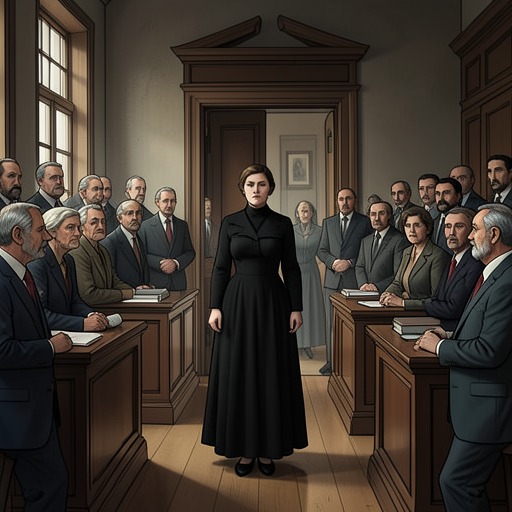
At trial, McNearney’s cooperation did not prevent her from being acquitted. On the day the verdicts were delivered at Winchester Castle, Judge Shaw announced that the jury had found her not guilty before passing sentence on the other defendants. He cautioned her against involvement in murderous enterprises and referred to dangers she might face after leaving court. The acquittal therefore did not restore her to her former life or erase the risk attached to her disclosure.
The reaction in the courtroom made the rupture unmistakable. As armed guards escorted McNearney out, the remaining defendants hummed the funeral march from Handel’s Saul in unison. Hugh Feeney threw a coin after her and called it blood money; McNearney rushed from the hall sobbing. This public gesture transformed the verdict into a scene of collective condemnation. The defendants’ musical choice and Feeney’s coin cast her departure as a funeral procession and her cooperation as a betrayal for which she was being symbolically paid.
The contrast with the sentences imposed on the others sharpened the moment. The remaining defendants were convicted; Dolours Price, Marian Price, and Feeney initially received thirty-year sentences because of their leadership roles, while other bombers faced a life sentence that would mean twenty years in practice. Judge Shaw then reduced the three leadership sentences to twenty years. McNearney, meanwhile, left the courtroom acquitted but exposed to a different kind of danger: a provisional leader in Belfast publicly warned that there was no hiding place for her.
Disappearance and Significance
Authorities moved McNearney away under armed guard and arranged a new identity for her. She received a new name and documents and was told she could never return to Northern Ireland. Her belongings were removed from her family home in Andersonstown and placed in storage, to be sent to her after she had begun her new life. The measures separated her from her former identity in practical as well as legal terms: even her possessions were held back until the transition was under way.
The Irish Republican Army never caught her. She vanished from the courtroom, became another person, and has not been heard from since. Her ending is consequently neither a conventional acquittal nor a return to safety that the account can verify. The new identity protected her by making a public life impossible to follow, while the threat voiced by a provisional leader and the warning from the judge frame her disappearance as the result of danger on more than one side. McNearney occupies an uneasy place in the story: a very young recruit who described herself as peripheral, a defendant who confessed but pleaded not guilty, and a witness whose cooperation divided her from the people who had stood beside her in court.