Roy Jenkins
Say NothingRoy Jenkins’s role in the Price sisters’ hunger strike was defined by a narrowing choice: resist their demand to serve their sentences in Northern Ireland and risk their deaths, or yield and appear to have been forced into concession. As British home secretary, he feared that their deaths could bring severe political consequences, yet also believed that meeting their demand under pressure might encourage further hunger strikes. His eventual decision to arrange their return followed months of force-feeding, the sisters’ increasingly grave condition, and his private fear of the consequences if they died.
Office and the Government’s Dilemma
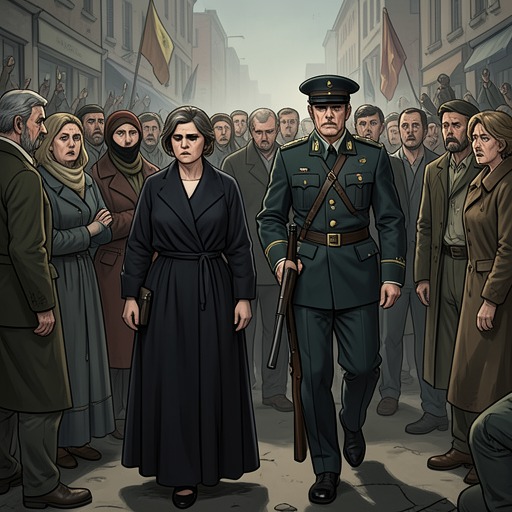
Jenkins had responsibility for responding to the sisters’ demand for repatriation after their conviction at Winchester Castle and imprisonment at Brixton Prison. Dolours Price and Marian Price had begun refusing food before arriving there; they wanted to serve their sentences as political prisoners in Northern Ireland. Hugh Feeney and Gerry Kelly, held in other prisons, joined their protest. The government understood that a death could be disastrous. Officials feared massive retaliatory violence, making the sisters’ physical decline not only a prison medical emergency but a political crisis.
Jenkins privately regarded the demand for repatriation as not entirely unreasonable. But he believed that the government could not seem to concede under duress. In his view, terrorism was contagious: granting the hunger strikers’ demand might validate their method and encourage others to use it. That calculation made a direct meeting dangerous in his eyes. When a Home Office psychiatrist examined the sisters and certified that they understood what they were doing, Marian asked whether Jenkins might visit them. The psychiatrist told her that Jenkins would not meet them face to face, because he knew he would send them straight home. The episode exposed the difference between recognizing the human force of their demand and accepting the political implications Jenkins attached to acting on it.
Force-Feeding and Public Pressure
The government’s alternative to concession was artificial feeding. On 3 December, after the strike had continued for two and a half weeks, doctors and nurses restrained Dolours in a chair bolted to the floor and forced a tube down her throat. She was already weak from more than two weeks without food. The feeding caused her to gag and nearly suffocate; she vomited the mixture soon afterwards. The procedure, which included raw eggs, orange juice and liquid Complan, was intended to keep her alive, but it became another source of physical and psychological harm.
The practice proved a public-relations disaster. Medical records showed that the sisters sometimes fainted during feeding. When they resisted, they were forcibly gagged, and on one occasion a radio was turned up to cover their screams. Some British observers regarded force-feeding as torture, while a psychiatrist speaking at a protest outside the British ambassador’s home in Dublin likened it to rape. The sisters’ treatment therefore undermined the government’s position even as it postponed the immediate consequence Jenkins most feared: their deaths.
Public attention widened beyond the prison. Benefit concerts by the Dubliners supported the sisters, Feeney and Kelly; protests took place outside Brixton and at Jenkins’s London home. The father of a young girl badly injured in the London bombing called for the sisters to be returned to Ireland. Even the Ulster Defence Association urged the government either to send them back to Northern Ireland or let them die. This unexpected endorsement astonished Dolours, but for Jenkins the wider attention sharpened the danger of allowing the crisis to continue.
The End of Force-Feeding
In May, after 167 days of artificial feeding, the doctors at Brixton stopped the procedure. The immediate change came not from a political order by Jenkins but from the sisters’ resistance. They fought the feeding so forcefully that inserting tubes safely became difficult. They warned the doctors that an accident could give them the privilege of killing the sisters. After several dangerous encounters, the doctors refused to continue. Jenkins later explained the policy change by saying that the sisters had withdrawn the minimal cooperation needed for artificial feeding. The distinction mattered: the doctors’ clinical judgement ended the procedure, while Jenkins had to account publicly for the government’s position.
The end of feeding did not end the danger. The sisters began losing about a pound a day and were eventually moved to the terminal ward, where they could share a room. They were so weak that walking across it exhausted Dolours; their beds required ripple mattresses to prevent sores where their bones pressed against their skin. Jenkins warned in early June that the possibility of their deaths now had to be clearly envisaged. He considered visiting them, perhaps in the hope of persuading them to abandon the strike, but decided that he should stand back and remain dispassionate as the person charged with deciding their fate.
His public position and private apprehension were increasingly at odds. He later recalled the sisters as figures from whom Irish martyrs could be made and feared that their deaths would have incalculable consequences. He also believed that their deaths might provoke violence and leave him personally exposed. Thinking of the political repercussions after Terence MacSwiney’s death, Jenkins imagined that if the sisters died he might never again be able to walk safely in Boston, New York or Chicago. His fear was not merely of immediate disorder: he imagined a lasting personal consequence, extending wherever he might travel.
Concession and Transfer
The death of Michael Gaughan in Parkhurst Prison on 3 June made the prospect of another hunger-strike death more immediate. Gaughan was an IRA volunteer imprisoned for a London bank robbery, not a member of the bombing mission. Jenkins’s fear of the consequences of the Price sisters’ deaths intensified, and he reluctantly concluded that he had no choice but to capitulate. On 8 June, Dolours and Marian, together with Feeney and Kelly, announced that they were ending their 206-day strike. They said Jenkins had assured them they would be returned to Northern Ireland, and maintained that the strike had never been a suicide mission: their aim had been to secure political-prisoner status and transfer.
The promise did not produce an immediate return. The sisters were moved instead to the women’s wing at Durham Prison. In March 1975, the prison governor told them they were going home—or, more precisely, to Armagh. Jenkins’s decision had therefore ended the hunger strike by accepting their demand for transfer, but its implementation was delayed. His arc in the episode is a movement from resisting any appearance of concession to authorizing a settlement when the costs of continued resistance became intolerable. The decision neither erased the government’s earlier use of force-feeding nor resolved the dispute over the sisters’ political status; it brought the immediate contest over their survival to an end.