Seán Mac Stíofáin
Say NothingSeán Mac Stíofáin was the Provisional IRA’s chief of staff and one of its most forceful advocates of armed struggle. Born in east London as John Stephenson, he fashioned an Irish identity through language, marriage, religion, and political commitment. The tension between that self-fashioning and his London origins became part of his public image, but did not soften the military doctrine he promoted: escalation was his answer to British power. He also helped shape the organization’s response to women demanding full participation and endorsed a campaign that carried the conflict from Northern Ireland to London.
Identity and Formation
Mac Stíofáin was born John Stephenson in east London. His mother told him stories of an Irish upbringing in Belfast, but it later emerged that she had been born in Bethnal Green, London. After serving in the Royal Air Force, he learned Irish, married an Irish woman, adopted an Irish name, and joined the IRA. The revelation about his mother’s birthplace unsettled the family story on which his Irish inheritance had partly rested. Yet the account also presents identity as something he pursued and built: the name, language, religion, and political allegiance were not merely inherited facts.
Born Protestant, Mac Stíofáin became a devout Catholic. In 1953 he took part in an IRA raid on an armoury and served time in prison in England. Those experiences preceded his rise to leadership and helped define the kind of republican he became: a physical-force advocate for whom armed struggle, rather than nonviolent protest, was the necessary means of removing British rule. Some contemporaries called him Mac the Knife, a nickname that condensed the threatening reputation associated with his militancy.
Doctrine and Leadership
As chief of staff of the Provisionals, Mac Stíofáin articulated a doctrine of escalation. He summarized his military strategy with the repeated imperative to escalate, making clear that violence was not, in his view, a regrettable departure from political action but a method to be intensified. The book places this outlook against a conflict in which the IRA was expanding its operations and seeking to impose greater military and economic costs.
His account of the car bomb’s value gives that strategic outlook a concrete form. Writing in 1975, he described the vehicle as both container and delivery system: it could carry a much larger payload than volunteers could transport by hand, blend into streets crowded with cars, inflict greater administrative, industrial, and economic damage, and require fewer people to place it. The tactic changed the meaning of an unattended vehicle. Even an empty car could provoke alarm, evacuation, and the arrival of authorities; the possibility of a hidden bomb could itself disrupt everyday life. Mac Stíofáin’s explanation treats the weapon as an instrument of operational efficiency, while the account also makes visible the fear that its camouflage spread beyond any single explosion.
Dolours Price and Full Membership
Mac Stíofáin’s leadership intersected with Dolours Price’s insistence that women be admitted as fighters, not confined to auxiliary service. In his 1975 memoir, he recalled that Price had once expected nonviolent protest to overcome injustice in the North, but that the attack at Burntollet Bridge changed her view. When she approached him about joining the IRA, he initially proposed Cumann na mBan, the women’s auxiliary. Its members undertook serious work, including caring for wounded men and removing weapons after shootings, but it was still a supporting unit rather than full membership in the organization.
Price rejected the offer. She wanted to do the same work as a man and refused a role limited to making tea or rolling bandages. Her insistence forced a question of organizational status into the open: whether women could belong to the IRA as soldiers in their own right. A special meeting of the Provisionals’ Army Council determined that women could, for the first time, join as full members. The book suggests that Price’s ambition and strong republican family background were important to the decision. It also records her own speculation that mass internment of men may have made the organization more willing to admit women. The change thus arose at the meeting point of an individual demand for equality and the practical pressures facing the movement.
Ceasefire and Secret Talks
Mac Stíofáin was among the IRA leaders involved in the 1972 ceasefire and the secret negotiations that followed. On 26 June, the IRA called a ceasefire, to which the British Army agreed to respond. The commitment came after an increase in bombings and shootings; some interpreted that escalation as a deliberate way to make the contrast with the truce more striking. The leadership pledged to observe the ceasefire, even threatening to shoot anyone who violated it, and announced that a peace plan would be revealed later. The book’s account of Mac Stíofáin’s career also records that he announced the ceasefire’s end in July.
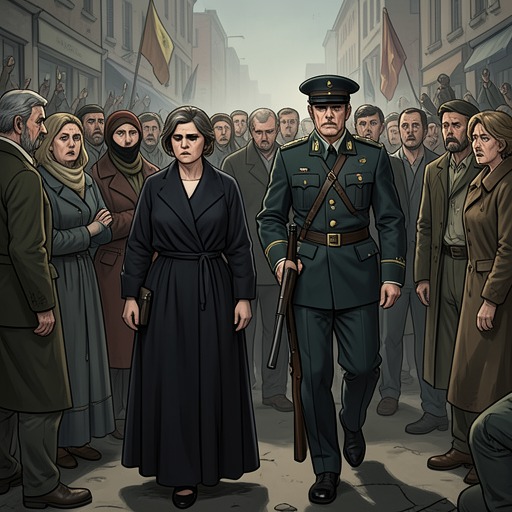
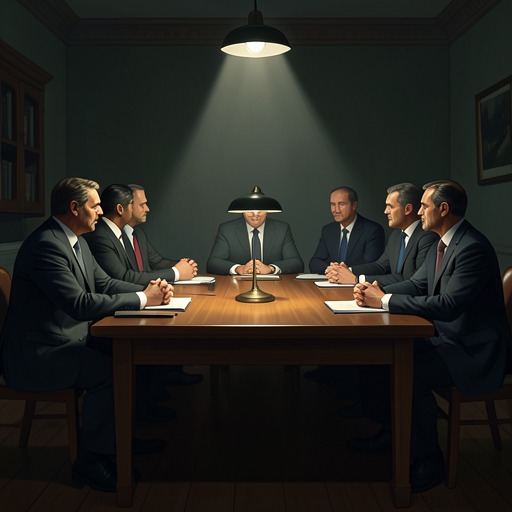
In July, he travelled with Gerry Adams, Ivor Bell, Martin McGuinness, and other IRA leaders to meet British representatives in secret. At the meeting, Mac Stíofáin read a prepared statement setting out the Provisional IRA’s demands: public recognition by the British government of the right of all Irish people, in both North and South, to self-determination, and a declaration that British forces would leave Irish soil by 1 January 1975. The demands presented withdrawal and self-determination as prerequisites, not distant aspirations to be negotiated after a settlement. A British intelligence officer who had worked with the representatives beforehand viewed the delegation’s military language and self-presentation with disdain. The encounter therefore exposed a sharp divide between how the IRA wished to be treated—as an army—and how British officials regarded it.
The London Campaign
Mac Stíofáin also approved Dolours Price’s proposal to take the bombing campaign into London. Price argued that the IRA’s violence was falling chiefly on people in Northern Ireland, while the English public remained distant from the catastrophe. She believed an attack in the heart of the British state could make the conflict harder to ignore. With approval from Mac Stíofáin, she worked with Pat McClure and Gerry Adams on an initial plan to firebomb London department stores. The devices failed when acid leaked from them; Price, already in London, abandoned the operation and disposed of the faulty bombs in the Thames.
The campaign then turned toward car bombs, an approach developed within the Belfast Brigade. Mac Stíofáin’s recorded contribution to this phase is clearest in his later explanation of the vehicle bomb’s military utility, rather than in evidence that he personally designed or placed a device. Four vehicles ultimately reached England: a Ford Corsair, a Hillman Hunter, a Vauxhall Viva, and a green Ford Cortina. Each carried a large incendiary payload concealed beneath the rear seat and connected to a timer under the front passenger seat. Taken together, Mac Stíofáin’s endorsement of the London initiative and his account of the car bomb connect strategic ambition to the practical means of carrying violence across the Irish Sea.
Narrative Significance
Mac Stíofáin’s portrayal is shaped by contrasts between origin and allegiance, identity and revelation, and negotiation and military threat. The story of the falsely remembered Belfast birth complicates his adopted Irish persona without reducing it to a simple deception: he learned the language, embraced Catholicism, and committed himself to the IRA. At the same time, his insistence on armed struggle gives that chosen identity an uncompromising political direction.
His actions also illuminate two changes within the Provisional IRA. Price’s challenge helped bring women into full membership, while the London campaign extended the organization’s operations beyond Northern Ireland and made the car bomb central to its capacity for attack. In the secret talks, the same leader who backed armed escalation presented demands for self-determination and British withdrawal. The biography does not resolve that contradiction; it shows how military pressure and political negotiation operated side by side in the movement he led.