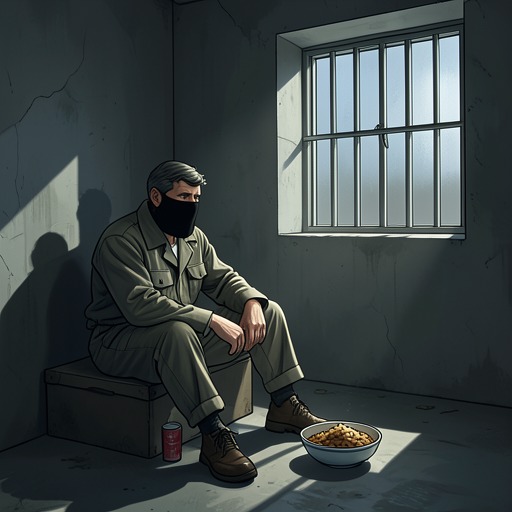
Sean McKenna
Say NothingSeán McKenna was a twenty-six-year-old prisoner from Newry whose deteriorating condition brought the first hunger strike led by Brendan Hughes to an abrupt end. Hughes had not wanted McKenna to join, but McKenna insisted; when the young striker became gravely ill, Hughes had to choose between the protest’s collective leverage and the promise he had made to keep McKenna alive.
Identity and Decision to Strike
McKenna was one of seven men who began refusing food at the same time. That shared start created a crisis built into the strike’s design: eventually, one man would near death before the others, leaving the rest to decide whether to stop or let him die. Hughes had opposed McKenna’s participation, but McKenna persisted and joined the fast. As his health worsened, he was confined to a wheelchair in the hospital wing.
The Promise and the Crisis
As fear grew, McKenna appealed directly to Hughes: “Dark, don’t let me die.” Hughes promised that he would not. Just before Christmas, McKenna began slipping in and out of a coma. Hughes saw orderlies rush him through the hospital wing on a stretcher, with two priests and Dr Ross nearby. The scene made the choice immediate: without intervention, McKenna would die and Hughes would break his promise; intervention, however, meant ending the strike and surrendering the prisoners’ leverage.
The Strike Ends
Hughes finally shouted, “Feed him!” A doctor told the orderlies to prepare scrambled eggs, and McKenna began eating again. Hughes’s decision ended the strike. The choice was not abstract: he had to act while confronted with the failing body of someone who had trusted him, and with the smell of the festering ward and of his own body consuming itself. The account also places the promise in the shadow of Hughes’s earlier broken promise of clemency to Seamus Wright and Kevin McKee, sharpening the personal weight of his decision.
Aftermath and Significance
Hughes slowly recovered and regained weight after his fifty-three-day fast, but felt deep shame at what he regarded as mishandling the strike. The prisoners soon planned another, this time staggering the starts so each striker would face the decision to continue alone rather than forcing a collective choice when one man approached death. McKenna’s crisis thus exposed a practical weakness in the first strike’s simultaneous structure: the group’s resolve could be tested through the life of its most endangered participant. The account does not say whether McKenna took part in the later strike.