Special Category Status
Say NothingSpecial Category Status was a prison classification at the centre of a struggle over whether republican volunteers would be treated as political prisoners or as ordinary criminals. The distinction reached beyond a name: it shaped what prisoners wore, where they were held, whether they could associate, and whether the British government would acknowledge the political meaning they attached to their actions. The Price sisters’ experience at Brixton Prison and Armagh Prison showed what the status could mean in practice; its refusal to republican prisoners at Long Kesh turned prison conditions into a prolonged confrontation.
Classification and political stakes
When internment officially ended toward the close of 1975, paramilitary suspects were to be charged and convicted under ordinary criminal procedures rather than detained indefinitely as political prisoners. Internment could mean imprisonment for years without charge or trial, but those held under it generally wore their own clothes and could associate freely with paramilitary colleagues. The subsequent system at Long Kesh’s H Blocks instead confined convicted prisoners to individual cells and issued them the same uniforms as common criminals.
For the republican prisoners, that change was not merely administrative. They considered themselves soldiers in a war and expected captured volunteers to be treated as prisoners of war. The government in London did not accept that the conflict was a war, and the uniform made the opposing classification visible in daily life: an IRA volunteer and a common thief wore the same prison clothes. Special Category Status was sought as a way to resist that criminalization and preserve a distinct political identity inside prison. It did not mean that the government had accepted the prisoners’ account of the conflict; rather, it was the status they demanded in order to be treated differently from ordinary convicted inmates.
The Price sisters and status in practice
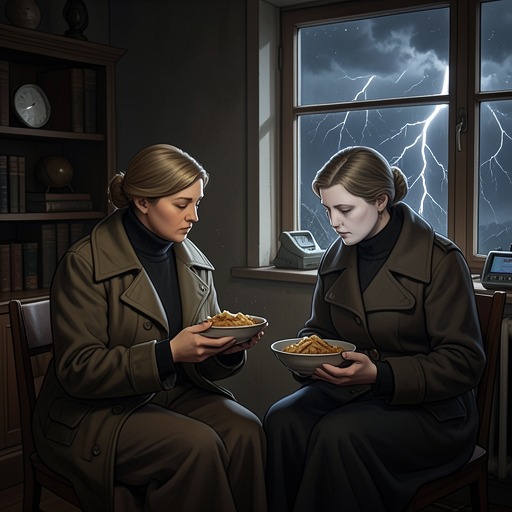
The Price sisters’ confrontation with prison identity began after their arrest in London. At the police station, their clothing was removed for forensic testing. When prison uniforms were offered, Dolours Price and Marian Price refused them, reasoning that they were captured soldiers rather than criminals. They covered themselves with rough prison blankets instead. The gesture made a political distinction out of the most immediate fact of imprisonment: the clothes imposed on the body.
At Brixton Prison, the sisters were the only women in an overcrowded, overwhelmingly male institution. They were separated in individual cells and escorted through the prison, where they faced intrusive attention from male inmates. Dolours Price was assigned the number 286185, an institutional identity that stood in stark contrast to the political identity she insisted on retaining. By the time the sisters arrived, they had stopped eating and would take only water. Their demand was repatriation so they could serve their sentences as political prisoners in jails in Northern Ireland. Their hunger strike therefore pressed for a change in both location and status, rather than simply a less demanding prison routine.
The British government feared the consequences if a hunger striker died, but it did not initially grant the sisters’ demand. On 3 December, after more than two weeks without food, medical staff restrained Dolours Price and force-fed her a mixture of raw eggs, orange juice and liquid Complan through a tube. She vomited the feed. Afterward, she told Marian Price what had happened and said she did not think she could endure it again; Marian told her she could leave the strike. The episode exposed the bodily cost of the confrontation and the government’s effort to prevent a death without conceding the political claim behind the protest.
In March 1975, after their transfer to Armagh Prison, the sisters were granted Special Category Status. It exempted them from work in the prison laundry and sewing rooms, permitted them to wear their own clothes, and allowed them to live in C Wing, a newly built area for special-category prisoners. Compared with Brixton’s isolated cells and relentless supervision, C Wing offered a shared living space with a television room and an eat-in kitchen. The classification thus had tangible consequences for everyday life, although it did not erase the fact of confinement.
Long Kesh and the protests
The status granted to the Price sisters became a point of comparison for republican prisoners at Long Kesh. In the autumn of 1976, prisoners rebelled against the uniforms issued in the H Blocks and began the blanket protest, wrapping themselves in blankets rather than wearing prison clothes. Like the Price sisters after their London arrests, they used the refusal of a uniform to contest the prison’s definition of them as ordinary criminals. Their demand for special-category treatment was, in effect, a demand to be classified as prisoners of war.
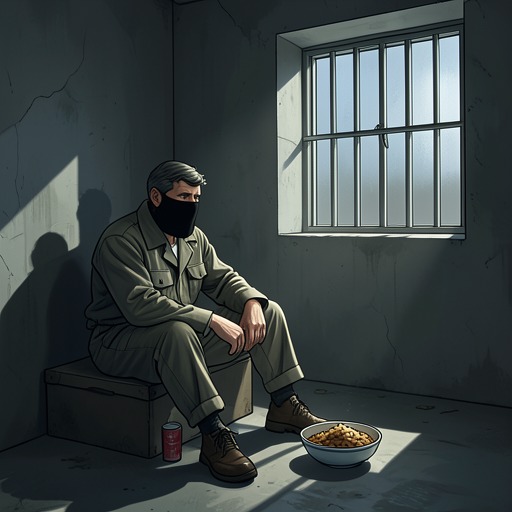
The authorities refused. The protest then developed through an escalating conflict between prisoners and guards. At first, the protesting men left their cells to shower and use the toilet. Guards sometimes beat them during these movements and restricted the towels they could use to cover or dry themselves. The prisoners responded by refusing to leave their cells. This no-wash phase forced guards to collect and empty chamber pots; the prisoners began tipping them so urine ran beneath cell doors and into the corridors. The blanket protest had become the dirty protest.
Brendan Hughes, the prisoners’ commanding officer, was asked what they should do with their faeces and suggested smearing it on the walls. Prisoners covered the walls with waste, while maggots and the threat of disease added to the squalor. Guards removed prisoners, hosed them down, and cleaned their cells with water and disinfectant, but moving a prisoner into a fresh cell did not end the protest. Each escalation made the dispute over status harder to separate from the control of bodies and space inside the prison.
The prisoners’ demands included the right not to wear prison uniforms, to associate freely with other prisoners, and to receive mail. Yet the authorities’ refusal to grant special-category treatment kept the confrontation unresolved. Where the Price sisters had secured a separate arrangement at Armagh, the men at Long Kesh faced individual cells and a shared uniform regime. The contrast helps explain why the protest persisted: the issue was not only the conditions of confinement, but whether the prison would recognize any distinction between political allegiance and ordinary criminality.
Significance and limits
Special Category Status gave political meaning a material form. Personal clothes marked a refusal of the convict identity; exemption from prison work and accommodation in C Wing made the Price sisters’ classification apparent in their daily conditions. At Long Kesh, the same contested distinction shaped the blanket protest and, through its successive stages, the dirty protest. The status was therefore both a practical arrangement and a focus for conflict over who had the power to define a prisoner.
The two prison settings also show that the classification was neither uniformly available nor an uncontested recognition of republican claims. The Price sisters received it in 1975 after their hunger-strike campaign and transfer to Armagh. The republican prisoners at Long Kesh demanded it but were refused, and their protest moved from rejected uniforms to the deliberate degradation of prison cells. The contrast places individual accommodations alongside a collective struggle: in both cases, clothing and the conditions of confinement became ways to make political identity visible under a system that sought to classify prisoners as criminals.