Winchester Castle
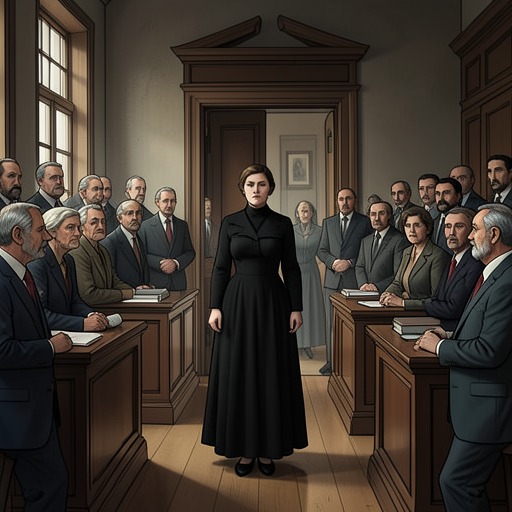
Say NothingWinchester Castle’s Great Hall became the courtroom for the 1973 trial of Dolours Price, Marian Price, and eight others captured after the London bombings. The choice of venue placed a modern prosecution inside a monumental medieval chamber, where legal process, political defiance, and an unusually visible security operation competed for attention. The hall’s historical associations sharpened that contrast: it was a working court, but also a space already marked by the memory of treason and state power.
The Great Hall and the choice of venue
The proceedings began in autumn 1973 in the Great Hall of Winchester Castle. The obvious alternative, the Old Bailey, was still being repaired after the bombing. The government also wanted the case expedited, while holding a trial in a courthouse the defendants were accused of trying to destroy risked appearing prejudicial. Winchester therefore supplied a different setting for a prosecution arising from an attack on London’s legal centre.
The hall was an imposing thirteenth-century chamber, with medieval stone, marble columns, and stained glass. Its past was not incidental to the trial’s atmosphere: Sir Walter Raleigh had been found guilty of treason there in 1603, accused of plotting to overthrow King James I. An enormous oak replica of King Arthur’s round table hung on one wall, its surface crossed by bands of green paint radiating from a Tudor Rose. The room joined legendary kingship and national history to the contemporary business of judging alleged enemies of the state.
A courtroom turned into a public stage
The defendants’ presence made the hall a conspicuous arena from the outset. On the prison bus to Winchester, the Price sisters and their co-defendants sang rebel songs; as the bus entered the complex under heavy guard, Dolours and Marian Price flashed V signs to spectators. Their gestures carried the confrontation from the journey into the courthouse itself. During proceedings, Dolours Price disputed the prosecution’s and judge’s framing of her politics, distinguishing the IRA’s long-term objective of Irish reunification and civil and religious liberties from the question of whether violence should be used. As the trial continued, she and other defendants heckled Judge Sebag Shaw, mocked witnesses, and rejected the court’s moral authority.
The trial attracted intense public fascination. Vanessa Redgrave offered to post bail and provide her West Hampstead home if a defendant were released, although none was. English press and public attention focused especially on the Price sisters, presenting them as dangerous figures and casting their appearance and politics through a gendered lens. Winchester’s Great Hall consequently hosted more than the formal presentation of evidence: it became the setting in which the defendants’ political identity, the press’s image of them, and the court’s authority were all publicly contested.
Security and the threat beyond the hall
The bombings produced a security operation that made the approach to the courtroom part of the spectacle. Each morning, a convoy of motorcycles and police cars escorted the defendants. A complete daytime parking ban covered the surrounding area to reduce the risk of car bombs, and police marksmen watched from nearby rooftops. The proceedings were so tightly guarded that the defendants’ transport and entry became highly controlled public events.
The precautions had a specific background beyond general alarm. Republicans had tried to buy a house directly across the street from the prison where the defendants were held, intending to dig a tunnel under the street into the cellblock and free them. The plan was abandoned when the local woman who owned the house reconsidered the sale for sentimental reasons. Although no tunnel was made, its intended route linked the trial’s security to the possibility of an armed rescue. The Great Hall’s solemn architecture stood within a wider landscape of guarded transport, restricted streets, and feared escape attempts.
Verdict, departure, and significance
On the day the verdict was due, the courthouse was searched and secured with particular intensity. Dolours Price wore a green sweater and a pink ribbon in her hair. Fifteen prison officers crowded behind the defendants in the dock; a bodyguard who had previously sat out of sight behind Judge Shaw’s seat was positioned openly beside him. After nearby department stores had received bomb scares, a rowdy Irish crowd filled the public gallery, plainclothes detectives sat behind the all-male jury, and guards bolted the courthouse doors as proceedings were about to begin. Michael Mansfield, the Price sisters’ lawyer, thought the security arrangements created an atmosphere of guilt.
The hall also witnessed a bitter rupture among the defendants. Before sentencing, Judge Shaw announced that Roisin McNearney had been acquitted. As armed guards escorted her out, the remaining defendants hummed The Dead March from Handel’s Saul. Hugh Feeney threw a coin after her and denounced it as blood money; McNearney left sobbing. The scene turned a verdict into an accusation of betrayal, played out before the judge, jury, supporters, and security personnel assembled in the hall.
After sentencing, the defendants’ political challenge continued inside the courtroom: Hugh Feeney declared that victory remained within reach of the Irish nation, while Judge Shaw insisted that the dock was not a political arena. Before leaving Winchester Castle, Dolours and Marian Price announced a hunger strike, demanding political-prisoner status and a return to Northern Ireland to serve their sentences. They were taken to Brixton Prison. The Great Hall’s role in their story thus ended not with an accommodation between political claim and legal judgment, but with the defendants carrying their protest from the courtroom into prison. Winchester Castle remains significant in the book as a place where the spectacle of a heavily secured trial made the struggle over political legitimacy visible in the very setting of the law.