Interzone
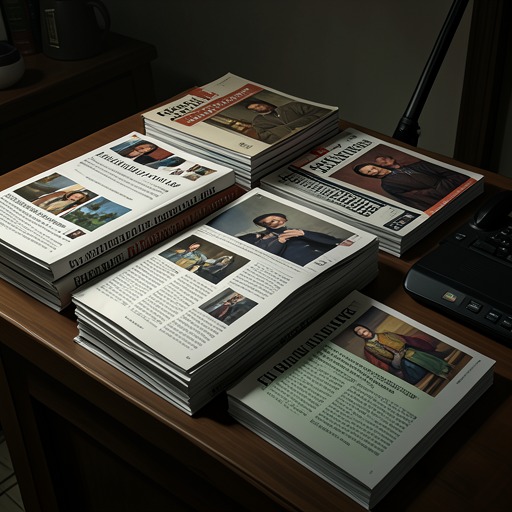
Science Fiction, Fantasy and Horror Genre and Rating GuideInterzone is a recurring publication venue in the catalog, significant less as a single work than as a sustained periodical presence. The evidence identifies a consecutive run of issues numbered 211 through 216, and places that run beside novels, stories, podcasts, interviews, and critical studies. Interzone therefore functions as part of the book’s publishing infrastructure: a place where science fiction is gathered into serial form and encountered through an ongoing editorial sequence rather than as an isolated volume.
Identity and Catalog Presence
Interzone appears explicitly as the title of multiple magazine issues, including Interzone 211, Interzone 212, Interzone 213, Interzone 214, Interzone 215, and Interzone 216. The consecutive numbering is the clearest concrete feature attached to the organization in the supplied evidence. It establishes continuity and gives Interzone a historical scale within the catalog: readers are not shown one exceptional issue, but a connected stretch of a continuing publication.
The catalog’s type codes classify these entries as SF-M, distinguishing them from SF-N novel entries, SF-S story entries, SF-A analytical works, and ST-X interviews or other nonfiction. That classification presents Interzone as a magazine rather than as a conventional single-author book. The issues also receive different star ratings, ranging from 3.0 to 5.0, so the sequence is not treated as aesthetically uniform. Each issue remains an individual catalog object while belonging to the larger identity of the periodical.
Editorial and Generic Function
The evidence does not provide a named editor, staff list, founding history, publication schedule, or internal organizational structure. It does, however, place Interzone within a dense network of science-fiction forms. In the same catalog, podcasts such as The Geek's Guide to the Galaxy Podcast Episode 03: Robots! War Machines! Robolobsters! and The Geek's Guide to the Galaxy Podcast Episode 04: Superheroes! Romance! Sea Monsters! represent spoken and episodic circulation; The History Of the Science Fiction Magazine 1926-1935 represents historical analysis; and works such as Diaspora, Ender's Game, Bloom, and The Android's Dream represent novel-length fiction. Against these forms, Interzone is legible as a recurring magazine platform that belongs to the living circulation of the genre rather than merely to its retrospective history.
Its magazine identity also matters because the catalog preserves the medium’s serial logic. A novel can be represented by one title, while Interzone returns through issue numbers. The repeated entries make publication itself visible: science fiction is not only a body of stories and ideas, but also a sequence of editorially bounded installments through which the genre is selected, packaged, and revisited.
Relations to Science-Fiction History
Interzone’s placement near Mike Ashley’s The History Of the Science Fiction Magazine 1926-1935 is especially revealing at the level of catalog structure. Ashley’s work studies the historical development of the magazine as a form, while the Interzone entries instantiate that form as a continuing series. The relationship is not presented as a direct collaboration or shared subject, and the evidence does not establish that the issues are discussed in Ashley’s history. It does show, however, that historical reflection on science-fiction magazines and the cataloging of a later magazine run coexist within the same knowledge environment.
The same pattern appears beside David G. Hartwell and Kathryn Cramer’s The Ascent of Wonder The Evolution of Hard SF. That analytical title frames hard science fiction as an evolving mode, whereas Interzone’s six consecutive issues embody the periodical infrastructure through which changing modes can be published and encountered. The evidence does not identify the individual contents of those issues, so no specific story, author, technological idea, or editorial controversy can be assigned to Interzone here. What can be stated is that the magazine is positioned within a catalog that treats science fiction simultaneously as literature, history, criticism, and media practice.
Serial Continuity and Variation
The run from issue 211 to issue 216 creates a contrast between continuity and variation. Continuity comes from the unchanged title and advancing issue numbers; variation appears in the ratings, with Interzone 213, Interzone 214, and Interzone 215 receiving 5.0, Interzone 211 receiving 4.0, and Interzone 212 and Interzone 216 receiving 3.0. Those ratings are catalog judgments rather than intrinsic properties of the publication, and the evidence does not explain their criteria. Even so, their differences prevent the periodical from appearing as a single undifferentiated object. The catalog recognizes a series whose installments can be assessed separately while still contributing to a recognizable institutional identity.
This serial form also distinguishes Interzone from the free-marked entries around it. The supplied Interzone records carry no FREE marker, while several neighboring works do. The evidence cannot establish pricing, distribution policy, or the magazine’s wider readership from that absence alone. It can establish that the catalog visually separates Interzone’s issue records from entries explicitly marked as freely available, making availability another axis along which publication objects are organized.
Significance in the Book’s Knowledge System
Interzone’s decisive significance is archival and mediating. The catalog does not give enough evidence to describe its editorial program or individual contents, but it gives enough to show how a periodical becomes meaningful through recurrence. Six numbered issues turn a title into a continuing institution; the SF-M classification identifies its medium and genre position; and its proximity to fiction, criticism, podcasting, and magazine history places it inside a broad ecosystem of science-fiction production.
For that reason, Interzone should be read here not as a character, event, or self-contained narrative, but as a node connecting works to the systems that make them visible. Its presence records the persistence of magazine publication within science fiction and demonstrates how serial venues can occupy a different but indispensable place beside novels and critical histories. The evidence ultimately supports a modest yet concrete conclusion: within this catalog, Interzone represents ongoing, issue-by-issue participation in the culture and transmission of science fiction.