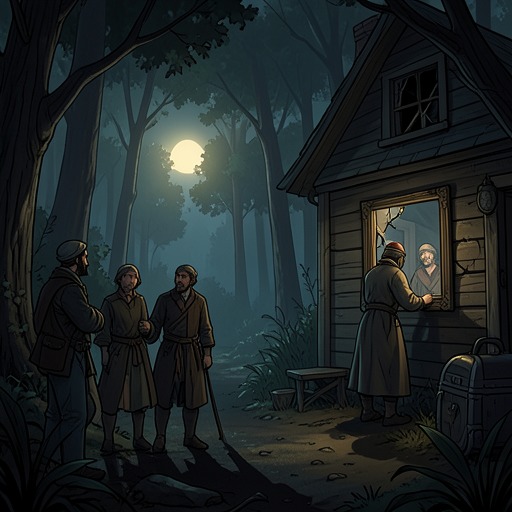
Vampires
Science Fiction, Fantasy and Horror Genre and Rating GuideVampires are one of the guide’s clearest recurring supernatural figures: they appear in horror works, in fantasy narratives shaped by sorcery or the supernatural, and even in detective fiction where their apparent existence can turn an investigation into a test of competing explanations. The guide does not supply a single universal vampire biography or rulebook; instead, its catalogue places Vampires across different narrative systems, showing how the figure travels between genres while retaining its association with fear, bodily danger, and the uncertain status of the nonhuman.
A Recurring Supernatural Figure
The guide explicitly defines supernatural fantasy as “Supernatural Fantasy” and scary horror as “Scary Horror,” while also distinguishing science fiction, shootist fiction, sorcery fantasy, sleuth fiction, soldier fiction, spy fiction, study, superhero fiction, and swords fiction. Vampires belong most directly to the supernatural and horror side of this taxonomy, but their repeated appearance beside other genre forms demonstrates that they are not confined to one literary mode. They can function as monsters, uncanny presences, investigative problems, or symbols of a world in which ordinary categories have become unreliable.
The classification system itself is significant because it treats genre as an organizing instrument rather than as a rigid prison. Vampire-related entries receive horror or supernatural designations, yet the surrounding catalogue includes detective and fantasy traditions that can frame the creature differently. This recurring movement across categories makes the vampire a useful test case for the guide’s larger map of popular literature: the same basic figure can support terror, mystery, gothic atmosphere, dark fantasy, or a conflict between natural and supernatural interpretations.
Gothic and Horror Appearances
The evidence places Vampires in several explicitly horror-oriented works. Alice and Claude Askew’s “Aylmer Vance and the Vampire” is marked as scary horror and identified as freely available. Simon Clark’s “Vampyrrhic Outcast” and “Vampyrrhic” likewise appear under scary horror, with the latter also marked as free. Eugene Field’s “The Werewolf” occupies the same horror grouping, placing the vampire within a broader field of transformed or predatory beings rather than presenting it as an isolated curiosity.
These titles show two complementary uses of the figure. In “Aylmer Vance and the Vampire,” the vampire is attached to a named investigator or protagonist, suggesting a narrative in which the creature may be encountered through pursuit, confrontation, or supernatural investigation. Clark’s related “Vampyrrhic” titles emphasize the vampire condition through a vocabulary of blood, appetite, and estrangement. The catalogue does not provide plot details sufficient to specify the characters’ actions or the endings, but the paired titles establish a sustained interest in vampirism as both threat and identity.
The Vampire Across Genre Boundaries
The guide also places vampire-related works in supernatural fantasy. J. Sheridan Le Fanu’s “Carmilla” is classified as supernatural fantasy and freely available, while Paul Monette’s “Nosferatu : The Vampyre” receives the same broad supernatural designation. Paul Monette’s separate “Nosferatu” is classified as scary horror, creating an immediate contrast between two adjacent treatments of related material. The distinction suggests that the vampire can be framed either as an accepted supernatural presence within a fantastic world or as an object of fear within a horror structure.
The detective tradition supplies another important variation. Arthur Conan Doyle’s “The Adventure of the Sussex Vampire” is marked as sleuth fiction and freely available. Its classification matters because the word “vampire” in a detective title does not automatically settle the case in favor of the supernatural. A sleuth narrative can make the vampire an alleged explanation, a literal adversary, a disguise, or a mystery whose apparent impossibility must be examined. The figure therefore carries genre tension: it may announce a supernatural threat while also inviting the rational scrutiny associated with detective fiction.
Names, Variants, and Narrative Function
The catalogue records several distinct naming patterns: “Vampire” appears as a singular figure in “Aylmer Vance and the Vampire,” “Vampyrrhic” turns the condition into a descriptive or atmospheric term, “Carmilla” identifies the work through a central proper name, and “Nosferatu” invokes a more collective or folkloric image of vampirism. These variations move the creature from individual antagonist to condition, legend, and cultural type. The result is not one fixed character but a flexible narrative figure capable of carrying different kinds of menace.
Vampires also appear in the company of werewolves and other fantastic beings. The guide’s taxonomy separately identifies werewolves, ghosts, demons, faeries, and other nonhuman categories, while its title listings include “The Werewolf” alongside multiple vampire texts. This arrangement places vampirism within a comparative ecology of transformation and haunting. Yet the vampire’s repeated return across horror, supernatural fantasy, and sleuth fiction gives it an especially broad range: it can be embodied in a named individual, spread as a condition, inherited as a legend, or treated as a proposition to be investigated.
Significance in the Guide’s Genre Map
As a recurring entry-level subject, Vampires reveal how the guide’s classification system links content with narrative method. The horror labels foreground fear and predation; the supernatural-fantasy labels foreground the possibility that the impossible is part of the world’s operative reality; and the sleuth label foregrounds uncertainty, evidence, and explanation. The creature’s significance lies in this adaptability. It is recognizable enough to signal a tradition immediately, yet open-ended enough to be reshaped by the genre surrounding it.
The evidence supports no single definitive account of vampire origins, powers, social organization, or fate. What it does establish is a pattern of literary persistence. From “Carmilla” and “The Adventure of the Sussex Vampire” to “Vampyrrhic Outcast” and the two “Nosferatu” entries, Vampires occupy a durable position where bodily threat, gothic inheritance, supernatural possibility, and investigative doubt meet. In the guide’s broader literary landscape, they are less a single monster than a portable narrative instrument—one that repeatedly converts the familiar world into a place where another order of life may be hiding within it.