
The Containment Contest
Secret InvasionThis conflict arc follows the operational struggle between a rapidly reproducing, adaptable predator and responders trying to locate every nest before it spreads.
increasing Bearing strength in each event
 decreasing
Bearing strength in each eventdecreasingA Threat That Grows Fast
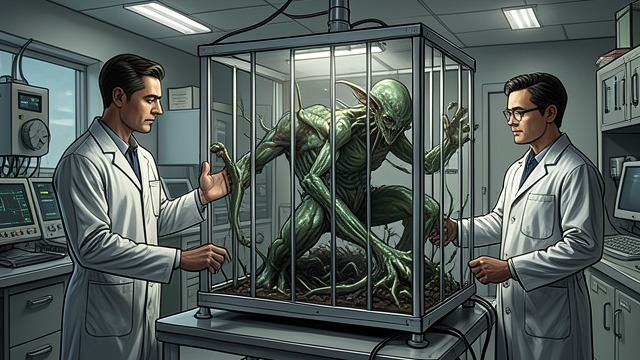
A Threat That Grows Fast
Growth in captivity
The Richmond hatchlings double in size within hours and attack the enclosure. Their behavior makes ordinary laboratory containment inadequate.
An uncertain enemy
The researchers do not yet know how quickly the animals mature or reproduce. Every delay risks giving an unknown organism more time to escape and establish itself.
Nests Require Close Searches
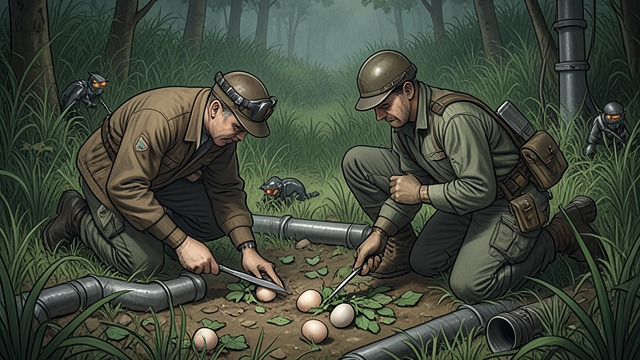
Nests Require Close Searches
Habitat hides the danger
Eggs lie in grasses, under vegetation, and within drainage structures. Searchers must inspect ground carefully rather than relying on a quick shoreline patrol.
Protection follows discovery
Adult sliggers often remain near nests and attack intruders. Finding eggs can therefore trigger the most dangerous moment of a search, making disciplined spacing and firepower essential.
The St. Augustine Culvert Fight
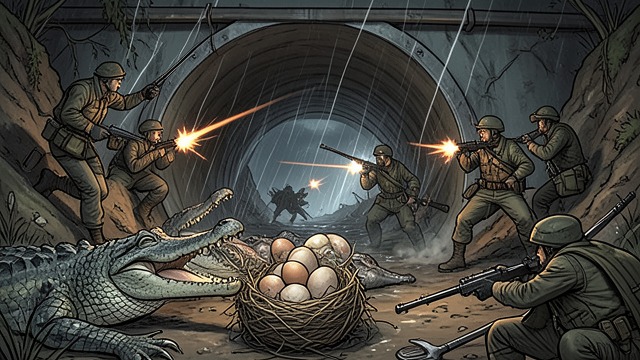
The St. Augustine Culvert Fight
A concealed nest
A team enters a storm culvert after finding a habitat likely to shelter sliggers. Inside, they find dead alligators, a strong odor, and a nest of eggs.
Sudden close combat
Multiple creatures charge the searchers, who fire until the nest’s defenders are down. A final animal attacks during the apparent pause and is killed by Ron, proving that a battle is not over when the first wave falls.
The Riverbank Counterattack
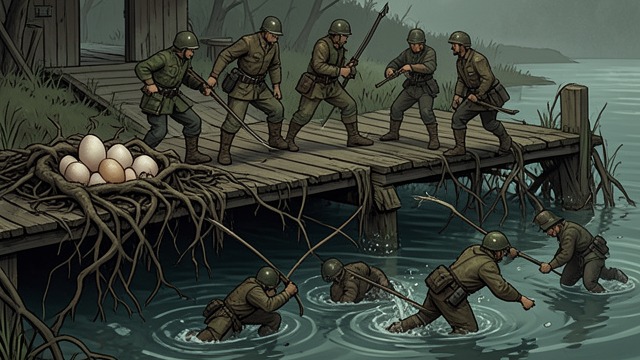
The Riverbank Counterattack
A nest over water
National Guard troops find eggs among trees rooted in a ruined dock. The unstable structure leaves soldiers exposed above and below the waterline.
The line is tested
Creatures strike from beneath the beams, dragging soldiers into the water and forcing the squad to fight at close range. The unit kills the attackers, but the casualties and ammunition expenditure reveal how costly a nest encounter can be.
Tougher Creatures, Harder Clearance
Tougher Creatures, Harder Clearance
Increasing resistance
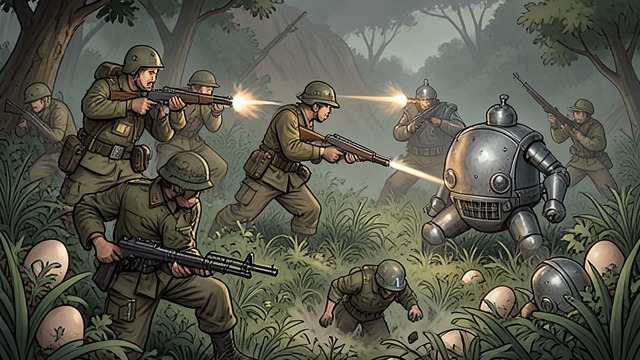
Responders report that later animals require concentrated fire to stop. Scientists also observe denser skin and longer legs in newer specimens.
The race tightens
The operation must clear the population before adaptation makes containment still harder. Better weapons help, but thorough searches and complete disposal remain the only reliable way to stop further generations.
Within hours of the Richmond hatching
During the first statewide sweeps
During a coordinated Florida shoreline sweep
After dark, during the New Orleans river sweep
During the later Louisiana operations
