
The Ethics of Civilian Help
Secret InvasionThis thematic flow examines the tension between community participation, individual courage, inadequate preparation, and the need for organized safeguards.
increasing Bearing strength in each event
 decreasing
Bearing strength in each eventdecreasingA Community Takes Up Arms
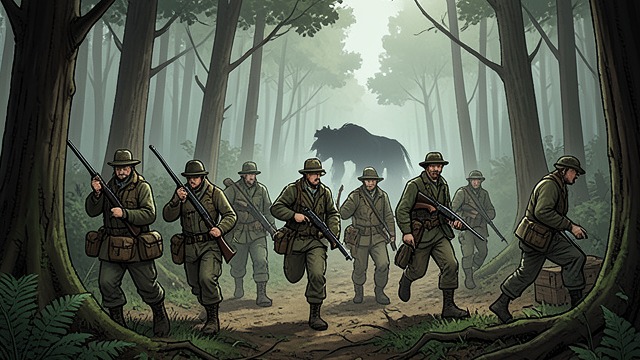
A Community Takes Up Arms
Local initiative
Molly gathers friends to search near the Savannah River after official warnings make the danger public. Their familiarity with hunting gives them confidence and practical equipment.
Courage carries risk
The group locates eggs and survives an attack, but its success does not make the decision safe. Their experience demonstrates why public service in a crisis requires discipline as well as bravery.
The Cost of Poor Preparation

The Cost of Poor Preparation
Unequal equipment
Oscar arrives with only a small handgun while the others carry shotguns. The group allows him to join but warns him to stay close.
Trust under emergency conditions
The hunters’ choice reflects a practical need for more participants, but it creates vulnerabilities. Oscar’s concealed motive further shows that good intentions cannot be assumed from a volunteer’s presence alone.
Official Forces Set the Standard
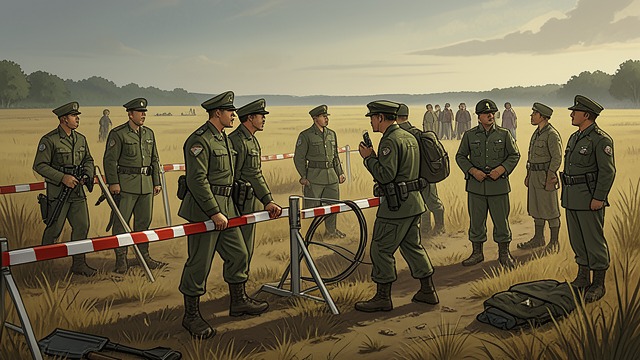
Official Forces Set the Standard
Training and coordination
Military units and police establish search lines, assign areas, and brief personnel on the animals’ attacks and toxic claws. Their scale and organization improve the chance of thorough coverage.
Volunteers within a system
Civilian help remains welcome, but the operation increasingly depends on coordination with trained responders. The story distinguishes useful participation from reckless solo action without dismissing local contribution.
A Method for Safer Searching
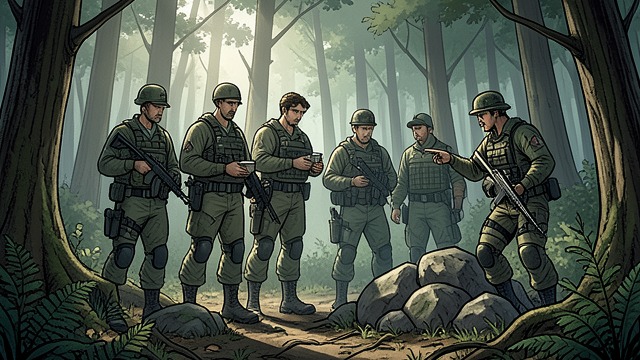
A Method for Safer Searching
Preparation before contact
Teams learn to search likely nesting habitat carefully, keep weapons ready, and avoid assuming that a first round has ended an attack. They also prepare to collect and destroy remains.
Safety as shared knowledge
Guidance passes from experienced survivors and scientists to local officers and volunteers. Each lesson reduces avoidable exposure, even though no procedure can erase the danger of encountering a nest.
Courage Without Glory
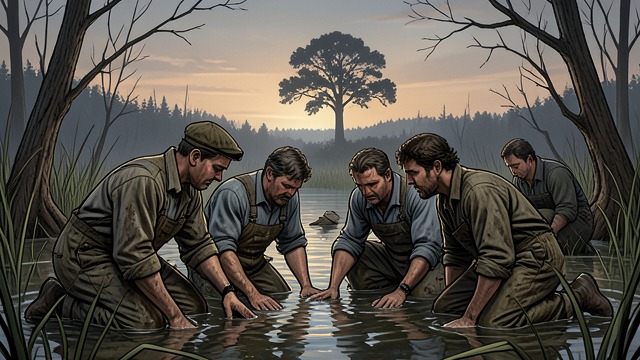
Courage Without Glory
Repetitive labor
Most volunteers and responders spend long hours searching without finding anything. The absence of dramatic contact is still useful evidence that an area may be clear.
Collective protection
The operation succeeds through thousands of ordinary searches rather than one decisive hero. The narrative treats persistence, caution, and cooperation as forms of courage that rarely produce spectacle.
The first nights of volunteer searches in Georgia
During Oscar’s arrival at the Savannah hunt
After the federal campaign begins
During the Florida and Louisiana operations
Near the end of the search campaign
