
The Search for the Origin
Secret InvasionThis flow follows the effort to explain the sliggers’ biology and locate the source of their emergence, from laboratory specimens to an uncertain theory of mutation.
increasing Bearing strength in each event
 decreasing
Bearing strength in each eventdecreasingThree Eggs in Richmond
Three Eggs in Richmond
A scientific opportunity
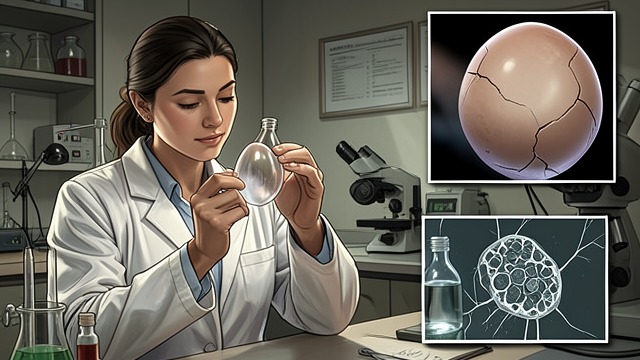
Leslie receives three intact eggs from a Virginia crime scene and begins careful examination. She draws a fluid sample but cannot identify the organism through ordinary comparisons.
Evidence begins to move
When one egg hatches, the laboratory acquires living specimens. The transformation from unusual sample to dangerous animal accelerates the investigation and makes containment as important as classification.
The Hatchlings Attack
The Hatchlings Attack
A failed containment
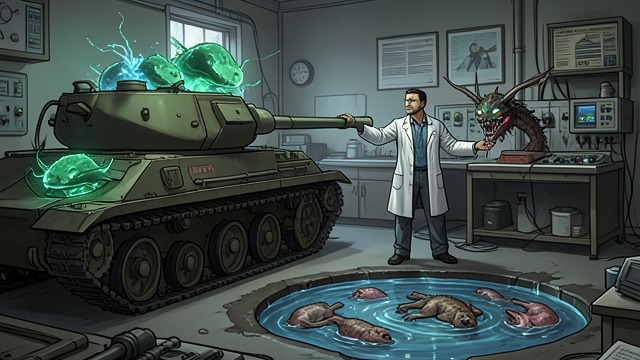
The hatchlings strike the tank and rapidly grow, demonstrating aggression and an alarming rate of development. They kill and eat one another before turning their attacks toward the researchers.
A forced decision
Ron electrocutes the animals through the water rather than risk their escape. The choice preserves immediate safety but leaves the scientists to learn from carcasses instead of living subjects.
A Link to the Submarine
A Link to the Submarine
A plausible mechanism
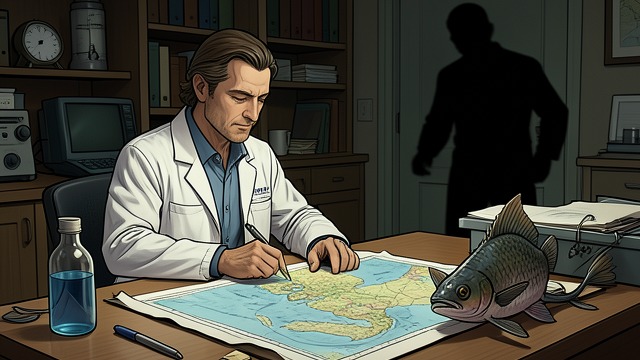
Denise describes samples from the Nazi submarine discovered near Wrecker Island. She suspects an unknown substance may have induced mutations across generations of marine organisms.
A theory, not a verdict
The hypothesis explains why sliggers appear to combine traits from different animal groups, but testing remains incomplete. The team must act on the danger without pretending it has solved the biological mystery.
Reproduction Inside Hatchlings
Reproduction Inside Hatchlings
A discovery in the remains
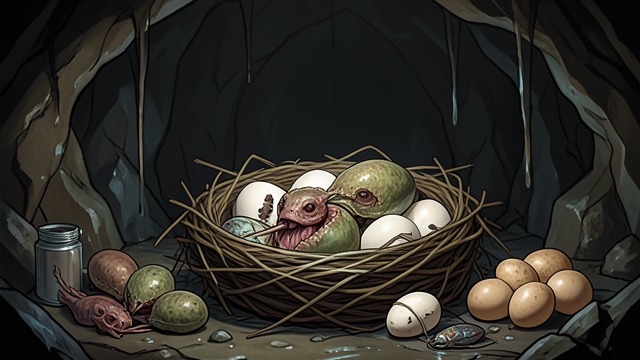
Leslie finds developing eggs inside the dead hatchlings. The animals may reproduce through parthenogenesis, allowing a single survivor to establish a new population.
The scale of the danger
The discovery changes the team’s estimate of how quickly numbers could grow. Even successful attacks may fail to contain the crisis if nests are missed or one animal survives unnoticed.
Evolution in the Field
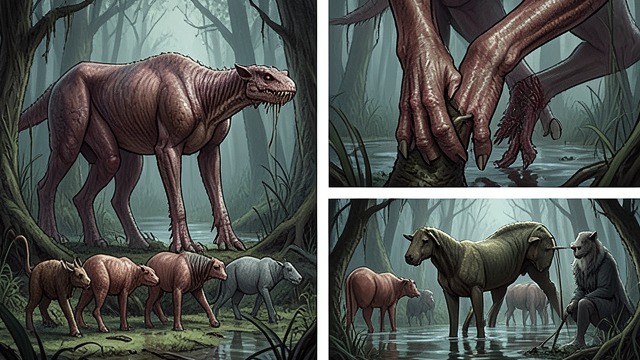
Evolution in the Field
Changing bodies
Denise notices that later specimens have denser skin and longer legs than earlier animals. The differences suggest that the population is adapting rapidly across generations.
An uncertain endpoint
Ron fears that continued adaptation could make the creatures less dependent on water and harder to contain. The team therefore treats biological change as an active operational threat, not merely a subject for future study.
Two days after the Virginia Beach discovery
Later that morning, in Leslie’s laboratory
During the first field-team briefing in Sweetboro
After the Richmond specimens are dissected
During the Louisiana river operation
