Oscar Brown
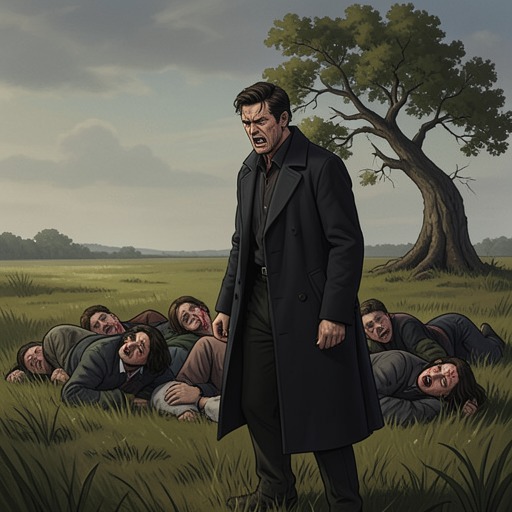
Secret InvasionOscar Brown is a small-town opportunist whose resentment becomes a mechanism for spreading the sligger crisis. After being displaced from Brittney Nelson’s home by her new partner, Randy Miller, Oscar turns the news of civilian nest searches into an opportunity for revenge: he intends to carry sligger eggs from the East Coast to Port Arthur and place them behind Brittney’s house. The scheme makes him both a calculating antagonist in the couple’s story and, as its consequences widen, a deeply compromised figure in the crisis.
Identity and Background
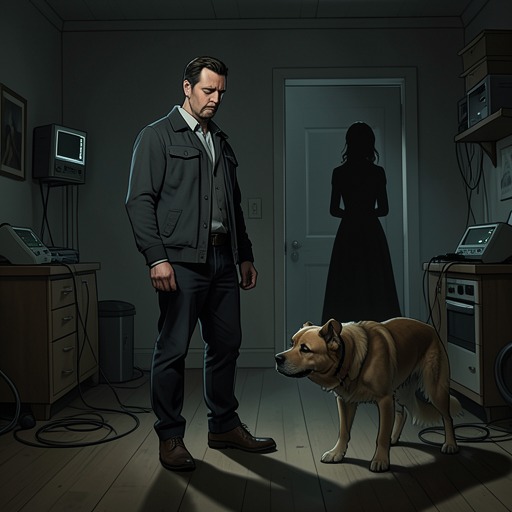
Oscar’s immediate grievance is personal. He had been Brittney’s boyfriend for almost three years, and remembers their earlier life together as pleasurable and energetic. The relationship changed when Brittney began seeing Randy, her high-school sweetheart, and Randy persuaded her to make Oscar leave so he could move in. Oscar resents both of them: he sees Randy as a small-town deputy who uses his authority to bully people, and Brittney’s decision as a betrayal that leaves him alone and displaced. Even after anger gives way to depression, Oscar misses Brittney and the life they shared, including her Chihuahua, Precious. That combination of wounded attachment and hostility shapes the revenge he later chooses.
Oscar’s position in Port Arthur is precarious. He has little education or work experience, but has managed to meet his needs by dealing drugs and believes he can survive by starting over. When Randy threatens to use alleged vehicle violations or contraband to arrest him, Oscar recognizes that the deputy’s authority gives him the advantage in any confrontation. Rather than risk an arrest built on Randy’s word against his own, Oscar backs down and leaves town. The retreat does not resolve the conflict: it gives his anger room to return on the road, where thoughts of Randy and Brittney turn from resentment toward fantasies of killing them. His first imagined method seems too likely to fail, so he looks for a way to get even without being arrested or shot.
The Scheme and Its Execution
A radio report supplies Oscar with a way to turn private revenge into an indirect attack. The news describes authorities overwhelmed by searches for sligger nests and states allowing civilian groups to help; a group near Savannah has already found a nest and killed as many as four adults. Oscar knows the creatures are dangerous, but imagines that danger as useful. Since the outbreak seems to belong to the East Coast, he first assumes it could not reach Port Arthur, then realizes he could bring the threat there himself. Rather than break into Brittney’s house and risk being caught or shot, he plans to hide eggs in her backyard, trusting that the hatchlings will attack the couple while he is elsewhere.
Oscar’s plot depends on access created by the very emergency he intends to exploit. He decides to travel to the coast, join a hunting party, and steal eggs under cover of the civilian search effort. The trip from Texas to Savannah takes thirteen grueling hours, with an overnight stop in Mobile, Alabama. Near the Savannah River, he follows the cobblestone streets to the waterfront, then waits until night before driving toward the wetlands between Savannah and Tybee Island, where the group is searching south of the river. He arrives behind two trucks and joins a woman and three men outfitted in waders and carrying shotguns. Oscar brings an LED flashlight and a loaded 9mm pistol; he is unsure how effective his weapon would be against the creatures, but assumes the group’s combined firepower will protect them.
During the search, Oscar finds six pale, greenish-yellow eggs, each roughly a foot long, bunched beneath reeds. Their resemblance to the eggs shown on television confirms what he has come to find. The discovery converts his imagined scheme into an actual act: he takes two eggs and carries them back to Port Arthur. The journey makes the eggs a concealed cargo as well as a biological danger; they remain in his backpack on the passenger seat, held by a seatbelt, while their acrid smell forces him to keep a car window open for the drive.
Back in Port Arthur, Oscar keeps to the outskirts and checks into a highway motel rather than risk approaching Randy or Brittney too soon. He inspects the eggs and reasons that, if they hatch, the creatures may attack the first prey they encounter. At night he goes to Brittney’s yard, pushes one egg two feet into weeds beneath lumber, then places the second beside it. He checks the house for lights or movement before retreating to his car, pleased with what he has done and hoping the eggs hatch that night. His plan’s intended victims are Randy and Brittney, but transporting and planting the eggs also makes Oscar the deliberate link between the East Coast infestation and the danger now introduced into Port Arthur.
Consequences, Guilt, and Ending
Oscar’s revenge succeeds in its immediate aim, but the creatures do not remain confined to the violence he intended. As sligger attacks spread through Brittney’s neighborhood, Oscar watches local reports of at least two further deaths along the Sabine Neches Canal, with the creatures apparently moving south toward the ocean. He stays away from the waterways, recognizing that the danger he brought to Port Arthur has become a threat to people beyond the two targets he chose. The route of the outbreak also places his act within a larger pattern: officials conclude that coastal currents have carried the creatures east through the Gulf of Mexico, while Port Arthur is identified as the westernmost point from which they have been reported.
Oscar’s response is divided between satisfaction and responsibility. He still regards Randy and Brittney as deserving of what happened to them, and initially takes pride in having made his plan work. Yet the deaths of other people cannot be contained by that judgment. He reflects that those victims were innocent and that his actions helped bring about their deaths, even though he had not intended to kill them. His distinction between deliberate revenge and unintended wider consequences offers him a defense, but not an escape: he knows that he chose to transport the eggs and place them where they could hatch. The crisis has made his private grievance public in its effects.
His self-image shifts accordingly. In a mirror, Oscar sees himself as a killer and struggles with what that means; the thought that Randy and Brittney deserved to die sits beside the knowledge that other people have been killed because of him. Later, he judges himself more harshly, imagining an empty person who disregarded public safety and endangered thousands. He calls himself a bio-terrorist, while recognizing that this was not his intention. The label marks a change from the self-satisfied schemer who imagined that the creatures could carry out revenge without implicating him: once the consequences spread, he can no longer treat the attack as a cleanly outsourced act.
Oscar’s guilt does not lead to an attempt at repair. When he returns to Brittney’s former home, the old bedroom recalls the relationship and the life from which he was expelled. He sits on the bed where they once slept, takes a musty sheet, ties one corner to the headboard and the other around his neck, then slides from the mattress. His memories pass through happiness, shame, despair, pride, and guilt before fading as he loses oxygen. The ending gathers the contradictions that have defined him: he has achieved revenge, still retains some attachment to Brittney, and cannot reconcile his satisfaction with the deaths his scheme caused.
The wider response to the outbreak proceeds after Oscar’s death. Four days after the creatures break into a hotel room in Baton Rouge, Army Reserve troops locate and destroy a nest near the Mississippi River, and Ron Tully’s team searches northward as the operation advances to St. Francisville. Ron’s assessment records the creatures’ ability to reproduce asexually and adapt rapidly, and stresses that the exterminated animals were disposed of without leaving remains that could contaminate the ecosystem. Searchers cover another forty miles of waterways without finding a further nest; reports from the Gulf Coast also improve, and officials estimate that the remaining infestation can be eradicated soon. This containment effort addresses the biological danger Oscar helped introduce, but it does not undo the deaths or restore the distinction he hoped to preserve between revenge against his enemies and responsibility for everyone else.
Ecological Context and Narrative Significance
Oscar’s act takes place against a biological mystery that remains unresolved even as the danger becomes immediate. Tissue analysis has not identified what the creatures are, and tests on residue recovered from the Nazi U-boat beneath Wrecker Island are still pending. Denise suspects that a substance created for genetic mutation leaked into the ocean long ago; her theory is that generations of sliggers acquired characteristics from the marine animals they ate. The proposed origin is uncertain, but the response to the creatures is not: their tissue must be collected and their carcasses burned so scavengers cannot carry mutated DNA further through the food chain.
Oscar does not cause the original contamination, but he deliberately carries viable eggs from the coastal search zone to Port Arthur and plants them where they may hatch. In doing so, he turns the crisis’s existing civilian response into a means of dispersal: a search organized to locate and destroy nests gives him access to the eggs he wants to steal. His scheme therefore links a private act of vengeance to a wider ecological hazard, one that cannot be confined to his intended victims or measured by his intentions. The contrast sharpens the novel’s account of responsibility: the creatures’ origin remains a scientific hypothesis, while Oscar’s decision to move them across the country is deliberate.