Oscar's Suicide
Secret InvasionOscar’s suicide is the personal culmination of the sligger crisis in Port Arthur: as a national response closes in on the creatures’ suspected origin point, Oscar recognizes that his own deliberate planting of eggs may have helped endanger the public. The outbreak’s spread becomes, for him, not merely a disaster to fear but a responsibility he can no longer evade.
The Emergency and Oscar’s Recognition of Responsibility
The immediate trigger is a national news update Oscar hears in his motel room. The President has declared a National State of Emergency after attacks by sliggers in the Gulf states, and troops from the National Guard and Army Reserve are being sent to contain and eliminate the animals. Port Arthur is among the locations receiving troops: the search is focused on waterways and nests because officials consider the city a possible origin point for the creatures’ current migration. Oscar understands the danger of that attention personally. He fears investigators may trace the spread to Brittney’s house and then back to him, because he had placed sligger eggs beneath its back porch.
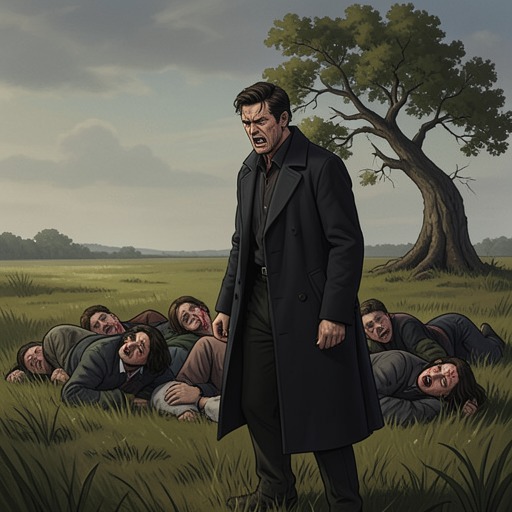
That fear becomes an accusation against himself. Looking at his reflection, Oscar sees a person who disregarded public safety and put thousands in danger. He identifies himself as a biological terrorist, though he had not intended that consequence, and measures his conduct against the deadly violence he condemns in others. The distinction between intention and outcome offers him no relief: the creatures are spreading, the government is mobilizing, and his own part in the crisis is no longer abstract. The guilt, the narrative makes clear, is what drives his decision to die.
Return to the Former Home and Death
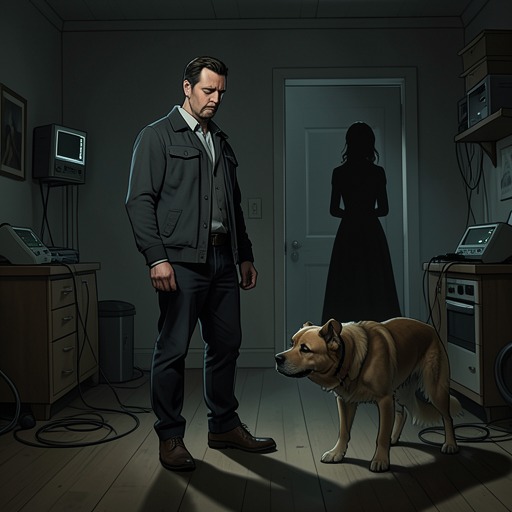
Oscar leaves the motel and drives toward Sabine Lake, then turns to the house he once shared with Brittney—the same house where he had placed the sligger eggs beneath the back porch. He has not returned since planting them. The approach is a bittersweet homecoming: the familiar building recalls mostly good memories, but inside, dried bloodstains mark the floor. In the master bedroom, the old bed remains, turning the house’s former intimacy into the setting for his final act.
Oscar takes a twisted bed sheet, ties one corner to the headboard, loops the other around his neck, and slides from the mattress after pulling the fabric taut. As oxygen runs out, memories surge through him in flashes of happiness, shame, despair, pride, and guilt, before fading. His death closes his personal arc in the crisis at the place where his private betrayal of Brittney and his role in the outbreak had converged.
The Crisis Beyond Oscar’s Room
Oscar’s private reckoning unfolded against evidence that the outbreak had already escaped any single, easily contained site. Reports of an attack at a Georgia campground and clear footage of eggs on a Florida beach placed the danger far apart along the coast. Denise concluded that the distance between the locations pointed to multiple nests, eggs, and creatures, and warned that more attacks—and many deaths—could follow before anyone knew where the next nest lay. The scale of that uncertainty gives Oscar’s fear its wider context: the danger he associated with the eggs beneath Brittney’s porch belonged to an expanding emergency, not an isolated secret.
The creatures’ possible origin and movement remained matters of investigation rather than settled explanation. Denise’s tissue analysis had not identified them conclusively; residue from the Wrecker Island Nazi U-boat was still awaiting test results. She suspected it might contain a compound designed to induce genetic mutation, which could account for the creatures’ mixed marine characteristics as they fed on other species and changed across generations. Later, investigators concluded that coastal currents had carried them east along the Gulf of Mexico from somewhere west of Port Arthur, the westernmost reported location at that point. The combination of uncertain origin, waterborne movement, and rapid biological change made the threat difficult to reduce to one person’s act, even as Oscar feared his own role could be traced.
The response likewise widened beyond the local search. In New Orleans, National Guard troops were briefed to avoid the creatures’ toxic appendages and kill them without explosives, while police searched culverts and crevices away from the water’s edge. Farther upriver, Army Reserve troops destroyed a nest near Baton Rouge and continued searching toward St. Francisville. Ron later reported that the creatures reproduced asexually and adapted rapidly, but that the found animals had been exterminated without leaving remains that could contaminate the ecosystem; after forty more miles of waterways were searched, no further monsters were found. Against this organized effort, Oscar’s return to the house where he had planted eggs marks the crisis at its most intimate scale: a broad, still-mysterious invasion becomes inseparable from the guilt he attaches to one concealed act.
Civilian Search and the Scale of the Coast
The widening search also drew civilians into dangerous terrain. In Savannah, Molly Foster led a group that included two of her massage clients, Robbie and Steve, who were frightened by the creatures but eager to hunt them. Wearing rubber chest waders for the waterlogged route, they entered by Old Fort Jackson, followed the fence toward the Savannah River, and moved east with River Street’s lights behind them. They checked the tightly packed riprap outside the fort, then continued past wooded shoreline to the brightly lit SeaPoint Industrial Terminal. The banks there were similarly armored with close-set rocks, leaving little room for a large animal to nest; the group moved quickly, also mindful that the terminal’s security staff might intercept them.
After a confrontation that left bodies for the authorities to dispose of, Molly called the police and agreed to wait rather than continue the hunt. The group was already two miles from its vehicles, and the remaining search gave the decision a larger significance: from their position, another ten miles of river remained before the Atlantic, not counting the inlets or the shores of numerous islands. Molly reckoned that searching those waterways could take months. Such efforts made the crisis visible not only as a government emergency but as an immense stretch of coastline that no single team could cover.