Richmond
Secret InvasionRichmond, Virginia, gives the early Sligger investigation a working base: at the VA Bio+Tech Park, biologist Leslie Bickers examines three eggs recovered near Virginia Beach, and federal officials recruit Richmond-based researcher Ron Tully to join the response. The city’s role is not defined by a single public attack but by the laboratory work and scientific coordination through which scattered evidence begins to demand organized action.
Setting and the VA Bio+Tech Park
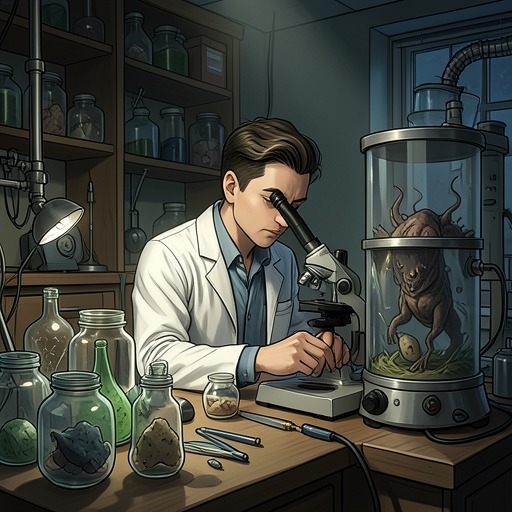
The laboratory scenes place Richmond’s scientific work inside the VA Bio+Tech Park. Leslie arrives on a Saturday after little sleep, encouraged by the prospect of examining three eggs she considers unlike anything known to the scientific community. The quietness of the day is concrete: traffic is lighter than during the week, her drive is quick, and in the building the sound of her shoes on the tile hallway is the only noise. After entering with her keycard, she puts on her lab coat and goes directly to the specimen tank.
The setting is therefore both an ordinary workplace and a point of contact with an extraordinary danger. The secure doors, empty corridor, and specimen tank establish a controlled research environment, but the material inside it has arrived from a lethal crime scene on the coast. Richmond is where evidence gathered elsewhere becomes an object of direct scientific scrutiny.
The eggs and the laboratory investigation
The eggs were collected after a young boy was killed in woods near Virginia Beach. His parents found a nest in the ground that may have held as many as ten eggs; by the time authorities arrived, only three remained intact, and the others appeared to have hatched. A brief search found no animals. The three eggs brought to the laboratory were thus both a limited sample and evidence that the nest might already have produced young.
Their appearance makes Leslie’s restraint significant. Each is about the size of a football, with a bumpy, greenish-yellow surface and a soft, thick, leathery covering rather than a hard shell. Though she is tempted to cut one open, she decides that a responsible biologist should let the organism finish developing. For the time being, she will examine the exterior and may take samples from inside with a syringe. The eggs’ presence in Richmond turns the laboratory into a place where investigation must balance the desire for immediate answers against the need to preserve a developing specimen.
Federal recruitment and the city’s wider role
Richmond also enters the response through Ron Tully, who is at home watching television when a call identified as coming from the U.S. Department of the Interior reaches him. Gina Taylor tells him the matter is extremely important and asks him and Andy Carlyle to go to the VA Bio+Tech Park and join Leslie, one of its resident biologists. She describes the subject as an unidentified animal found near Virginia Beach and connects the inquiry to reports of sea monsters off the South Carolina coast. The call brings federal attention, a local researcher, and the laboratory’s existing specimens into the same investigation.
The city’s significance lies in this convergence rather than in evidence that Richmond itself has been attacked. Its laboratory holds the surviving eggs from a coastal nest, while the recruitment call assembles additional expertise around the unknown animal. Richmond thus functions as an investigative hub in the crisis’s early phase: a place where physical specimens and newly mobilized personnel meet, even as the threat’s known evidence comes from elsewhere.