Savannah Civilian Sligger Hunt
Secret InvasionSavannah Civilian Sligger Hunt is the nighttime encounter in which Molly Foster and five companions found a Sligger nest in the tidal wetlands beyond Savannah, destroyed its eggs, and were immediately attacked by four adult creatures. The hunters survived and killed all four, but the episode made clear that civilian search parties could uncover nests only by accepting the risk of a close-range confrontation—and that one successful search covered almost none of the sprawling waterways still at risk.
Public Alarm and a Volunteer Search
By the time the group set out, national news broadcasts had warned people to stay indoors at night and away from the water until authorities declared areas safe. Social media circulated jokes about the creatures, but the threat also prompted people to organize East Coast hunting parties and search for nests themselves. In Savannah, police concentrated their efforts along the river after the massacre at Jekyll Island. River Street, however, remained open, with restaurants, pubs, galleries, confectionery shops, and riverboat rides continuing to draw visitors.
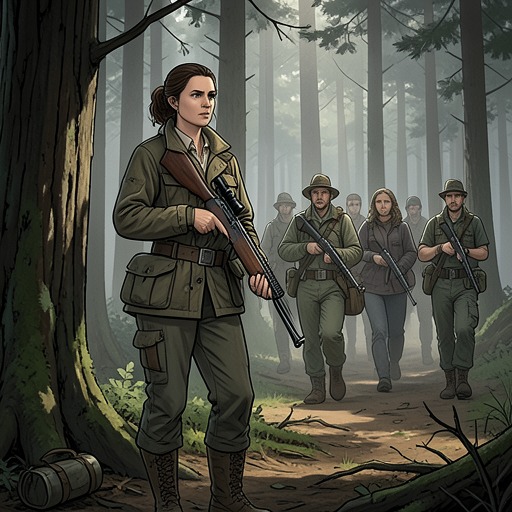
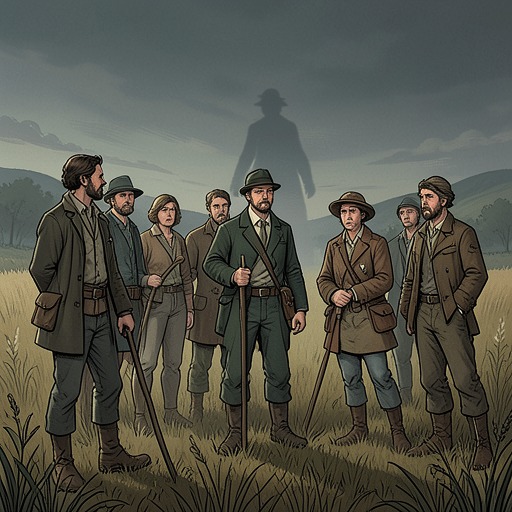
Civilian hunters had reason to search outside populated areas: there they could move with guns without interference from law enforcement. Molly Foster assembled five friends, including her younger brother Ryan. Raised in a military family, comfortable around firearms, and taught to hunt by her father, Molly was prepared for the outing; duck hunting was her favorite winter pastime, and she carried her best shotgun. The group parked near Old Fort Jackson, about three miles from River Street, and started out well after dark.
Following the River to Suitable Ground
The hunters first moved along the fort’s riprap shoreline, where tightly packed rocks left little room for a nest. They continued through wooded riverbank to SeaPoint Industrial Terminal, sweeping its mile-long waterfront beneath bright overhead lights. Its dense riprap also offered few hiding places, and the group hurried through before the terminal’s security personnel could intercept them.
Beyond SeaPoint, the shoreline changed. Tidal wetlands stretched toward Mackey Point and the South Channel of the Savannah River, with more potential nesting ground. High tide had submerged the low vegetation; black rush, giant cutgrass, and Indian rice bordered the water. As the group entered thicker grass, the mud became less troublesome but the denser growth gave them more to search through. The change in terrain brought them from relatively open, hard-edged banks into the kind of cover where a nest could be concealed.
The Nest and the Attack
Molly’s light picked out bright objects in the cutgrass. They were six eggs, each about a foot long and grouped together—far too large to be alligator eggs. The hunters recognized them as Sligger eggs. At Ryan’s suggestion, Molly stepped back and fired. Her shotgun blast shattered the eggs, scattering sticky debris through the grass. Some offspring inside were clearly dead, but several damaged young still twitched; Ryan shot them as well.
The hunters had barely finished when the smell of sulfur rose strongly over the pluff mud. They noticed the stench and the concern on one another’s faces; then the brush began to move. Four creatures burst from the foliage and converged on them. Gary and Dave fired first, knocking two beasts backward. The sound prompted Robbie and Steve to squeeze their triggers, and Steve’s shot brought down a third. The last creature came almost within striking range before Molly aimed at its head and fired, killing it with a direct shotgun blast.
The group stood stunned for several seconds before the reality of what had happened registered. Ryan celebrated their success; Steve’s hands shook, and Molly described her pounding heart and rush of adrenaline. Their reaction captures the encounter’s reversal: the hunters had entered the wetlands to destroy a hidden nest, but the act of destroying it was followed almost at once by an attack from four adult Sliggers concealed nearby. Their weapons proved effective, yet the creatures had been close enough to make the shooting a desperate defense rather than a controlled operation.
The Cleanup and the Limits of the Search
Molly called the police, reported the confrontation, and gave the location of the bodies so they could be disposed of. The responding officer told the group to wait. Molly was tempted to continue downriver, but it was late, and they were already two miles from their vehicles. She ended the hunt for the night and chose to return after dealing with the authorities. The account does not describe any hunter being injured.
While they waited, Molly considered how much shoreline remained. From their position, the Atlantic Ocean was another ten miles away, without counting the many inlets or the shores of the numerous islands. Searching those waterways alone could take months. The encounter thus joined a local victory to a much larger problem: even a group that found eggs and killed every creature that attacked it could not quickly secure the entire river system. Molly later remained involved in searches along the Savannah River; a deputy who responded to her group’s operations recalled having been part of the cleanup unit on three occasions. At the same time, the wider crisis had an origin the characters could not yet fully establish: Denise’s theory connected the creatures’ unusual traits to a mutagenic substance associated with the Nazi U-boat beneath Wrecker Island, while the precise test results were still pending. The hunt’s immediate lesson was more concrete: the wetlands held nests, the creatures could lie close by, and the scale of the waterways exceeded what isolated volunteer parties could cover.