Savannah River
Secret InvasionThe Savannah River is a working waterfront and a potential search corridor during the Sligger crisis. After attacks elsewhere made a wider coastal spread seem likely, the river’s banks became a focus of police attention and civilian searches. Its contrast between a crowded commercial riverfront and tidal wetlands also shapes how the hunt unfolds: the built shoreline offers few places for a nest, while the marsh beyond presents more plausible cover.
Setting and Riverfront Life
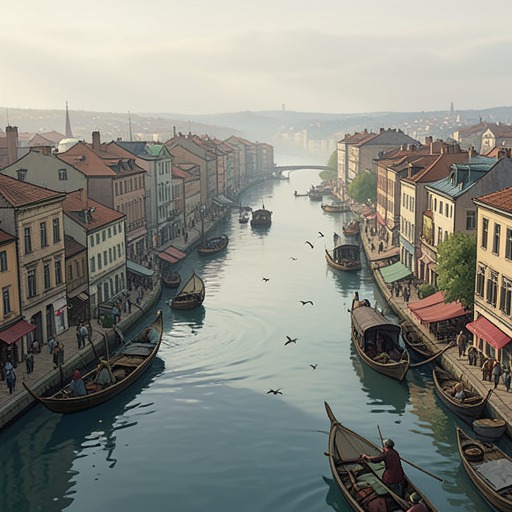
In Savannah, the river runs beside River Street, whose brick and cobblestone walkways remain busy even as the threat escalates. Patrons still come for restaurants, confectionery shops, pubs, galleries, ship watching, and rides on historic riverboats. The continued activity gives the waterfront an uneasy dual character: daily commerce persists within sight of an emergency that has already prompted an intensified search along the river.
The river’s tidal reach also determines conditions along its banks. On the night of the civilian hunt, the tide is high, and the ocean’s salt wedge pushes inland beneath the river, raising its level. Low vegetation is submerged, while taller stands of black rush, giant cutgrass, and Indian rice border the water. The change in water level is not simply background scenery; it complicates a search through a landscape where suitable cover may lie close to the water’s edge.
A Threatened Search Corridor
News of attacks in separated coastal locations led investigators to expect multiple nests rather than a single, localized outbreak. In their assessment, the distance between the reported incidents meant that nests and creatures could be distributed along the coast, with further attacks likely before authorities could find them. The Savannah River therefore entered the crisis as a place to search amid uncertainty, not as a location where the source material establishes a confirmed nest.
The broader investigation offered a tentative explanation for the creatures’ unusual biology. Denise’s tissue analysis had not identified them conclusively, and tests on residue recovered from the Nazi U-boat beneath Wrecker Island were still pending. She suspected that an engineered substance had induced genetic mutation, while successive generations acquired traits from marine species they ate. The hypothesis remained unconfirmed, but it made the possibility of environmental spread especially consequential. Denise accordingly urged responders to collect and burn all remains from killed Sliggers so scavengers could not carry mutated tissue further through the food chain.
Police Presence and Civilian Searches
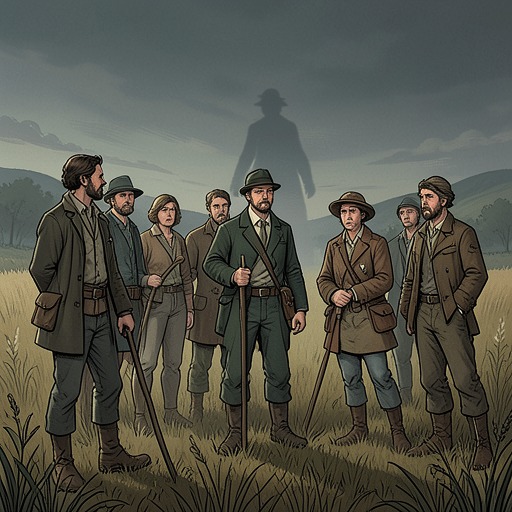
After the campground attack on Jekyll Island, Savannah concentrated police personnel along the river to look for signs that the creatures had occupied the area. The official search sat alongside a broader public response: national broadcasts advised people to stay indoors at night and away from the water, while groups of civilian hunters organized their own searches. To avoid interference from law enforcement while carrying guns, those groups had to operate outside populated areas.
One party began at the closed gate by the Old Fort Jackson entrance. It turned left, followed the fence to the river, rounded it, and then moved east with the lights of River Street behind it. The first stretch, a bank of tightly packed riprap in front of the fort, was comparatively easy to inspect: the dense rocks left no space for a large animal’s nest. The historic fort remained in view as the hunters worked, its cannons still fired daily for tourists, but the group kept its attention on the shoreline.
Beyond the fort, the searchers passed wooded shore and reached SeaPoint Industrial Terminal. Bright overhead lights made its waterfront easy to sweep, and its similarly dense riprap again offered little opportunity for a large animal to nest. They hurried through the mile-long industrial property before security personnel could intercept them. This portion of the hunt shows how the built riverbank could be searched quickly—and why the party continued toward less developed ground.
From Riprap to Tidal Wetlands
Beyond SeaPoint, the shoreline opened into tidal wetlands. The party walked east toward Mackey Point, a route that would take it around to the South Channel of the Savannah. Unlike the fort and industrial terminal, this stretch contained extensive areas that could conceal nests. The search thus shifted from checking exposed, rock-lined banks to approaching a landscape with the dark, wet cover the investigators considered promising for Sligger nesting sites.
The river’s role in the novel’s wider crisis is defined by this combination of uncertainty and access: it is a populated route under official watch, but its connected shorelines and wetlands also demand searches beyond the visible city waterfront. The hunters’ progress from the lit commercial and industrial banks toward marsh vegetation turns that geographical contrast into a practical problem of detection—where the terrain makes a nest unlikely, and where the shoreline begins to offer the cover the searchers fear.