Sligger parthenogenesis
Secret InvasionSligger parthenogenesis is the reproductive capacity that makes the Sliggers’ spread especially difficult to contain: hatchlings examined after their deaths were found to carry eggs already beginning to develop. The discovery suggested that a creature might produce another generation without a mate, raising the possibility that even one survivor could seed a colony. In the story, this is both a biological finding and a change in the scale of the emergency—from scattered attacks to a threat that could multiply faster than search teams could respond.
Discovery in the Richmond specimens
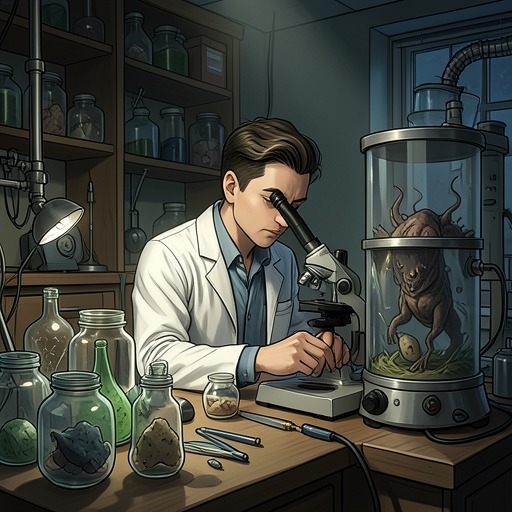
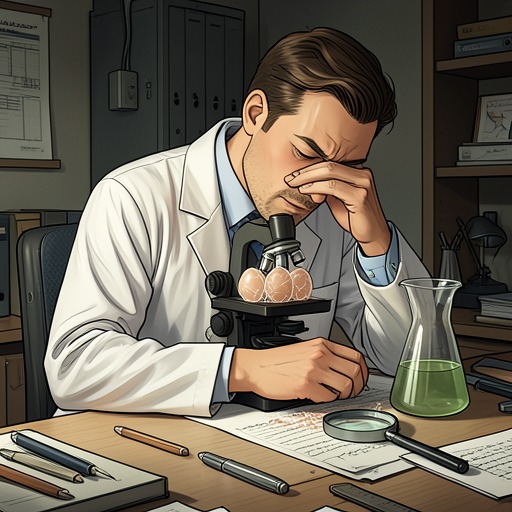
The evidence emerged from the remains of live specimens that had been electrocuted after becoming too aggressive to keep. Leslie Bickers, a biologist who had examined their bodies, reported finding little eggs inside the dead hatchlings. The eggs were not merely present: they were already beginning to develop. Her observation gave the group a concrete reason to fear that the animals’ reproductive cycle was active even at the youngest stage they had examined.
Leslie’s finding came to Ron Tully by phone. After ending the call, he relayed it to Mason Parker, Denise Baddington, Josh Moody, and the others: the young animals carried developing eggs within them. Mason immediately grasped the alarming implication, asking whether a single animal could produce a colony. That possibility is not presented as a separately demonstrated breeding trial; it is the inference the characters draw from the bodies and the developing eggs. The distinction matters: the discovery is direct evidence of eggs inside hatchlings, while the prospect of a lone animal founding a colony is the danger inferred from it.
What parthenogenesis means
Denise identifies the process as parthenogenesis: offspring developing from an unfertilized egg. Ron responds that this form of reproduction is not without precedent in nature, citing the bonnethead shark, also called the shovelhead. Denise adds blacktip sharks, some crayfish and frogs, whiptails, and Komodo dragons as examples of animals that have reproduced parthenogenetically. Their exchange gives the frightening discovery a biological name and places it beside known reproductive capacities rather than treating it as wholly inexplicable.
Denise also proposes an explanation for how the Sliggers acquired the ability. Their evolution, she suggests, may have involved eating one of the species capable of parthenogenesis and absorbing its DNA. This is a theory, not a confirmed result. It forms part of her broader account of the creatures’ mixed animal characteristics: generations feeding on other species may have mutated with DNA from their prey. Earlier, she had told Ron that tissue analysis had not established conclusively what the Sliggers were, and that tests on residue from the Nazi submarine beneath Wrecker Island were still pending. She suspected that the residue might be a substance engineered to induce genetic mutation when introduced into an organism’s DNA. The proposed transfer of reproductive capacity therefore belongs to an unsettled explanation of the Sliggers’ origins, not to a verified laboratory conclusion.
From unusual biology to population danger
For Leslie, the essential consequence was numerical. If each new hatchling already carried developing eggs, she warned, the population could grow exponentially. Josh Moody likewise stressed that the Sliggers might reproduce almost as fast as they grew, leaving their numbers beyond the capacity of the response effort to manage. Mason agreed that action had to be swift, calling for a public warning and for coastal police departments to be informed. The finding thus changes the meaning of a missed nest: it is no longer simply a cluster of dangerous animals left behind, but a possible source of further generations.
The threat becomes more concrete when Mason later warns Mittenfeld that the Sliggers are born with developing eggs inside them. Mittenfeld’s team had already returned to some previously searched areas to deal with nests they had missed; after hearing about the eggs, he recognizes that they cannot afford to overlook even one nest. Mason’s warning about concentrating firepower against groups of the creatures reinforces the operational stakes: searchers need enough force to survive an encounter, but they also need a thorough search that does not leave reproductive pockets behind. Parthenogenesis turns speed and completeness into linked requirements.
Spread, response, and limits of the evidence
The broader crisis gives that concern its geography. Reports of an attack at a Georgia campground and eggs on a Florida beach show that the danger has appeared at locations too far apart to be explained by one nest. Denise concludes that multiple nests, eggs, and creatures must be present along the coast, with attacks likely to continue and lives at risk. Later, investigators conclude that coastal currents carried Sliggers along the Gulf of Mexico, eastward from somewhere west of their position; Port Arthur, Texas, is the furthest-west reporting point mentioned. These observations show a distributed, water-linked invasion, although the text does not establish that parthenogenesis itself caused movement between locations.
The eventual search along the Mississippi shows both the urgency of containment and the care required in describing its success. Four days after the creatures broke into a Baton Rouge hotel room, Army Reserve troops destroyed a nest near the Mississippi. Ron’s team continued north with the searchers to St. Francisville. No further nests were found, and the group became convinced that the spread had been stopped; they had also searched forty more miles of waterways without finding another monster. Ron’s assessment to the U.S. Department of the Interior records asexual reproduction and rapid environmental adaptation among the Sliggers’ physical characteristics, alongside the clean disposal of exterminated creatures to prevent remains from contaminating the ecosystem and mutating its animals. The report marks a successful sweep of the known Mississippi spread, not a disproof of Leslie’s finding. Parthenogenesis remains the reason that an apparently empty stretch of water cannot be treated casually: one missed nest could make the count begin again.