
Manuel and Nina’s Last Shelter
Senza sangueThis flow traces the tenderness and protection between Manuel Roca and Nina as a loving father tries to shelter his daughter from violence, leaving her with a final image of safety that shapes her life.
increasing Bearing strength in each event
 decreasing
Bearing strength in each eventdecreasingA Father’s Warning
A Father’s Warning
Recognizing the danger
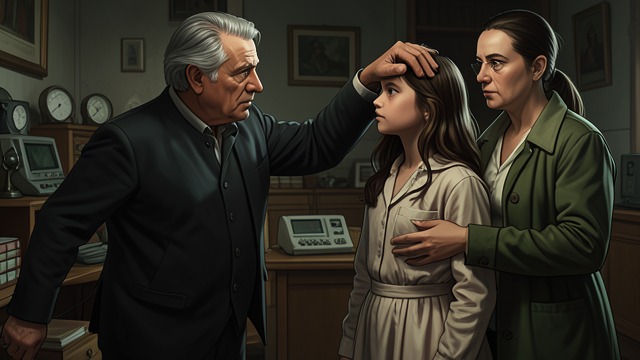
When Manuel Roca sees a car approach the isolated farmhouse, he understands that its occupants have come for him. He turns from the window and places a hand on Nina’s head, grounding her in a moment when danger has already entered their home.
His response is protective rather than explanatory. He gives instructions to the children and readies himself for what is coming, while Nina is still too young to understand the political history behind the men outside.
Fear translated into care
Manuel addresses Nina gently and leads her toward the hidden hatch. He does not offer her an account of the past or ask her to share his burden; he gives her a place to hide and a simple task to carry out.
His care is visible in the difference between the violence he anticipates and the tenderness with which he speaks. The father-daughter bond begins this crisis as an attempt to preserve Nina’s childhood for a little longer.
The Hidden Shelter
The Hidden Shelter
Instructions beneath the floor
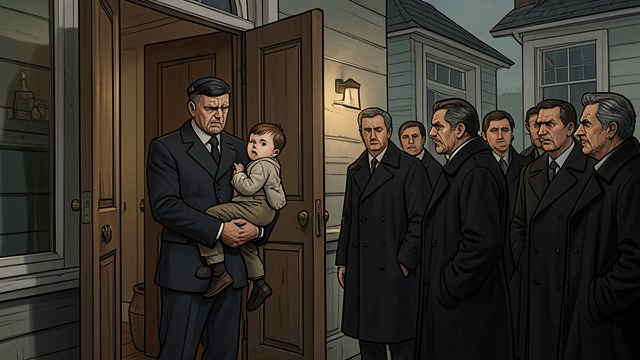
Manuel tells Nina to stay inside the Botola nascosta di Mato Rujo, remain still, and wait until her brother or the silence tells her it is safe. He repeats the instructions patiently, as though clarity might protect her from the terror of what she cannot see.
He also prepares her for the possibility that he will have to leave with the armed men. His words try to make that separation sound temporary, though his pause and the careful reassurance suggest that he knows he may not return.
A private farewell
Before closing the hatch, Manuel asks Nina for a kiss and strokes her hair. He tells her that what is happening is not what he wanted, giving her a small but lasting truth about his intentions when the world around them offers only confusion.
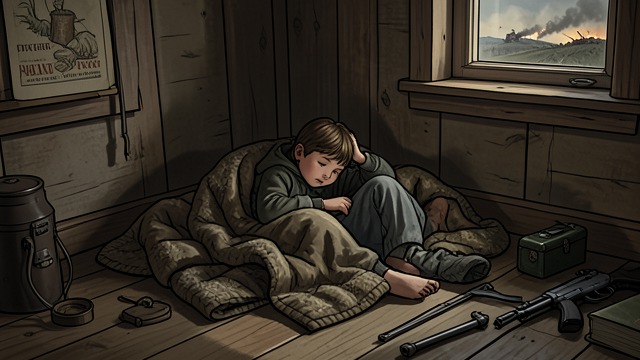
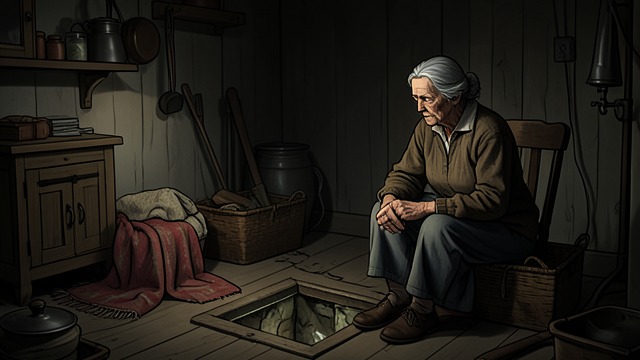
Nina descends with a blanket and lies curled in the earth. The shelter is a practical refuge, but it is also the last place where her father can still speak to her in safety and where his voice can briefly make the danger seem manageable.
A Voice Through the Floor
A Voice Through the Floor
Comfort under bombardment
From beneath the floor, Nina hears gunfire, breaking glass, and her father moving through the farmhouse. She cannot see what is happening, so the fragments of sound become her entire world and her father’s voice becomes its most important anchor.
She folds herself into a compact, orderly shape, finding comfort in the earth and blanket around her. That bodily retreat is a child's effort to stay safe, but it also shows how little control she has over the danger unfolding above her.
The father remains near
Nina distinguishes her father’s shadow from the other movement overhead. Even when the gunfire grows intense, she imagines his presence as something familiar, while the floor keeps them separated from one another.
The protection he created cannot shield her from the emotional reality of the attack. She hears the violence that may be taking him away, but can neither intervene nor ask him what is happening; their bond persists only through memory, sound, and the shelter he made.
The Brother’s Last Words
The Brother’s Last Words
A child enters the room
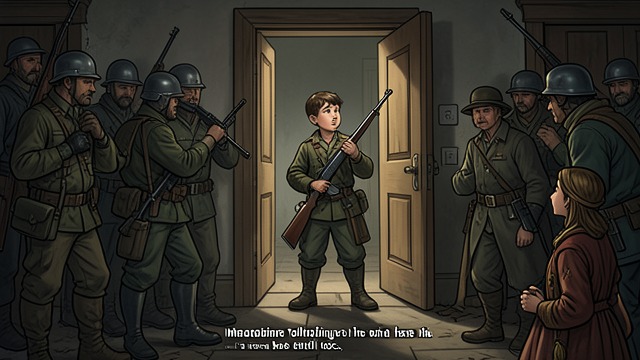
When Manuel’s son appears with a rifle and tells the armed men to leave, Nina hears her brother’s voice from below. Its plainness and unmistakable childhood quality move her: she imagines telling him later that he has a beautiful voice.
In that instant, the family bond is carried by sound rather than sight. Nina cannot see her brother’s courage or the danger he faces, but she recognizes him and responds inwardly with affection and hope.
Hope cut short
The men’s violence ends the moment almost immediately. Nina hears the sounds of the raid continue, but she does not know that her brother has been killed; from within the hatch, she can only hold onto the voice that seemed to promise a family still waiting above.
Her later life is shaped by this separation between what she heard and what she was told. Her brother’s final words remain a tender memory, untouched in her mind by the full scene she could not witness.
The Promise That Remains
The Promise That Remains
Memory without a complete scene
As an older woman, Nina explains that she remembers little directly from the night at Fattoria di Mato Rujo. She was underground, unable to see, and the sounds seemed dreamlike; much of what she knows came later from other people’s stories.
Yet her father’s tenderness remains legible inside that broken memory. She remembers the hiding place, the instructions, and the experience of being left alone, while the exact sequence of violence above her stays uncertain.
A daughter’s lasting interpretation
Nina challenges Pedro Cantos’s account of her father by insisting that Manuel was a splendid father. She does not deny what others say happened; instead, she resists allowing a single terrible night to define the entirety of her relationship with him.
That insistence is not a clean resolution of grief. It is an effort to preserve the private bond she knew against the competing stories adults have attached to her father and to her childhood.
As the approaching car nears Fattoria di Mato Rujo
Just before the armed men enter the farmhouse
During the firefight at Fattoria di Mato Rujo
At the climax of the raid
Years later during Nina’s account to Pedro Cantos
