
Tito’s Complicity and Nina’s Unseen Bond
Senza sangueThis flow traces the unsettling connection between Tito and Nina, from her childhood wish to be rescued by him to his silence, guilt, and eventual return to confront the memory they share.
increasing Bearing strength in each event
 decreasing
Bearing strength in each eventdecreasingThe Hatch Opens
The Hatch Opens
The hidden child discovered
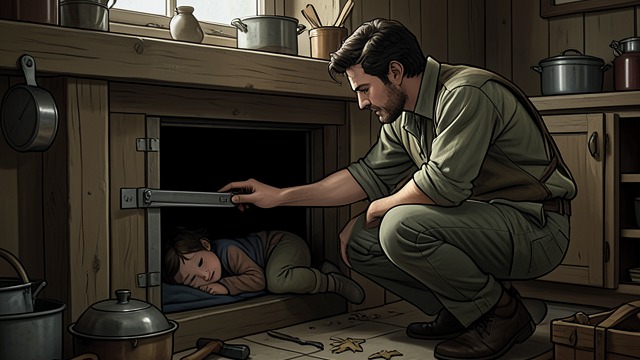
After the violence in the main room, Tito searches the farmhouse and finds the Botola nascosta di Mato Rujo beneath baskets of spoiled fruit. He lifts the cover and sees Nina curled in the position her father instructed her to keep.
He raises his pistol toward her, but the scene unsettles him. Nina’s stillness and careful posture recall a childhood sensation of safety, and he sees in her not a threat but a completed, sheltered shape.
A moment of recognition
Nina looks at Tito without expression. Neither child has the power to explain what is happening, but the encounter joins their lives through a shared instant of fear and attention.
Tito lowers the hatch without bringing her out. His choice is not a rescue, though it spares her immediate exposure to the armed men; it leaves Nina in the dark and makes his connection to her one of protection denied.
The Unspoken Warning
The Unspoken Warning
A truth left unsaid
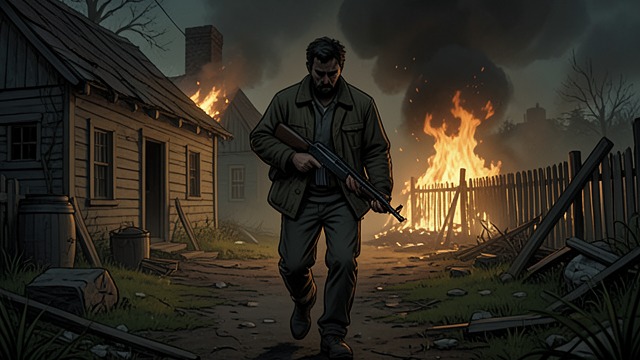
On the walk away from the farmhouse, Tito thinks about the child in the hatch. He wants to tell Salinas that a girl remains inside, but exhaustion and the silence around them keep the sentence from coming out.
His silence separates him from the rescue he could have attempted. Nina is not simply lost from his sight; she remains present in his thoughts, and he chooses to keep moving rather than interrupt the retreat to protect her.
The bond becomes culpability
When Tito sees the farmhouse burning, he understands that the decision to leave her behind has become more dangerous. He grabs el Gurre and demands to know what he has done, but the accusation cannot undo his own failure to speak.
He finally repeats, in a child’s voice, that they have done something terrible. Nina’s unseen presence has changed the event from a military operation into a personal betrayal that he will carry after the men leave.
A Child’s Wish
A Child’s Wish
Fear after the cover closes
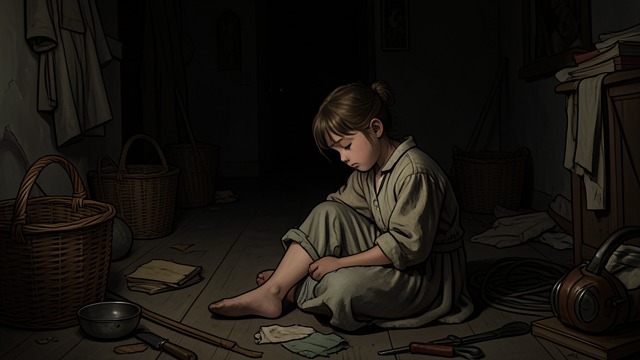
Nina remembers that seeing Tito open the hatch did not frighten her at first. The sight seemed natural, even welcome, until he lowered the cover and restored the darkness above her.
Then she heard the baskets move and his footsteps recede. What had briefly seemed like a possible change in her circumstances became the deepest fear of her life: she was alone again, and the person who had found her had left her there.
The wish for rescue
Nina tells Pedro Cantos that she believes she wanted Tito to take her with him. The desire is not a judgment formed with adult knowledge; it is a child’s longing for a person who has appeared at the edge of an unbearable situation.
Her recollection complicates Tito’s guilt. He may have experienced leaving her as a failure, while Nina remembers the encounter as the moment she hoped to be carried away from the dark. Their shared memory contains both abandonment and the possibility of rescue.
The Confession at the Cafe
The Confession at the Cafe
Naming the hidden witness
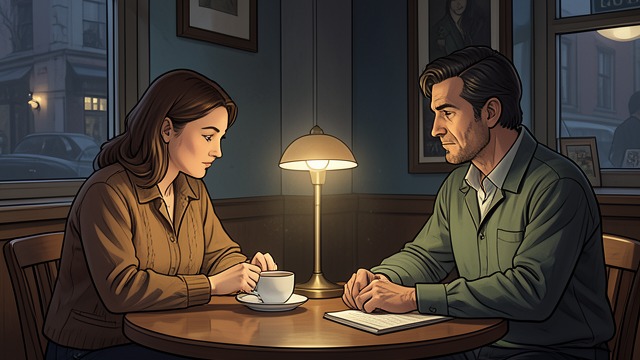
At the cafe, Pedro identifies Nina as the child who saw the men kill her father. He tells her that he was the one who discovered her and then closed the hatch again, finally giving a spoken form to the secret he had kept for years.
His confession places their childhood encounter in a new light. Nina has spent decades living with uncertain memories and other people’s stories; Pedro has spent those same years remembering her presence and fearing what she might recall.
Two versions of the same night
Pedro describes his guilt as a lifelong illness, while Nina says her direct memory is fragmentary and dreamlike. She knows the events through stories as much as through her own recollection, and she does not automatically accept his account as the only possible truth.
Their conversation makes the bond between them neither simple forgiveness nor simple accusation. It is a meeting between two people shaped by the same night in radically different ways, each trying to understand what the other carried away from it.
A Chosen Return
A Chosen Return
Intimacy without absolution
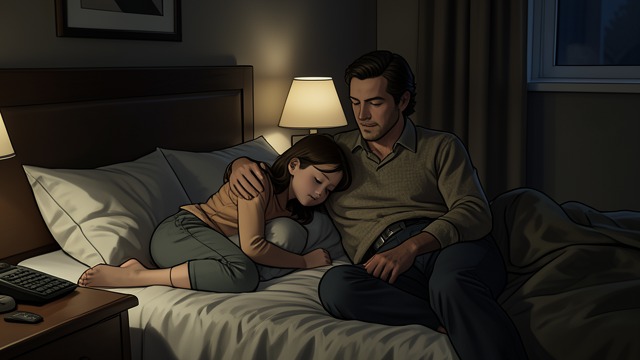
After their long conversation, Nina asks Pedro to go with her to a hotel and later invites physical intimacy. The encounter is not framed as a formal pardon for what he did; it is a choice she makes after hearing his confession and allowing him to remain beside her.
Pedro gives her his name, and she repeats it. That exchange makes him present as an individual rather than merely as the guilty young soldier she has sought, even as the history between them remains unresolved.
Recreating the shelter
When Pedro turns away, Nina curls behind him, draws her knees toward her chest, and settles into the posture she had held in the hatch as a child. She recognizes herself as an old child, returning to the form that once made her feel protected.
The gesture turns their shared past into a present choice. Nina lies beside the man who left her underground, seeking the closeness she had once wished he would provide; the return is tender, troubling, and deliberately her own.
After Tito enters the farmhouse during the raid
As Tito and Salinas leave the farmhouse
Many years later as Nina recalls her childhood in hiding
During Nina and Pedro Cantos’s meeting decades later
Near the end of Nina and Pedro’s night together
