La notte di Mato Rujo
Senza sangueLa notte di Mato Rujo is the night Tito carries as both a concealed act and an enduring debt: he opened the botola for Nina, then closed it, and believes she never forgot. Its significance reaches beyond the night itself. Years later, he travels to Belsito to confess the story to the Count of Torrelavid, only to be met with a composed denial that sharpens the difference between what happened and what can be acknowledged.
The remembered night
Tito recalls that many years after the events at Mato Rujo, he took a train to Belsito to tell the Count of Torrelavid about the botola, the girl, and everything connected with them. He frames the journey as a belated attempt to do what remained to be done once he could sleep at night and live among people who did not call him Tito: to speak of the night that had stayed with him.
In opening his account, Tito asks the Count whether he remembers that night at the farm. When the Count says he does not, Tito names it as the night of Manuel Roca. The exchange makes the remembered night a test of recognition as well as a recollection: Tito offers the event by which he understands his own past, while the Count refuses even its name.
The botola and Nina
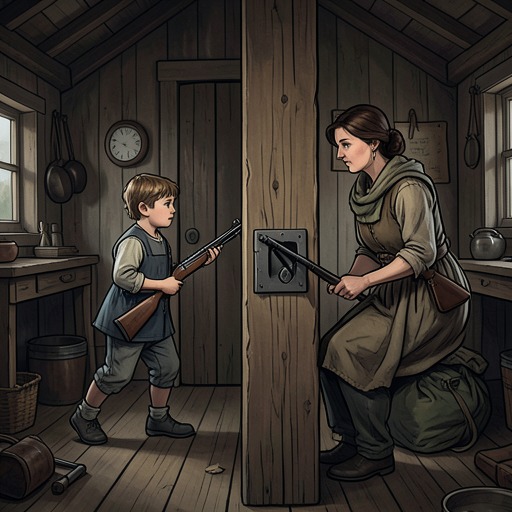
Tito identifies his part in the night with one precise action: he opened the botola and then closed it again. The account places Nina inside this act of concealment, but does not turn Tito’s recollection into an exoneration. He understands that she would remember what he did and that the secret remained his to carry.
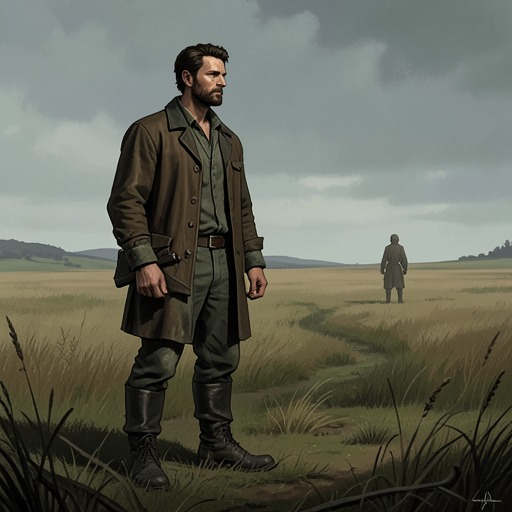
His expectation of Nina’s return is personal and specific. He says he never thought she would kill him by shooting him in the back or send someone who did not know him; he believed she would come herself, look him in the face, and speak to him first. In his view, the way she might confront him follows from the history between them: he was the man who opened the botola that night and then shut it again.
A confession refused
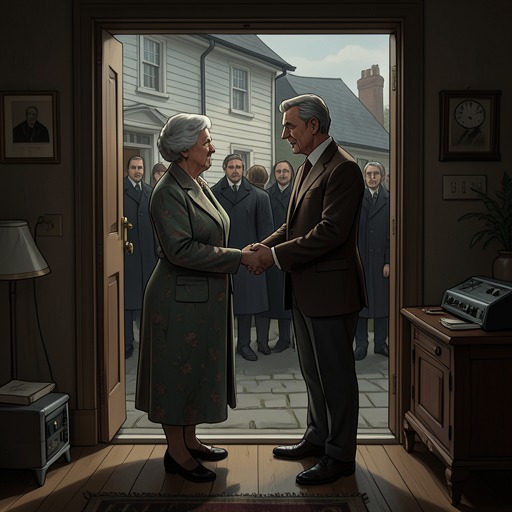
Tito’s journey to Belsito is presented as a deliberate confession, not an accidental return. The Count knows who Tito is, receives him kindly, takes him to the library, offers him a drink, and asks what he needs. Tito begins by asking about the night at the farm and then names Manuel Roca, but the Count calmly says he does not know what Tito is talking about. The narrator emphasizes the Count’s tranquillity and certainty; his denial is neither hesitant nor visibly unsettled.
That encounter leaves Tito’s attempt to tell the story without acknowledgment from the person he came to address. The contrast is stark: the Count’s assurance that he does not know, and Tito’s conviction that the night has defined his life. The exchange does not resolve the past; it brings into view the gap between Tito’s need to confess and the Count’s refusal to recognize the event.
The night carried forward
Tito describes the secret as something he carried inside him all his life, like an illness. He believes he deserved to sit with Nina, and his imagined confrontation has become part of how he understands the consequences of his action. The night therefore persists not only as a remembered episode but as an expectation of judgment: he has waited for Nina, believing she would come in person and make him face what he did.
The narration gives the memory its force through delayed telling. The journey to Belsito comes years after the night, and the confession is met not by confirmation but by denial. Tito’s account ends not with absolution or a settled version of events, but with the admission that the secret has remained inside him. In this way, La notte di Mato Rujo names both the event he wants to disclose and the burden that disclosure has not lifted.