Tenuta di Belsito
Senza sangueTenuta di Belsito is both a celebrated rural estate and the setting for a wager that turns property into a child’s fate. Its orange avenue and hilltop view of the ocean establish an image of beauty and abundance; a poker game makes that beauty the price of a morally grotesque bargain, and years later the estate becomes the destination for Tito’s attempt to disclose the truth about Mato Rujo.
The Estate and Its Landscape
The woman recounting the story describes Belsito as the finest fazenda in the area. An avenue of orange trees climbs to the crest of a hill, where the house looks out over the ocean. The description gives the estate a distinctive physical form—an ascent through cultivated land toward a house with a wide view—and explains why its loss could command attention in the gambling room.
That landscape is introduced not through a visit but through the woman’s account of the stakes. Belsito is valuable enough that the table falls silent when the Count of Torrelavid puts it into play. The scene’s imagined estate thus arrives as both a place of exceptional beauty and a measure of wealth that overwhelms the ordinary scale of the game.
The Poker Wager
One winter evening, Ricardo Uribe leaves home for the Riviera, a tavern where he gambles every Friday. He plays late and finds himself facing the Count of Torrelavid, holding four jacks against a pot containing more money than he would see in a year. The other players have put in some money and withdrawn; the Count keeps raising, and Uribe, confident in his hand, continues to follow.
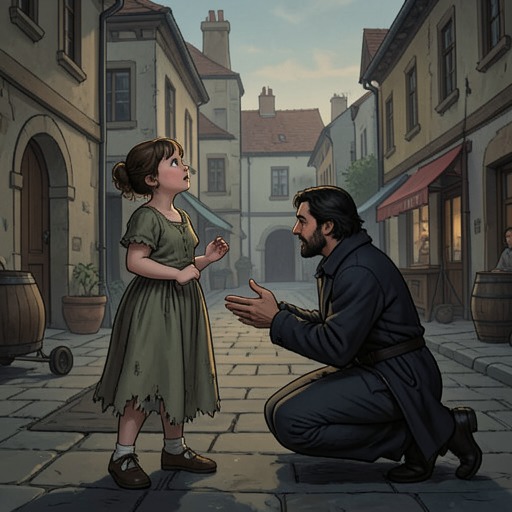
The contest changes scale when the Count stakes Belsito. The room goes still. Uribe says he has nothing to wager that is worth the estate and lays down his cards, but the Count answers by suggesting that Uribe can stake his pharmacy. He then points to Uribe’s daughter as something else of value. The offer converts the game from a contest over money and land into a bargain involving a child: Belsito is proposed against the girl, and the Count presents the proposition as fair.
Uribe does not immediately understand what the Count means. Under the attention of the room, he struggles to think; the Count makes the stakes explicit and places his five face-down cards on the table beneath Uribe’s nose. Uribe stares at them without touching them. The estate’s prestige has not merely heightened a wager: it has helped create a setting in which the child can be spoken of as a counter in an exchange.
Return and Unfinished Disclosure
Years later, Tito takes a train to Belsito. He says that he can sleep at night and is surrounded by people who do not call him Tito; he has thought the war truly over, with only one thing left to do. He goes to tell the Count the story of the trapdoor, the girl, and what happened at Mato Rujo.
The Count recognizes him and receives him kindly in the library, offers him a drink, and asks what he needs. Tito begins by asking whether the Count remembers the night at the farm at Mato Rujo. The scene places an attempted confession inside the estate’s house, years after the poker game: Belsito, once the setting for a transaction over Uribe’s daughter, is now the destination where Tito tries to bring a wartime secret into speech. The excerpt establishes his arrival and opening question, not the outcome of the conversation.