Adi’s “Genius” Image
Serious MenAdi Mani’s “Genius” Image is a reputation made through family performance, newspaper stories, and public endorsement rather than a settled account of what Adi can do. It turns a boy into a symbol: first a source of fresh achievements for a fading local legend, then a supposed opportunity for Dalits, and finally the focus of an institutional inquiry into possible fraud. The shifts in who repeats the claim—and who benefits from it—make the image both powerful and unstable.
A reputation that must be renewed
At home, Adi is already conscious that his prominence may not last. After the game that produced his heroic status has ended, he is dejected and worries that teachers’ wariness, classmates calling him brains, and neighbours asking him to teach their children will fade unless new achievements replenish his reputation. He puts down his textbook and joins Oja Mani for dinner while Ayyan Mani tries to draw his wife’s attention. The scene makes the image more than a story told by adults: Adi has begun to live inside the expectation that he must keep proving it.
Ayyan’s account of his son shifts according to audience. Speaking to Jana Nambodri, he describes an eleven-year-old who wants to take the Joint Entrance Test and claims he will crack it, but immediately undercuts the boast by saying that Adi has no chance. The combination presents the boy as extraordinary while giving the father the posture of a sceptic. It also brings the image into the Institute of Theory and Research, where Arvind Acharya had rejected the idea of Adi sitting the exam on the grounds that the entrance test was not a game.
Institutional recognition and a public stage
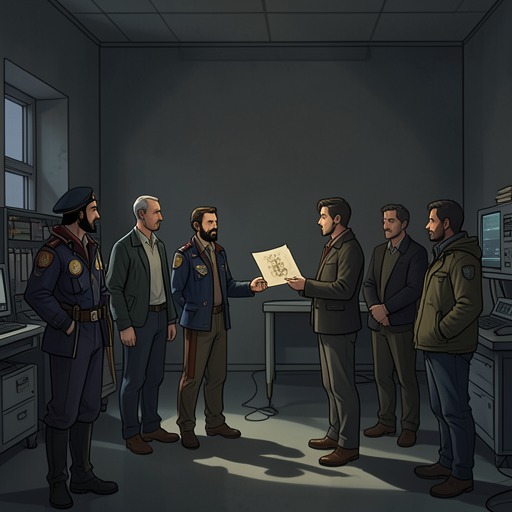
Nambodri gives the image a new institutional setting by accepting Adi’s application. English-language newspapers publish a cheerful photograph of the director receiving the form, and two television channels interview them in the Director’s chamber. Nambodri explains his decision by saying that Adi is a genius and deserves a chance. Adi’s brief response is that he will pass. The exchange appears to close the game on a note of confidence, but its publicity also gives the claim a reach beyond Ayyan’s household and the boy’s neighbourhood.
The image acquires still greater force when it is joined to a story of caste and opportunity. S. Waman publicly praises Adi as a rare boy and hails him as the future liberator of the Dalits. For Ayyan, this attention is unsettling: the minister’s knowledge of his son’s name makes the child’s fame feel newly dangerous. The political framing does not simply celebrate an individual’s ability; it makes Adi stand for a collective future. That symbolic weight raises the stakes of any later challenge to the story.
From individual prodigy to national emblem
At a press conference attended by journalists, photographers, and television crews, Ayyan discovers that he feels no fear, despite what he has done. Adi is appearing in newspapers and on television, as is Sister Chastity, who repeatedly recounts the boy’s extraordinary state of mind. Parents who witnessed a quiz also retell the episode on news channels, but their accounts contain inaccuracies. The coverage gathers these voices into a single national picture: a Dalit genius, the son of a clerk and grandson of a sweeper, arriving at an opportunity after centuries of oppression.
Ayyan’s own reported words make that picture explicit: his son has arrived at the edge of an opportunity. The formulation turns a personal claim into a historical threshold. Yet the press conference also reveals how the image is assembled: repeated accounts, emphatic narration, and public attention give it coherence even when eyewitness versions are inaccurate. The coverage does not merely report Adi’s reputation; it continually restates and enlarges it.
Records, suspicion, and the image under examination
The public certainty is later confronted by evidence gathered inside the Institute. Professor Jal brings Adi’s Joint Entrance Test answer sheet to Nambodri and the astronomers, reporting that the boy scored thirty-nine and would be among the top five. Jal calls this result unbelievable for an eleven-year-old, but his inquiry also supplies reasons to suspect that the test itself was compromised. He says that printers recalled an enquiry, less than eight weeks earlier, about when the exam papers would be delivered, and concludes that Ayyan obtained the test.
Jal also checks an earlier story about Adi winning a science contest hosted by the Swiss Consulate. The consulate, he reports, never held such a contest; the reporter says Ayyan supplied the story, and that some language newspapers accept payment to publish news. These discoveries challenge the public record on which Adi’s prodigy status has been built. They do not erase the fact that the image has already secured attention and political meaning, but they expose the difference between an achievement as reported and one that can be verified.
The result is not a simple choice between public acclaim and a single settled verdict. Nambodri asks whether Adi stole the Joint Entrance Test; Jal argues that the boy and his father are frauds, while the answer sheet and the printers’ recollections become objects of scrutiny. The image’s decisive significance lies in this collision: a claim powerful enough to carry a child into national headlines and caste politics also invites the institutions it touches to investigate how it was made. Its promise remains visible, but its supporting stories no longer pass unexamined.