Ayyan and Adi’s Secret Pact
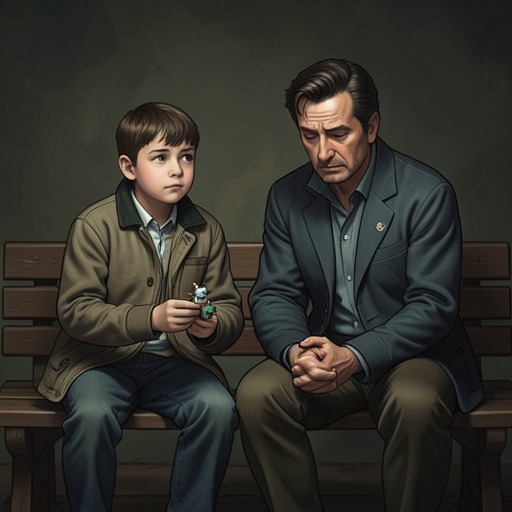
Serious MenAyyan and Adi’s Secret Pact is the private arrangement through which Ayyan Mani teaches his son, Adi Mani, to perform the appearance of extraordinary intelligence at school. What begins as a joke and a distraction from life in BDD Chawl grows into a deliberately maintained public identity: Adi asks prepared questions, teachers interpret his oddness as brilliance, and Ayyan extends the game into a fictitious news item. The pact matters because its secrecy binds father and son while its effects reach beyond them, changing how Adi is seen and what he believes that recognition means.
Origin and Terms
The scheme begins after Ayyan takes Adi out for ice cream. Walking along Worli Seaface, he hears the boy identify cars by looking at their fronts or backs, naming models including the City, Ambassador, Zen, and Esteem. Ayyan regards this as a familiar kind of childhood smartness, not evidence of genius. The contrast between Adi’s ordinary, specific knack and the extraordinary reputation that follows is central to the pact’s construction.
Ayyan’s first aim is modest: to make something entertaining out of the miseries of BDD. He recruits Adi into “Our secret,” teaching him questions to memorize and asking him to pose them in class regardless of the lesson’s subject. Some are simple challenges to everyday explanation, such as asking what gravity is made of or why leaves are green. The instruction is not to master the underlying science but to introduce a striking question at the right moment. Ayyan presents the exercise to his son as fun, while secrecy protects the game from interference.
How the Game Works
At first, the questions seem endearing to Adi’s teachers. They find him cute, bright, and curious. Ayyan then makes the performance more elaborate. Adi asks why nothing eats sound if plants can eat light, or responds to a mention of the ocean by announcing its average depth as 3.7 kilometres and wondering why lakes are not as deep. The questions sound learned, but when teachers try to draw him into discussion of light, sound, or the ocean, Adi falls silent: he knows no more than his father has taught him.
That silence does not immediately expose the act. The staff take it as compatible with the image of a young, odd, laconic boy who is also partially deaf. The pact therefore depends not only on the questions but on their limited, repeatable form: a memorized fact or puzzle creates an impression, while Adi need not sustain a conversation about it. As teachers become baffled and increasingly annoyed by the disruptions, they send notes home summoning his parents. Those notes bring the consequences of the classroom performance into family life, where fear and amusement coexist.
Secrecy, Attention, and Family Effects
Adi initially mentions the pact to Oja Mani, but she treats it as ordinary father-and-son prattle. Over time, however, the school’s attention changes the game for him. He begins to understand that others regard him as extraordinary rather than as “special,” the label used for handicapped children. He comes to value the status and to grasp why the pact must remain secret: he vaguely understands that Oja would oppose it, and that her opposition might cost him the standing he has begun to enjoy.
Oja’s response is itself divided. She worries about the disruptions and says she wants Adi to be normal, yet she is excited by the possibility of a genius and tells other people about his brilliance. She even circles fire around his face and marks his cheek with black powder to ward off the evil eye. Her actions show how the invented reputation can become compelling within the family, despite her unease about the behavior that sustains it. For Ayyan, the boy’s hearing aid and innate quickness help make the legend easy to maintain: an unusual question once a week is enough to keep it alive.
Expansion and Ending
Ayyan eventually wants more than the recurring classroom prank and arranges a fictitious news item about Adi. He still regards the operation as reversible and believes it can be called off before they are caught. His thoughts about the French child poet Minou Drouet, whose authorship was questioned and tested, offer him a precedent for the uncertainty surrounding celebrated young talent; they also give him comfort that he is not the first parent to create a genius myth around a child. But the comparison does not make his own fabrication true. The pact remains a planned performance, and Ayyan knows it must end someday.
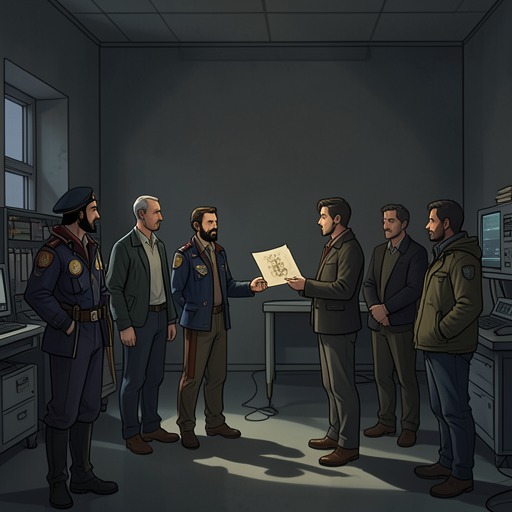
That ending comes after a night on the tar-coated terrace of BDD, when Ayyan tells Adi that the game is over. At the Institute of Theory and Research the next day, Ayyan writes a thought for the day on a blackboard while Adi waits near the lifts. Researchers have summoned the boy after reading the article in The Times of India and want to see the Dalit genius for themselves. Ayyan watches them gather around Adi, but understands that this public display will be the last day of the persona. He tells his son there will be no more clever prompts in class, quiz questions will no longer seem to land in his lap, and articles will not appear about him. Adi nods sadly but understands, repeating that the game is over.
Significance
The pact is both an act of fabrication and a relationship enacted through instructions, shared secrets, and an agreed performance. Its rules are practical: ask what Ayyan has taught, do so at school, and do not let the questions become a conversation that would reveal how little Adi knows. Yet the consequences exceed the father’s initial intention to amuse himself and his son. Adi develops an attachment to the distinction the performance gives him, while Oja’s pride and worry reveal how readily the family can be drawn into the story.
The pact’s closure is as deliberate as its beginning. Ayyan does not merely stop supplying material; he tells Adi that the performance, its classroom prompts, and its public reinforcement will cease. The boy’s sadness registers the cost of losing a status he had come to value, even as his understanding confirms that the secret was shared rather than simply imposed. The pact thus makes the manufactured genius identity temporary, but not inconsequential: it leaves its mark on how Adi experiences recognition, disability, and the boundary between a game and a public claim.