
The Regency Council’s Legitimacy Crisis
ShōgunThis flow traces how the Council’s fragile post-Taikō settlement becomes a contest over legitimacy, coercion, and the right to rule.
increasing Bearing strength in each event
 decreasing
Bearing strength in each eventdecreasingA Vacant Regency
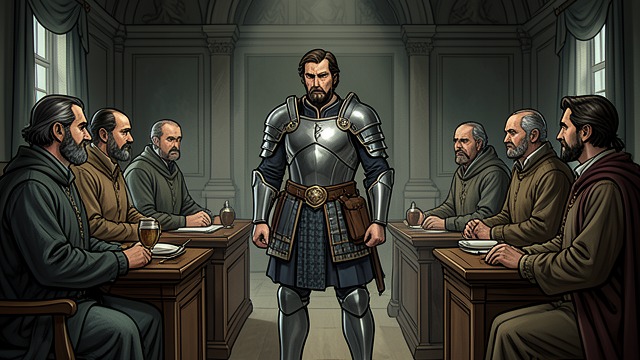
A Vacant Regency
The Settlement
The Taikō has left a child heir and a Council of Regents meant to govern until the boy comes of age. Its members are bound to unanimous rule, a design intended to prevent any one lord from seizing power.
The Fault Line
Toranaga, the regent and most powerful lord in the east, and Ishido, Osaka’s powerful lord, distrust one another. Their rivalry turns the Council’s rules into weapons: each side fears that the other will use procedure to isolate and destroy it.
Pressure
With no adult successor and armies already divided between eastern and western allegiances, the settlement depends on restraint that neither rival trusts the other to maintain.
Marriages Become Charges
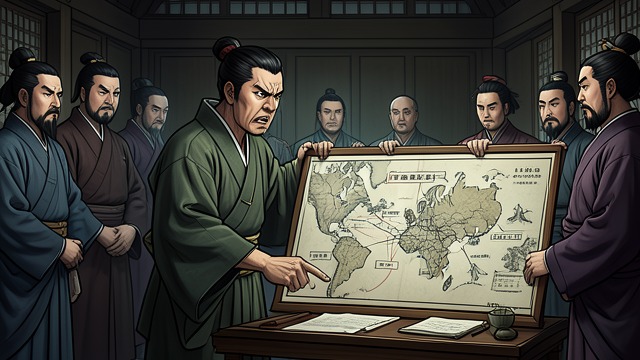
Marriages Become Charges
The Accusation
Ishido challenges Toranaga over marriages linking his family to other powerful houses. He presents them as violations of the Taikō’s restrictions, turning family alliances into a potential charge of treason.
The Counterargument
Toranaga answers that the marriages do not threaten the heir’s succession and that the late Taikō would have understood their purpose. The dispute exposes a deeper struggle over whether the dead ruler’s testament is a stable law or a tool for political advantage.
Isolation
Ishido gathers other Regents to demand action against Toranaga. The threat of a four-to-one vote makes the Council’s formal rules feel less like protection and more like a mechanism for forcing submission.
The Missing Fifth Regent
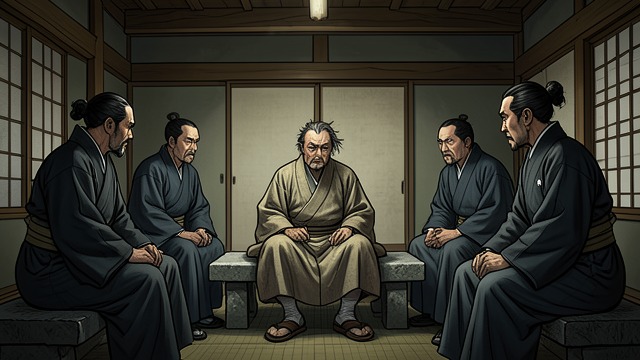
The Missing Fifth Regent
The Council Stalls
Toranaga resigns from the Council before his opponents can impeach him. Without five members, the body cannot act as the lawful instrument of imperial power, so his apparent retreat also blocks Ishido from completing a formal victory.
A Replacement Changes the Balance
Ishido obtains agreement to appoint Ito Teruzumi as a new Regent. The appointment restores the Council’s ability to convene and threatens to put Toranaga back under a hostile majority, undoing the advantage his resignation created.
The Crisis Hardens
The issue is no longer simply who commands more soldiers. It is whether a Council rebuilt under Ishido can make its orders binding, and whether Toranaga must obey an authority he believes has been captured by his enemies.
Mariko’s Challenge at Osaka
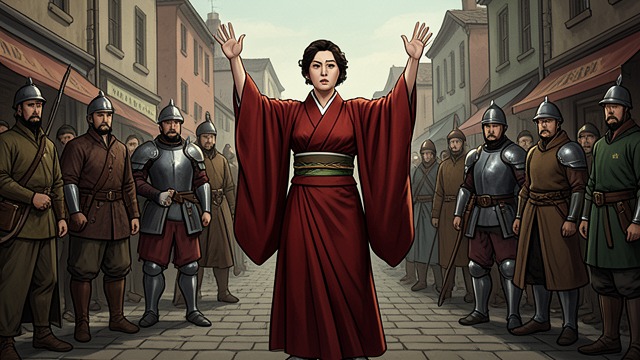
Mariko’s Challenge at Osaka
A Disputed Right to Leave
Ishido’s forces prevent Mariko from leaving Osaka with Toranaga’s household. She argues that the imperial invitation does not confine her indefinitely and that her duty to her liege lord requires her departure.
Public Defiance
Ishido refuses to recognize her interpretation and invokes the Council’s authority. Mariko answers that a samurai’s duty cannot be displaced by an order that contradicts her lord’s command, making her personal departure a visible test of whether Ishido can hold the other hostages.
A Political Crisis
The standoff raises the risk that other women and families will demand release. Mariko’s resolve makes her more than an interpreter: her conduct threatens the coercive system that keeps Toranaga’s allies in Osaka.
The Imperial Summons and War
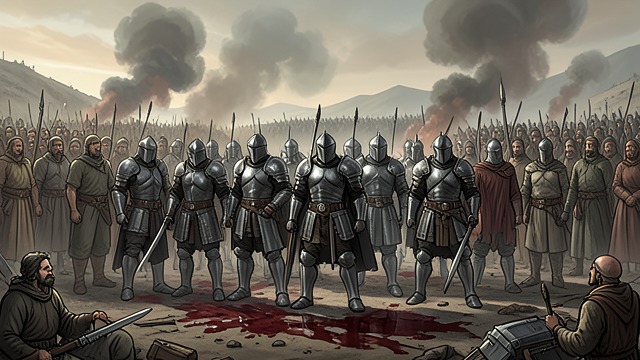
The Imperial Summons and War
Pressure for Submission
The Emperor’s scheduled presence at Osaka gives the gathering of lords extraordinary weight. Ishido expects Toranaga to appear and submit to the Council, while Toranaga must weigh the consequences of openly defying an imperial summons.
The Death of Mariko
After the ninja attack and Mariko’s death, the Council can no longer treat the hostage crisis as a contained political maneuver. Her public resistance and the violence surrounding it damage Ishido’s authority and intensify resentment among those watching.
The Choice of Battle
The Regents vote for war as Toranaga gathers forces and prepares to act on his own timetable. The conflict moves from procedural struggle to military confrontation, culminating in the battle near Sekigahara, where Toranaga’s victory settles the contest for power.
After the Taikō’s death, before the fleet reaches Japan
During Toranaga’s stay in Osaka, before the first formal council meeting
After Sugiyama’s resignation and death, before the planned battle
On the attempted departure from Osaka Castle, before the public funeral
After Mariko’s death and Ishido’s attack, as the novel approaches its final battle
