
Karma and the Discipline of the Present
ShōgunThis thread traces how Blackthorne moves from trying to master an unpredictable world toward acting within uncertainty, while Toranaga turns acceptance of fate into deliberate political timing.
increasing Bearing strength in each event
 decreasing
Bearing strength in each eventdecreasingThe Sea Resists Mastery
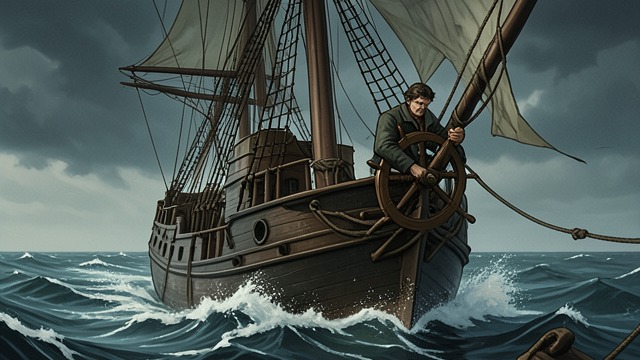
The Sea Resists Mastery
A pilot’s confidence
Blackthorne understands the sea through observation, discipline, and repeated correction. His survival depends on reading winds, currents, and reefs more accurately than other men, so the storm’s arrival seems at first like another test that skill can answer.
Limits of control
The Erasmus reaches safety through a sequence of choices made under pressure, but survival does not restore the ship, crew, or certainty. From the beginning, the novel sets human competence beside forces that cannot be commanded, establishing the tension between preparation and contingency.
Blackthorne’s confidence is not simply arrogance: it is a working method that has kept him alive. Yet the storm also plants a question that will recur in Japan—whether a person can distinguish control from luck when the outcome is already beyond prediction.
Learning to Leave the Future Open
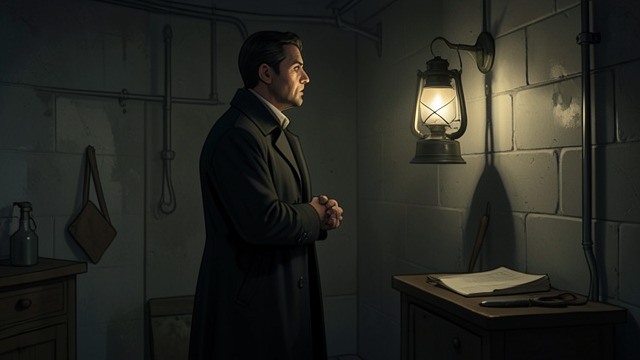
Learning to Leave the Future Open
Survival without a map
In the prison, Blackthorne cannot rely on a ship, instruments, or the authority of a pilot. Friar Domingo supplies knowledge, but even knowledge cannot reveal when the guards will call his name or what sentence awaits him. Blackthorne’s usual planning reaches its limit in a place designed to make the future unknowable.
A smaller unit of time
He repeatedly steadies himself by refusing to solve everything at once. Attention narrows to a breath, a ration, a Japanese word, or the next order; this discipline keeps terror from taking over completely.
The shift matters because his adaptation does not begin with a sudden conversion to Japanese beliefs. He borrows a practical method of endurance while retaining his own convictions, discovering that patience can be a technique before it becomes a philosophy.
The Near-Seppuku and the Reprieve
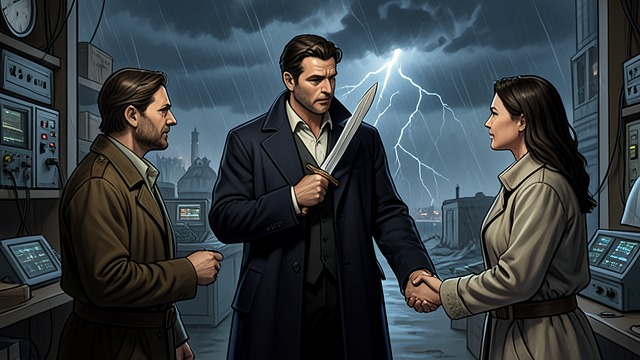
The Near-Seppuku and the Reprieve
A chosen threshold
When Yabu refuses to release the villagers from the threat of collective punishment, Blackthorne concludes that his own honor requires action. He places the blade against himself rather than accept a life purchased by the continuing terror of others.
Returning from the edge
Omi and Igurashi stop the thrust, and Yabu offers a compromise: Blackthorne’s language learning will be judged satisfactory without disclosing the arrangement to the village. The interruption returns Blackthorne to life, but not to his former assumptions about what survival means.
Afterward he experiences ordinary sensation with startling intensity. Rain, air, and tea become newly vivid, suggesting that his encounter with death has changed his attention rather than resolved the moral contradictions around him. His rebirth remains incomplete and must be lived out through daily choices.
Mariko’s Lesson in Impermanence
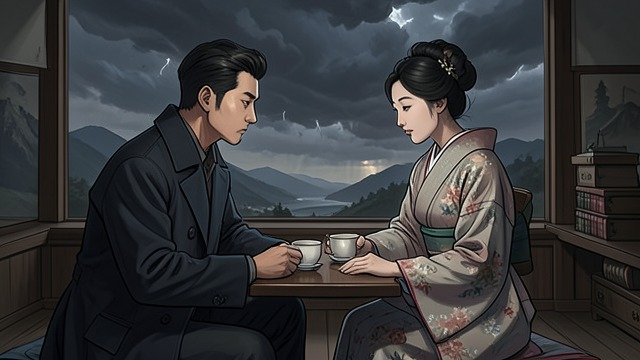
Mariko’s Lesson in Impermanence
A world organized around change
Mariko teaches Blackthorne that Japanese ideas of time can encompass a tear, a storm, a siege, or a rock. The comparison unsettles his European habit of treating time chiefly as duration and measurement.
Attention as release
Her counsel is not that suffering is unreal, but that fixation on an unchangeable past can make the present unlivable. Blackthorne struggles with that teaching because his duties and memories remain active: he owes loyalty to his crew, remembers the dead, and fears what may happen next.
The lesson becomes a shared vocabulary rather than a simple doctrine. When they later face danger together, attention to the immediate task gives them a way to act without pretending that grief or fear has vanished.
The Earthquake and the Living Present
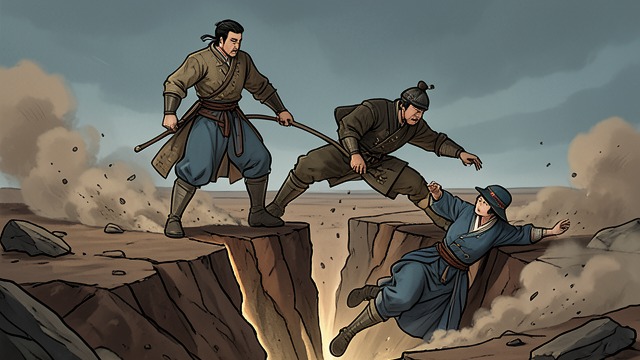
The Earthquake and the Living Present
Sudden exposure
When the ground splits beneath Toranaga and Mariko, political rank and careful planning briefly lose their power. Blackthorne, Toranaga, and Mariko must respond to shifting earth rather than to any plan they can control.
Action without certainty
Blackthorne pulls Toranaga from the fissure and then helps rescue Mariko. His actions do not abolish danger; each successful movement risks a new collapse. The immediate demand to keep another person alive displaces speculation about who deserves safety or what the future will bring.
Afterward, Toranaga and Blackthorne share a laugh and an awkward attempt to urinate over the damaged ground. Humor becomes a way to return to life after terror, while the rescue gives the characters a concrete experience of dependence that no abstract claim about fate could supply.
During the final storm before Blackthorne reaches Anjiro
During Blackthorne’s early confinement in Osaka
On Blackthorne’s first night under Yabu’s control in Anjiro
During the journey from Osaka toward Anjiro
During the Anjiro earthquake
